

Baboons are some of the most recognizable monkeys in the world. With their dog-like faces, strong limbs, and loud social behavior, they are hard to miss. Baboons are smart, social, and sometimes a little mischievous. They live in large groups and have a strong family system, making them one of the most interesting animals in Africa.
Scientific Classification
- Kingdom: Animalia
- hylum:Chordata
- Class: Mammalia
- Order: Primates
- Family: Cercopithecidae
- Genus: Papio
There are five main species of baboons:
- Olive Baboon (Papio anubis)
- Yellow Baboon (Papio cynocephalus)
- Chacma Baboon (Papio ursinus)
- Guinea Baboon (Papio papio)
- Hamadryas Baboon (Papio hamadryas)
Common Names
- Baboon
- “Eegun” (Yoruba)
- “Nyani” (Swahili)
- Sometimes called “dog-faced monkeys” due to their long, narrow snouts
Geographic Distribution
Baboons are found across Africa and parts of **the Arabian Peninsula. They live in many different habitats, including:
- Savannas
- Woodlands
- Mountains
- Semi-deserts
They are especially common in countries like Kenya, Nigeria, South Africa, Ethiopia, and Tanzania.
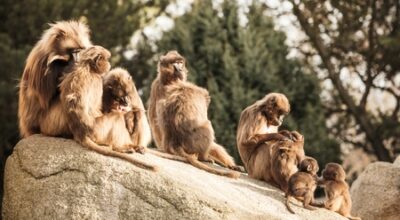
Image showing A troop of baboons sitting on rocks in the savanna(Source:123RF)
Major Types of Baboons
1. Olive Baboon
The most widespread species, Olive Baboons are named for their grey-green fur.
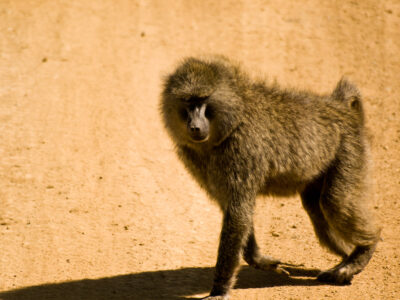
Image showing Olive Baboon walking on dusty road(Source:Flickr)
Key Facts:
- Color: Grey-green coat
- Size: Males up to 30 kg (66 lbs), females smaller
- Social structure: Large troops, often over 50 members
- Location: Most of Central and East Africa
2. Hamadryas Baboon
This species has a silver-white mane and is found in the Horn of Africa and the Arabian Peninsula.
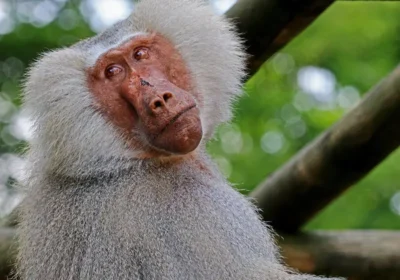
Image showing Hamadryas Baboon with silver fur and pink face(Source:The Animal Facts)
Key Facts:
- Color: Males have white-silver capes; females are brown
- Size: Males up to 40 kg (88 lbs)
- Behavior: Lives in smaller harems led by one male
- Location: Ethiopia, Somalia, Yemen
3. Chacma Baboon
One of the largest baboons, found in southern Africa.
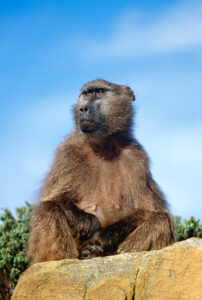
Image showing Large Chacma Baboon sitting on a rock(Source:Kimballstock)
Key Facts:
- Size: Can weigh up to 45 kg (100 lbs)
- Color: Dark brown to grey
- Temperament: Bold and sometimes aggressive
- Location: South Africa, Botswana, Namibia
Physical Characteristics
Baboons have long snouts, powerful jaws, and sharp canine teeth, especially in males. Their tails are long and curve sharply at the base. Males are usually much larger than females.
They walk on all fours and often **sit upright** using their tough, calloused buttocks, known as ischial callosities.
Intelligence and Social Life
Baboons are very intelligent and social. They live in troops with complex relationships. Troops can have dozens to over a hundred members.
- They groom each other to build bonds
- Have leaders and social ranks
- Use facial expressions and sounds to communicate
- Can solve problems and use simple tools
Fun Facts
* Baboons can sleep on cliffs to avoid predators at night.
* They are omnivores—eating fruits, seeds, insects, and even small animals.
* Baboons can travel over 10 km a day in search of food.
* They sometimes raid farms and homes, stealing crops or food.
* Mothers carry babies on their backs or stomachs for months.
Importance to Humans
Baboons are both admired and feared in many communities:
- In some cultures, they are symbols of wisdom or mischief
- Farmers often see them as pests when they steal crops.
- They are used in scientific research due to their human-like behavior.
- Some baboons are kept in zoos and sanctuaries for conservation and education.
They play a role in spreading seeds and help balance ecosystems by eating insects and small animals.
Health & Common Issues
Baboons are tough, but like all animals, they can get sick or injured.
Common Health Issues:
- Skin infections or parasites (like lice or ticks)
- Wounds from fights with other baboons
- Broken bones from falls or predators
- Diseases from contact with humans (zoonotic diseases)
Veterinary Needs (in captivity or rescue):
- Proper nutrition and enrichment
- Treatment for injuries and parasites
- Vaccinations (in protected or zoo environments)
- Clean, natural enclosures for mental well-being
Conservation Status
Most baboon species are currently listed as Least Concern, but they face threats such as:
- Habitat destruction due to farming and cities
- Hunting for meat or traditional medicine
- Conflict with humans near farms and roads
Conservation efforts include protecting forests, education programs, and wildlife laws.
Summary
Baboons are bold, clever, and full of personality. They remind us how complex and emotional animals can be. While they may be troublemakers at times, they are also key players in the wild and deserve our understanding and protection.
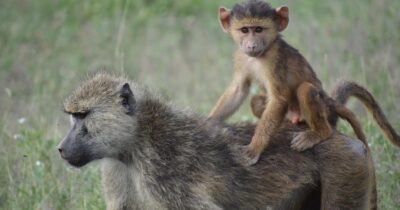
Image showing Baboon mother carrying baby on her back in a forest trail (Source:Duke Today Duke university)
Need help with a rescued primate or want to learn more about wild animals?
📞 Contact Doctor Hulk Veterinary Hospital Today @ 08143397614. We treat all animals with care including house pets and wild survivors.





Reviews
There are no reviews yet.