
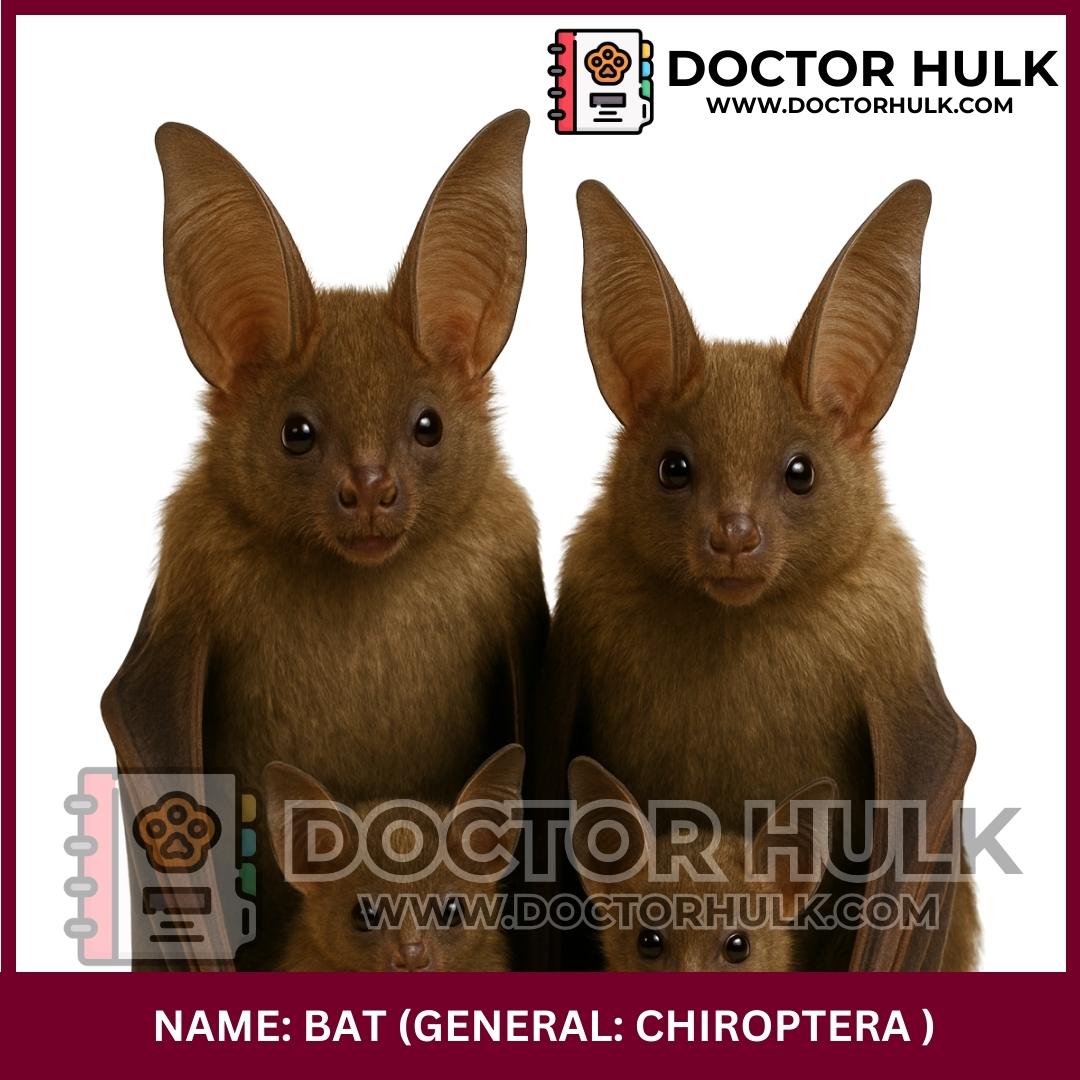

Bats are the only mammals that can truly fly. Often misunderstood, these amazing creatures are more helpful than harmful. They help pollinate plants, eat harmful insects, and keep the natural balance in check. From caves to cities, bats are everywhere, watching the world from above as they flap silently through the night.
Scientific Classification
- Kingdom: Animalia
- Phylum: Chordata
- Class: Mammalia
- Order: Chiroptera
There are over 1,400 species of bats, divided into two main groups:
- Megabats (fruit bats or flying foxes)
- Microbats (insect-eating bats)
Common Names
Bats are known by different names around the world:
- “Bat” (English)
- “Adán” (Yoruba)
- “Aza” (Igbo)
- “Chiroptera” (scientific term)
- “Flying mammals” or “night fliers” (descriptive nicknames)
Geographic Distribution
Bats are found almost everywhere in the world, except in extreme deserts or cold polar regions. They live in:
- Forests
- Caves
- Roofs and buildings
- Trees and hollow logs
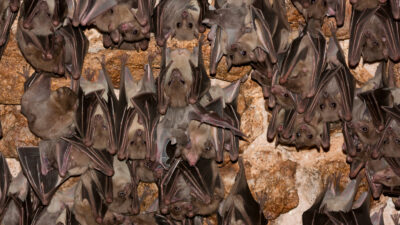
Image Showing Bats hanging upside down inside a cave(Source:Getty images)
They are especially common in Africa, Asia, the Americas, and Australia.
Major Types of Bats
1. Fruit Bat (Megabat)
Also called flying foxes, these bats are large and eat fruits and nectar. They help pollinate trees and spread seeds.
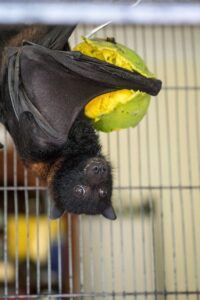
Image Showing Fruit bat hanging from a tree while eating a mango(Source:Pinterest)
Key Facts:
- Size: Wingspan up to 1.5 meters (5 feet)
- Diet: Fruits, flowers, nectar
- Eyesight: Very good vision
- Activity: Active at night (nocturnal)
2. Insect-eating Bat (Microbat)
These smaller bats use echolocation (sound waves) to find insects in the dark.
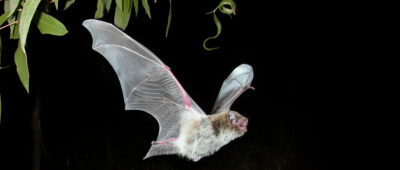
Image Showing Small microbat flying at night catching insects (Source:Bat Conservation and Rescue QLD)
Key Facts:
- Size: Small, often fits in a person’s hand
- Diet: Mosquitoes, moths, beetles
- Special Skill: Echolocation
- Wingspan: 15–40 cm (6–16 inches)
Physical Characteristics
Bats have thin wings made of skin, stretched between their arms and long finger bones. They also have:
- Sharp claws for hanging upside down
- Large ears (especially in microbats)
- Small eyes or large eyes depending on the species
- Fur-covered bodies like other mammals
They rest during the day and come out at night—a behavior called nocturnal activity.
Intelligence and Behavior
Bats are smart and highly social. Some live in colonies of hundreds or even thousands. They:
- Use echolocation to move and hunt
- Can recognize other bats by their sounds
- Show loyalty to their groups or mates
- Can learn flight paths and return to the same roost every day
Fun Facts
- A single bat can eat over 1,000 mosquitoes in one night.
- Some bats pollinate bananas, mangoes, and guavas.
- Baby bats are called pups and cling to their mothers.
- Bats sleep upside down, hanging by their toes.
- They don’t get dizzy hanging upside down, it’s natural for them.
Importance to Humans
Bats play a huge role in helping people, even if most don’t realize it.
- Pest control: Eat mosquitoes and crop-damaging insects
- Pollination: Help plants grow, especially tropical fruits
- Fertilizer: Bat droppings (called guano) are used as strong natural manure
- Science & medicine: Their flight and sonar help scientists design better tools
However, bats are also feared due to myths and diseases.
Health & Common Issues
Bats can carry diseases, especially if handled carelessly or kept in dirty places.
Common Health Concerns:
- Rabies (though rare, it’s deadly)
- Fungal infections like White-nose syndrome
- Parasites like mites or fleas
- Injuries from getting trapped in buildings
Veterinary Needs (when rescued or in captivity):
- Clean, quiet spaces to reduce stress
- Special diets for fruit or insect-eating type
- care for wing tears or infection
- Vaccination and disease checks (especially in bat sanctuaries)
- Protecting caves and forest
- Educating people about bats
- Creating bat-friendly gardens
Supporting bat rescue programs
Conservation Status
Many bat species are now threatened or endangered due to:
-
Deforestation and cave destruction
-
Killing out of fear or myth
-
Climate change affecting food and roosting spots
-
Noise and light pollution
Conservation efforts include:
-
Vaccination and disease checks (especially in bat sanctuaries)
📞 Contact Doctor Hulk Veterinary Hospital Today @ 08143397614. We care for all creatures including silent flyers.


Reviews
There are no reviews yet.