
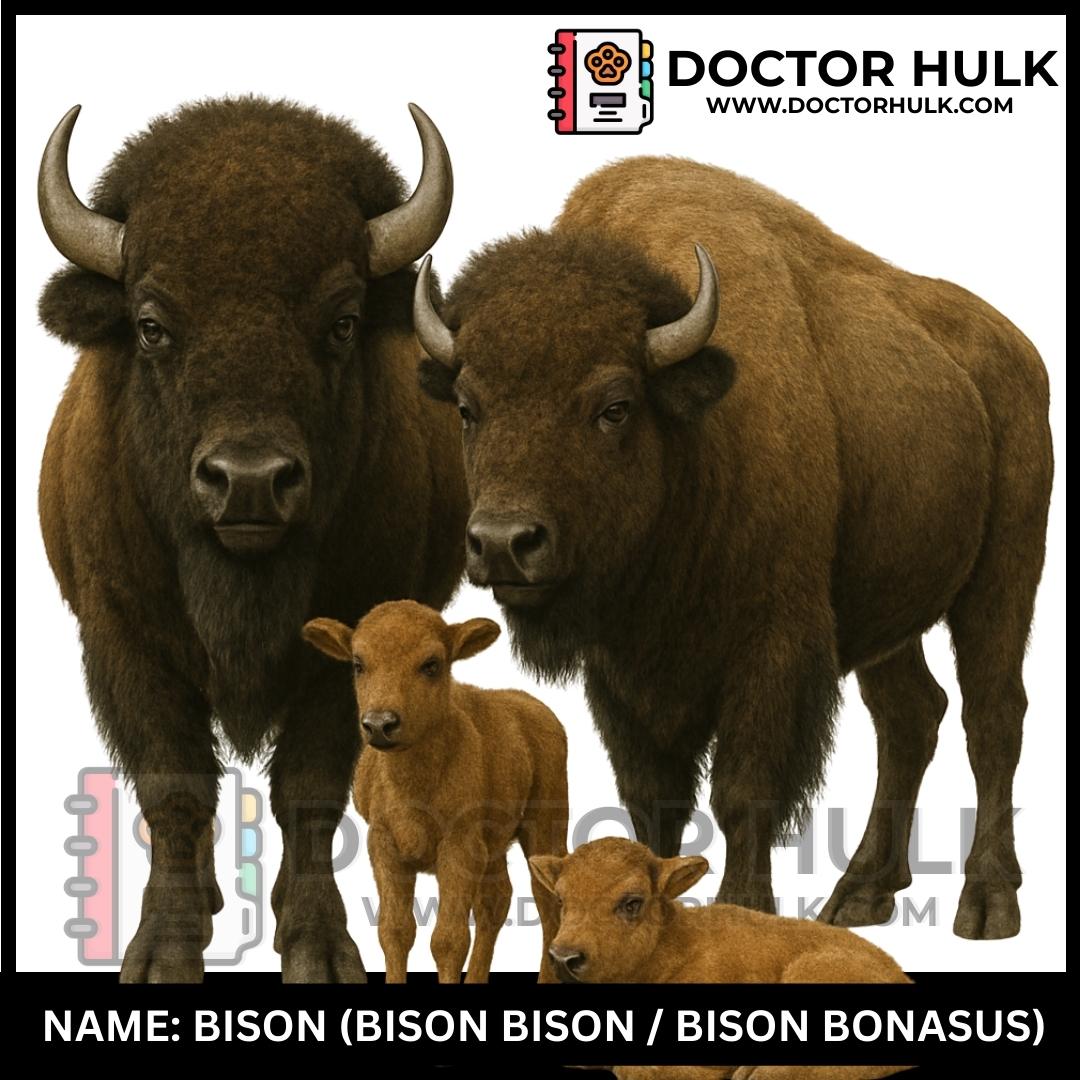

Bison are large, powerful animals that roam grasslands, forests, and plains. Known for their massive heads and thick coats, bison have been symbols of strength, freedom, and survival for centuries. They once covered the land in great numbers and are now making a comeback thanks to protection efforts.
Scientific Classification
- Kingdom: Animalia
- Phylum: Chordata
- Class: Mammalia
- Order: Artiodactyla
- Family: Bovidae
- Genus: Bison
There are two main species of bison:
- American Bison (Bison bison)
- European Bison (Bison bonasus)
Common Names
- Bison
- Buffalo (used in America, though they are not true buffalo)
- American Buffalo
- Wisent (European Bison)
- In many cultures, they are called “thunder beasts” for the sound their herds make when running
Geographic Distribution
American Bison are found mostly in North America, especially in the United States and Canada.
European Bison (Wisent) are found in forests of Eastern Europe, including Poland, Belarus, and Russia.
Bison prefer:
- Grasslands and prairies
- Light forests
- Open meadows
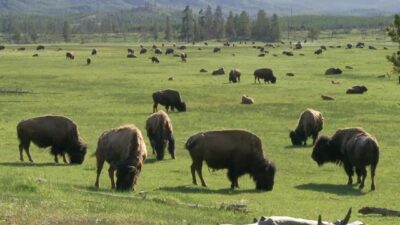
Image Showing A herd of bison grazing on a wide open plain(Source:National Park Service)
Major Types of Bison
1. American Bison
The most well-known and largest land mammal in North America.
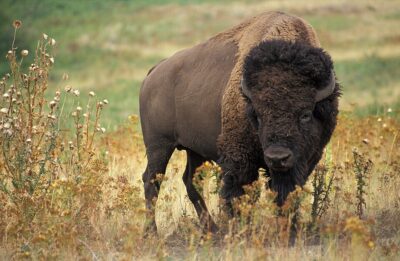
Image Showing American Bison with shaggy dark fur and strong horns(Source:Wikipedia)
Key Facts:
- Weight: Up to 1,000 kg (2,200 lbs)
- Height: About 1.8 meters at the shoulder
- Features: Hump on shoulders, thick brown fur, short curved horns
- Behavior: Lives in herds, grazes on grass, migrates with seasons
2. European Bison (Wisent)
Slightly slimmer and taller, with shorter fur and a longer tail.
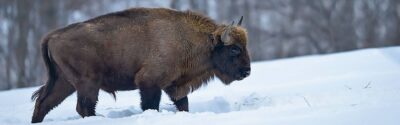
Image Showing European Bison walking in a snowy forest(Source:Sanctuary Nature Foundation)
Key Facts:
- Weight: Up to 900 kg (1,980 lbs)
- Habitat: Forests and wooded grasslands
- Behavior: Shy and more reclusive
- Status: Once extinct in the wild, now reintroduced to Europe
Physical Characteristics
Bison are large animals with:
- Thick, woolly fur that protects them in cold weather
- Strong legs and hooves for running across rough ground
- Large heads with a hump of muscle used for digging snow or fighting
- Sharp, curved horns on both males and females
They can run up to 55 km/h and jump fences or obstacles if chased.
Behavior and Lifestyle
Bison are herd animals, living in groups for safety and warmth.
- Grazers: Eat grass, herbs, and shrubs
- Seasonal movers: Migrate to find better food and weather
- Calm but defensive: Usually peaceful but can charge if threatened
- Mothers are protective of their calves and care for them for months
Fun Facts
- Bison were once so numerous that they covered the Great Plains like waves
- A bison calf can stand and walk within one hour of birth
- Their humps are made of pure muscle, helping them push snow to find grass
- Bison can survive extreme weather from snowstorms to heat waves
- The American Bison is the national mammal of the United States
Importance to Humans
Bison have been very important to Indigenous people for centuries, providing:
- Meat, hides, and bones for food, clothing, and tools
- Cultural and spiritual meaning in rituals and stories
- Inspiration in art and identity
Today, they help in:
- Grassland conservation by grazing and fertilizing the land
- Tourism and eco-education in parks and reserves
- Sustainable meat farming in some regions
Health & Common Issues
In the wild or in captivity, bison can face:
Common Problems:
- Parasites (ticks, lice, worms)
- Foot rot or hoof injuries
- Respiratory infections, especially in winter
- Malnutrition during drought or snow cover
- Brucellosis (a disease that can also affect livestock)
Veterinary Needs:
- Periodic deworming and vaccinations (in farms or sanctuaries)
- Hoof care and injury treatment
- Proper grazing land and water access
- Monitoring during calving season
Conservation Status
American Bison:
- Once nearly extinct due to hunting, now listed as Near Threatened
- Protected in parks like Yellowstone and on tribal lands
European Bison:
- Listed as Vulnerable
- Saved from extinction through captive breeding and forest release programs
Threats Include:
- Habitat loss
- Disease spread from livestock
- Human conflict or overhunting (in history)
Bison are gentle giants that helped shape human history and natural landscapes. From their thunderous stampedes to quiet grazing, bison remind us of nature’s strength and beauty. With ongoing care, their comeback is one of the great conservation success stories of our time.
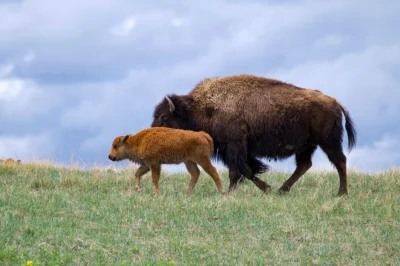
Image Showing A young bison calf walking beside its mother(Source:Wild Idea Buffalo Company)
Want to learn more about large mammals or report a wildlife concern?
📞 Contact Doctor Hulk Veterinary Hospital Today @ 08143397614. We’re here for animals.




Reviews
There are no reviews yet.