
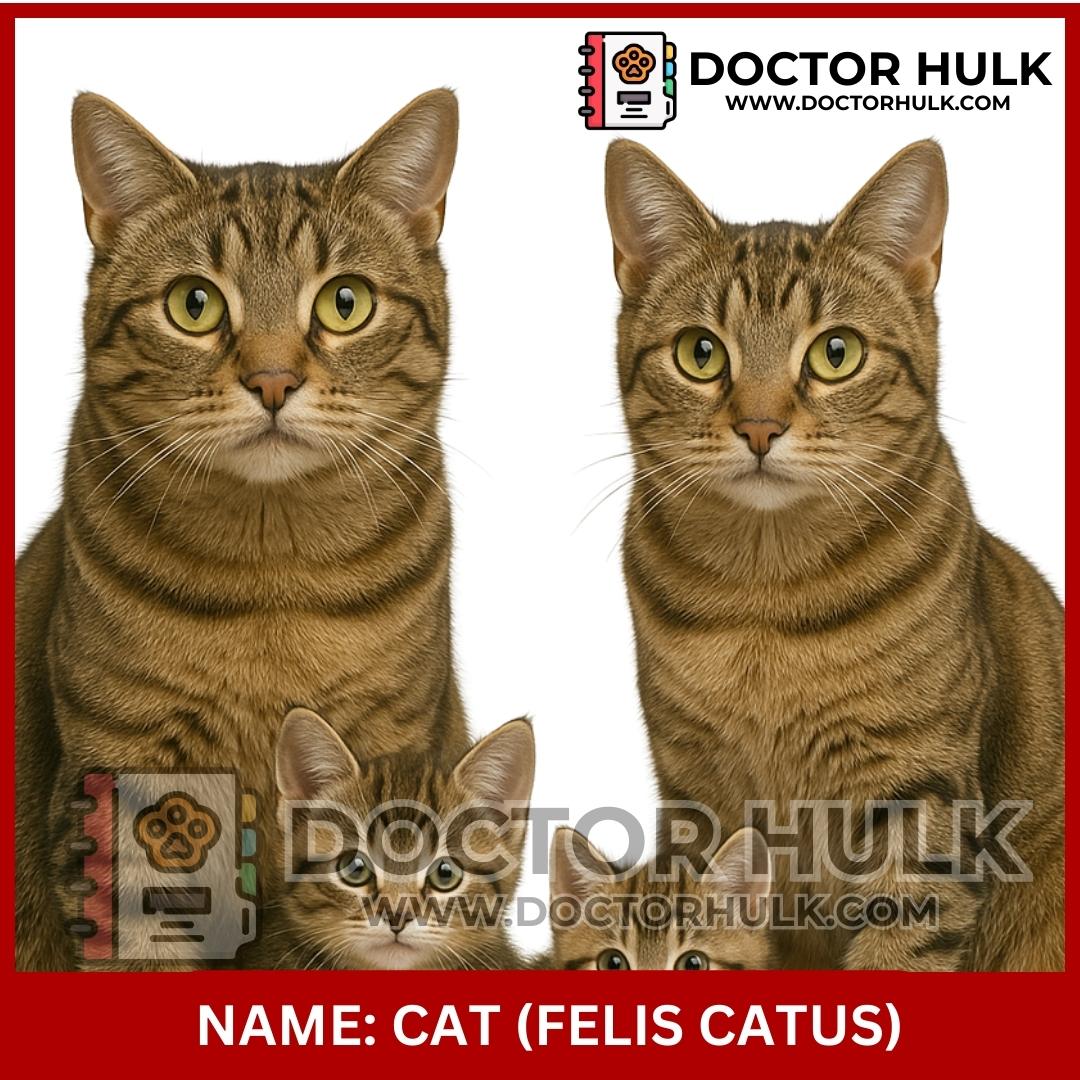
Cats are one of the most popular and loved animals in the world. Cats are known for their independence even they live in homes or roam freely in the streets. They are also known for their playful nature, and graceful movements. These small carnivores have lived alongside humans for thousands of years, offering companionship, pest control, and a whole lot of personality.
Scientific Classification
-
Kingdom: Animalia
-
Phylum: Chordata
-
Class: Mammalia
-
Order: Carnivora
-
Family: Felidae
-
Genus: Felis
-
Species: Felis catus (domestic cat)
Common Names
-
Cat
-
House cat
-
Domestic cat
-
“Ologbo” (Yoruba)
-
“Mishi” (Hausa)
-
“Pusi” or “Paka” (Swahili)
Geographic Distribution
Cats are found all over the world, in cities, towns, and villages. They live in:
-
Homes as pets
-
Streets and markets
-
Farms and barns
-
Forests and wild areas (feral cats)
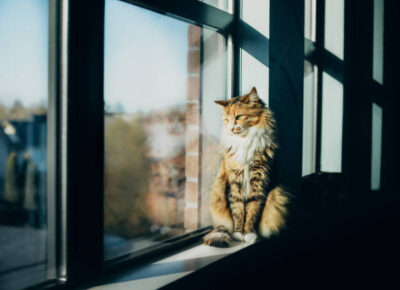
Image showing Domestic cat sitting on a window sill, looking outside(Source:iStock)
Breeds of Cat
There are many breeds of domestic cats, each with different looks and behaviors. Here are common examples:
1. Persian Cat
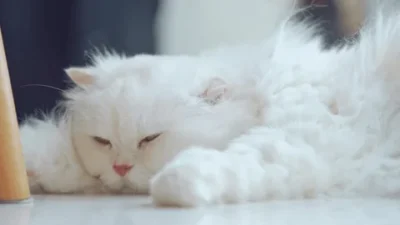
Image Showing fluffy white Persian cat lying down indoors (Source: Shutterstock).
Description:
The Persian cat is one of the oldest and most recognized cat breeds in the world, famous for its luxurious long coat and distinctive flat face. Calm, affectionate, and dignified, Persians prefer serene environments. They form strong bonds with their owners and enjoy quiet companionship, often lounging gracefully like feline royalty.
Fun Facts:
-
Royal Status: Persian cats were favorites of Queen Victoria and other royals, helping to cement their image as elite and aristocratic pets.
-
Movie Stars: Persians have appeared in countless movies and TV shows, including James Bond’s villain cat and Stuart Little.
-
Ancient Origins: They trace their roots back to ancient Persia (modern-day Iran), where long-haired cats were prized treasures.
-
Grooming Royalty: Their long, silky fur requires daily grooming to prevent matting, making them one of the highest-maintenance cat breeds.
-
Quiet Companions: Persian cats are known for their quiet, soft voices and mellow temperament—they’re more likely to purr than meow loudly.
Key Facts:
-
Fur: Long and soft
-
Temperament: Gentle and quiet
-
Needs: Regular brushing, indoor life
-
Popular as a luxury pet
2. Local or Mixed-Breed Cat (often called “village cat”)
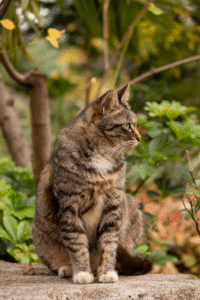
Image Showing Short-haired tabby cat standing in the shade (Source: Pngtree)
Description:
Local mixed breed cats are non-pedigreed felines that come in an endless variety of colors, patterns, sizes, and personalities. These adaptable, hardy cats are typically found in homes and streets worldwide. They tend to be low-maintenance, intelligent, and affectionate, each with a unique charm born from their diverse genetic backgrounds.
Fun Facts:
-
World’s Most Common Cat: Mixed breeds make up the vast majority of cats kept as pets globally. They’re the “people’s cat.”
-
Tailored Temperament: Since they’re not bred for specific traits, their personalities can range from fiercely independent to cuddly lap cats.
-
Natural Survivors: These cats often possess strong survival instincts due to their ancestry and upbringing in various environments.
-
Infinite Looks: Their appearances can be wildly diverse, tabby, calico, tuxedo, tortoiseshell, you name it.
-
Low Maintenance: With minimal grooming needs and fewer inherited disorders, they’re ideal for first-time cat owners or busy households.
Key Facts:
-
Fur: Short or medium
-
Temperament: Playful and smart
-
Needs: Basic food, shelter, and care
-
Great at catching rats and mice
3. Siamese Cat
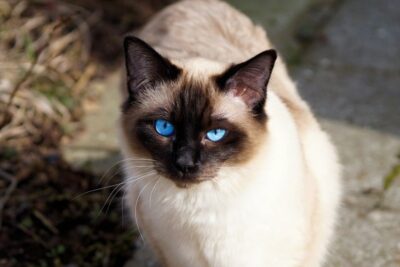
Image showing Sleek Siamese cat with blue eyes and pointed ears (Source: Hepper)
Description:
Sleek, vocal, and bonded strongly with people, the Siamese cat is a social butterfly. With short creamy coats and striking point coloration on face, ears, paws, and tail, plus bright blue almond eyes, they often meow in full sentences and thrive in lively households.
Fun Facts:
-
Siamese are famous for being extremely talkative and chatty.
-
Their kittens are born white; point colors develop later.
-
They were once considered guardian spirits in royal Thai palaces.
-
The breed inspired the Disney characters in Lady and the Tramp.
-
Many Siamese enjoy walking on leashes and playing fetch.
The Siamese is talkative, social, and elegant with blue almond-shaped eyes and dark “points” on its ears, face, paws, and tail.
Key Facts:
-
Short-haired and easy to groom
-
Very vocal and interactive
-
Loyal to family members
-
Needs attention and play
4. Maine Coon
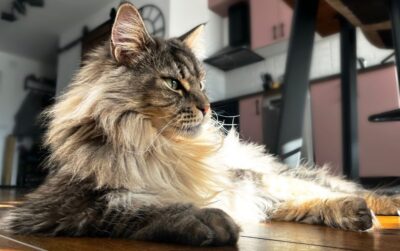
Image showing Large Maine Coon with long fur and tufted ears(Source:Maine Coon Cat Nation)
Description:
Friendly, gentle giants, Maine Coons combine size, tufted paws, and outgoing personalities. Their double coat sheds less and repels water, making them hardy and adaptable. With lynx-like ear tufts and bushy tails, they’re affectionate but independent, matching adventurous homes with cozy laps alike.
Fun Facts:
-
Known as the largest domestic cat breed, some exceed 20 pounds.
-
They’re natural water-lovers, many enjoy swimming or playing with water.
-
Maine Coons often chirp or trill instead of meow.
-
Their ear tufts help keep snow out of their ears.
-
One Maine Coon, Stewie, holds the record at nearly 49 inches long.
Key Facts
-
Long-haired and thick-coated
-
Gentle and playful
-
Good with kids and other pets
-
Needs brushing weekly
5. British Shorthair
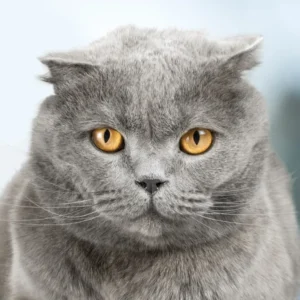 Image showing Round-faced British Shorthair with plush gray fur (Source: Happy Pet India)
Description:
Local mixed breed cats are non-pedigreed felines that come in an endless variety of colors, patterns, sizes, and personalities. These adaptable, hardy cats are typically found in homes and streets worldwide. They tend to be low-maintenance, intelligent, and affectionate, each with a unique charm born from their diverse genetic backgrounds.
Fun Facts:
-
World’s Most Common Cat: Mixed breeds make up the vast majority of cats kept as pets globally—they’re the “people’s cat.”
-
Tailored Temperament: Since they’re not bred for specific traits, their personalities can range from fiercely independent to cuddly lap cats.
-
Natural Survivors: These cats often possess strong survival instincts due to their ancestry and upbringing in various environments.
-
Infinite Looks: Their appearances can be wildly diverse, tabby, calico, tuxedo, tortoiseshell, you name it.
-
Low Maintenance: With minimal grooming needs and fewer inherited disorders, they’re ideal for first-time cat owners or busy households.
Key Facts:
-
Short, dense coat
-
Independent but affectionate
-
Minimal grooming needs
-
Prone to weight gain
6. Bengal Cat
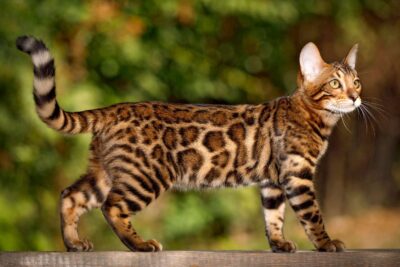 Image showing Spotted Bengal cat with leopard-like coat (Source:Daily Paws)
Description:
The Bengal cat is a strikingly exotic breed known for its wild leopard-like appearance and energetic personality. Developed by crossing domestic cats with the Asian leopard cat, Bengals boast a sleek, muscular build and glittering coats with vivid spots or marbling. They’re intelligent, active, and thrive in engaging environments that stimulate both mind and body.
Fun Facts:
-
Wild Origins: Bengals were first bred in the 1970s by crossing an Asian leopard cat with a domestic cat to combine the beauty of the wild with the temperament of a pet.
-
Water Lovers: Unlike most cats, Bengals love water and often play in sinks, bathtubs, or even join their humans in the shower.
-
High Jumpers: Bengals can leap up to three times their height and love to perch on high spots around the home.
-
Chatterboxes: Bengals are very vocal—they chirp, trill, and meow expressively to communicate with their humans.
-
Dog-Like Behavior: Many Bengals can be trained to fetch, walk on leashes, and follow commands, much like a dog.
Key Facts:
-
Short, spotted or marbled coat
-
Highly energetic
-
Requires mental stimulation
-
Good with water and adventure
7. Sphynx Cat
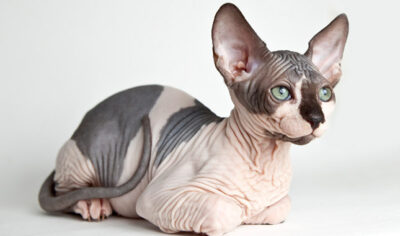 Image showing Wrinkled Sphynx cat with no fur and large ears (Source: Vetstreet)
Description:
The Sphynx is a warm, friendly, and affectionate hairless cat with wrinkled skin and oversized ears. Though hypoallergenic for some, they require regular bathing to manage skin oils. These extroverted climbers thrive on human contact and enjoy cuddling under blankets and on laps.
Fun Facts:
-
They feel warm and soft because of their lack of fur.
-
Sphynx cats enjoy wearing sweaters or snuggling in warm spots.
-
Their skin may exhibit freckles or blotches—not visible under fur.
-
Many Sphynx cats walk upright or perch like humans.
-
They tend to be more doglike—learning tricks and playing fetch.
Key Facts:
-
No fur—needs regular bathing
-
Friendly and curious
-
Gets cold easily
-
Needs skin care and sun protection
8. Ragdoll
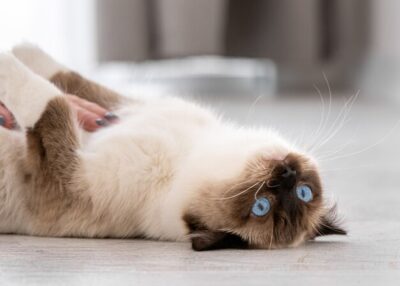 Image showing Fluffy blue-eyed Ragdoll lying on its back(Source:Freepik)
Description:
The Ragdoll is a large, affectionate cat breed known for its silky semi-long fur, stunning blue eyes, and relaxed, floppy nature—hence the name. They are gentle, sociable companions who thrive on human interaction and are especially known for going limp like a ragdoll when picked up. Ideal for families and indoor living.
Fun Facts:
-
Dog-Like Loyalty: Ragdolls often follow their owners from room to room, much like a puppy.
-
Blue-Eyed Beauties: All purebred Ragdolls have striking blue eyes—a key trait of the breed.
-
Late Bloomers: They mature slowly, often taking up to 4 years to reach full size and color.
-
Silky Fur, No Matting: Despite their long fur, their coats are non-matting and low-maintenance, requiring minimal grooming.
-
Floppy by Nature: The breed is named for their tendency to go limp when held, a behavior that adds to their calm, cuddly charm.
Key Facts:
-
Semi-long hair
-
Docile and cuddly
-
Great lap cats
-
Needs weekly grooming
9. Abyssinian
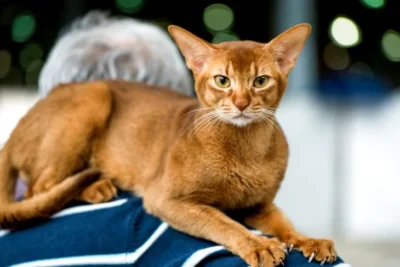
Image showing Sleek Abyssinian cat with reddish-gold coat(Source:Critter Culture)
Description:
The Abyssinian is one of the oldest and most elegant domestic cat breeds, renowned for its short, ticked coat that glows with a warm, reddish-brown hue. Sleek, muscular, and graceful, the Abyssinian is highly intelligent, curious, and endlessly active. It forms strong bonds with humans and thrives on companionship and exploration.
Fun Facts:
-
Frequently called “dog‑cat” for fetching toys and following owners.
-
Coat hairs are banded in four or more colors for a shimmering effect.
-
Ancient Egyptians are believed to have held them sacred.
-
They purr like kittens even into adulthood.
-
Unlike many breeds, Abyssinians never stop growing until around age 4.
Key Facts:
-
Sleek, low-maintenance coat
-
Very active and alert
-
Needs playtime and space
-
Friendly and intelligent
10. Scottish Fold
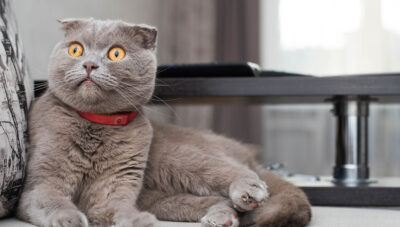 Image showing Scottish Fold with rounded face and folded ears(Source:Pet Assure)
Description:
The Scottish Fold is best known for its unique folded ears, which bend forward and downward, giving it an owl-like appearance. This medium-sized cat has a round face, large expressive eyes, and a plush coat that can be short or long. It’s a gentle, calm, and affectionate breed that bonds deeply with its family.
Fun Facts:
-
Born Straight-Eared: All Scottish Folds are born with straight ears; the folding usually starts at around 3–4 weeks old if they carry the gene.
-
Celebrity Favorite: Pop star Taylor Swift owns Scottish Folds, helping popularize the breed among fans and cat lovers alike.
-
“Buddha Sit”: Many Scottish Folds sit in a pose that resembles a sitting Buddha, with legs stretched out in front—adorably known as the “loaf” or “sit-up” position.
-
Sensitive Tails: Their tails can be stiff or sensitive due to cartilage issues, so careful handling is essential.
-
Not All Folds Fold: Some kittens from Fold parents don’t inherit the ear fold and are called Scottish Straights, often used in breeding to reduce health issues.
Key Facts:
-
Medium coat length
-
Quiet and reserved
-
Needs gentle handling
-
Prone to joint issues
11. Domestic Shorthair (DSH)
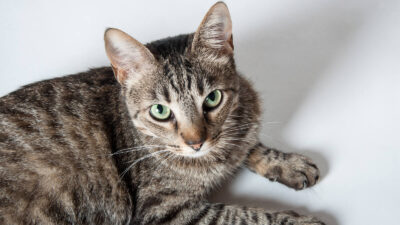 Image showing Common short-haired cat in mixed colors (Source:aumuca)
Description:
The Domestic Shorthair is not a specific breed, but a mixed-breed cat with short fur and a wide range of colors and patterns. These cats are known for their resilience, diverse looks, and adaptable nature. They’re typically low-maintenance, healthy, and affectionate, making them one of the most popular cats in homes and shelters worldwide.
Fun Facts:
-
No Two Look Alike: Because of their mixed ancestry, each Domestic Shorthair is unique, with an endless combination of colors, markings, and personalities.
-
America’s Favorite Cat: DSH cats make up the majority of pet cats in the United States and are among the most adopted cats globally.
-
Naturally Athletic: DSH cats are usually very agile and muscular, capable of impressive jumps and lightning-fast reflexes thanks to their diverse gene pool.
-
Low Grooming Needs: Their short, dense coat is easy to maintain, shedding less than long-haired breeds and rarely needing brushing.
-
War Heroes: Some DSH cats have served in military roles, including “Simon,” a DSH who earned the Dickin Medal for protecting food supplies on a naval ship during war.
Key Facts:
-
Very low grooming needs
-
Hardy and adaptable
-
Friendly personalities vary
-
Found in homes and streets worldwide
13. Bombay
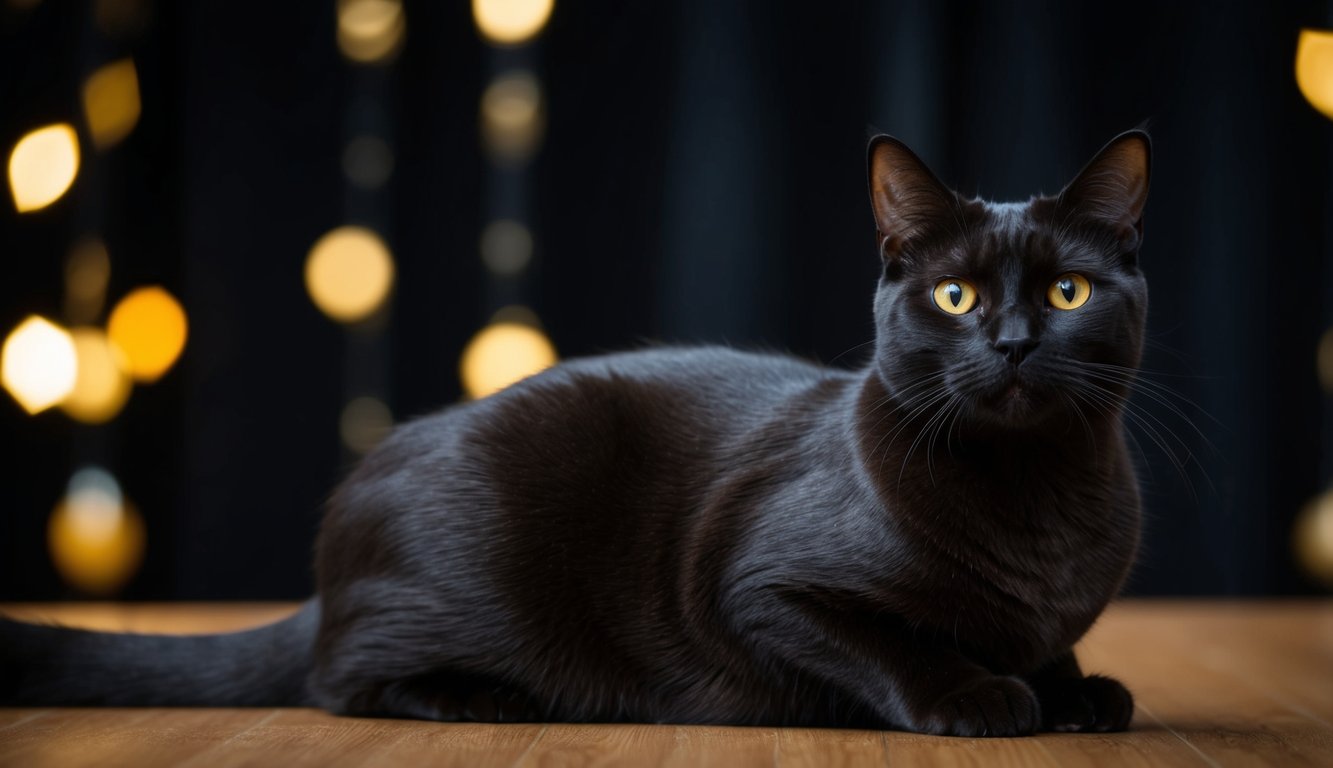 Image showing a bombay cat against a dark velvet backdrop to highlight shiny fur and eye color(Source:CitizeShipper)
Description:
The Bombay cat is a sleek, muscular feline known for its shiny black coat and golden-copper eyes, often described as a “miniature black panther.” Bred from the Burmese and American Shorthair, it is affectionate, intelligent, and playful, thriving in human company and forming strong bonds with its owners.
Fun Facts:
-
Velvety Fur: Their jet-black fur is short, close-lying, and satin-like, giving them a luxurious, almost patent-leather appearance.
-
Golden Eyes: Their large, expressive eyes glow in shades of copper or gold, adding to their exotic mystique.
-
Shadow Cat: Nicknamed the “Velcro cat,” Bombays love following their humans from room to room and thrive on companionship.
-
Talkative but Soft-Spoken: While not as vocal as Siamese, they have a sweet, gentle voice and often “talk” when they want attention.
-
Hollywood Looks: Because of their striking appearance, Bombays are often chosen for roles in films or commercials where an exotic or mysterious cat is needed.
Key Fact:
Bombays were purposefully bred to resemble a panther in miniature, combining the shiny black coat of the American Shorthair with the personality and structure of the Burmese.
14. Egyptian Mau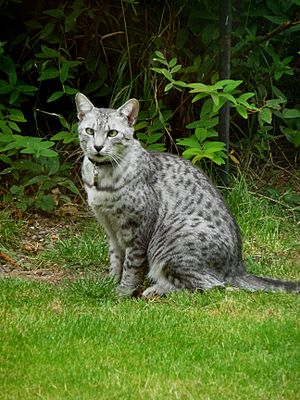
Image showing a mau sitting on the grass(Source:Kiddle)
Description:
Sporting natural spots and striking green eyes, the Egyptian Mau is graceful, athletic, and fast. These cats have a trademark “scarab” or an “M”-shaped marking on their forehead. Intelligent and vocal, they form strong bonds and love high vantage points and interactive play.
Fun Facts:
-
The fastest domestic cat—can run up to 30 mph.
-
Unique skin flaps under hind legs help enable high speed.
-
One of the few naturally spotted cat breeds.
-
Believed to be companions of ancient Egyptian royalty.
-
Often purrs loudly and has a chortle-like trill.
-
The only naturally spotted domestic breed; distinctive scarab-like forehead mark
-
FasteProne to bladder stones (urate urolithiasis); diet and hydration are key
Key Facts:
-
The only naturally spotted domestic breed; distinctive scarab-like forehead mark
-
Fastest domestic cat breed—running over 30 mph due to unique skin flaps
-
Prone to bladder stones (urate urolithiasis); diet and hydration are key
15. Singapura
 Image showing a singapura cat(Source:iStock)
Description:
The Singapura is one of the smallest domestic cat breeds, known for its large, expressive eyes and sepia-toned ticked coat. Originating from the streets of Singapore, these charming, intelligent cats are affectionate, people-oriented, and full of playful energy. Their curious nature and love of heights make them delightful, lively companions.
Key Facts:
-
World’s Smallest Cat Breed – Adult Singapuras typically weigh just 4–8 pounds, yet are muscular and compact.
-
Ticked Coat Pattern – Each hair strand has bands of color, creating a warm, iridescent glow.
-
Native to Singapore – The breed is named after its origin, where it was affectionately called the “drain cat” due to its street-cat history.
-
Recognized by CFA in 1988 – Though small in population, it gained global recognition quickly.
-
Highly Social – Singapuras love to be involved in everything you do—they thrive in active households and often perch on shoulders.
Fun Facts:
- Tiny But Mighty: Despite their petite size, Singapuras are incredibly agile and love to climb. They often perch on top of doors or shelves.
- Big Eyes & Ears: Their disproportionately large eyes and ears give them an eternally curious and kitten-like appearance.
- Official Mascot: The Singapura is considered a national treasure in Singapore and has even been used as a tourism mascot for the country.
- People-Person Cat: They thrive on human attention and are known to follow their owners from room to room, like a little shadow.
- Purring Machines: Singapuras are affectionate and vocal—while not loud, they love to communicate through soft trills, meows, and especially purrs.
16.Arabian Mau

Image showing a arabian Mau with short coat, alert eyes, and upright ears (Source:VioVet)
Description:
The Arabian Mau is a natural, desert-adapted cat breed native to the Arabian Peninsula. It is muscular, medium to large in size, with short, sleek fur that withstands heat. Highly intelligent and energetic, Arabian Maus are affectionate with families yet retain their independent, outdoor instincts. They thrive in both homes and open spaces.
Fun Facts:
-
Desert Survivor: Arabian Maus are native desert cats and have evolved to survive extreme heat, making them one of the most heat-tolerant domestic breeds.
-
Natural Breed: Unlike many cat breeds, the Arabian Mau developed naturally over centuries without selective breeding.
-
Unique Meow: They are known for their loud, distinct voice—used to communicate clearly with humans and other cats.
-
No Two Alike: Their coat colors and patterns are incredibly diverse, ranging from solid black to tabby and bi-color, often with striking green eyes.
-
Hunting Instinct: These cats are skilled hunters, a trait developed from generations of surviving independently in the wild.
Key Facts:
-
Origin: Native to the Arabian Peninsula; developed naturally over centuries.
-
Coat: Short, sleek, and suited to hot climates; minimal grooming needed.
-
Temperament: Energetic, intelligent, and loyal; often bonds strongly with humans.
-
Activity Level: Very active; loves climbing and exploring.
-
Adaptability: Excellent hunter; thrives indoors or in safe outdoor environments.
-
Size: Medium to large; lean but muscular build.
17. American Bobtail
:strip_icc()/american-bobtail-cat-breed-9f32da27133647db92f4decc93a71e6d.jpg) Image showing an american bobtail cat with short tail, shaggy fur, and alert expression (Source:The Spruce Pets)
Image showing an american bobtail cat with short tail, shaggy fur, and alert expression (Source:The Spruce Pets)
Description:
The American Bobtail is a wild-looking, medium-to-large cat with a distinctive short “bobbed” tail, powerful build, and shaggy coat. Despite its rugged appearance, this breed is a gentle, affectionate, and highly intelligent companion. Known for their dog-like loyalty, American Bobtails are playful and intuitive, often forming deep emotional bonds with their humans.
Key Facts:
-
Signature Tail – Their naturally short tails range from 1 to 4 inches and are never docked, giving each cat a unique look.
-
Developed in the U.S. – The breed originated in the 1960s, beginning with a naturally bobtailed kitten found in Arizona.
-
Dog-Like Personality – Known for their loyalty, fetch-playing, and leash-walking tendencies.
-
Come in All Colors & Patterns – American Bobtails can have short or long hair, and coats in nearly every shade and pattern.
-
Highly Adaptable – This breed adjusts well to travel, new people, and unfamiliar environments, making them ideal for therapy work.
Fun Facts:
-
Tail Waggers: American Bobtails often wag their tails when they’re happy or focused, just like dogs!
-
Travel Buddies: Their calm demeanor makes them popular among RV travelers and truckers as loyal road companions.
-
Emotion Readers: Many owners say these cats can sense moods and offer comfort—some are even used as emotional support animals.
-
Escape Artists: They’re clever and curious, often figuring out how to open doors, drawers, or crates—a true feline Houdini.
-
Silent Hunters: Despite their playful nature, they’re natural stalkers and love interactive hunting-style games like feather wands and puzzle toys.
18.Balinese
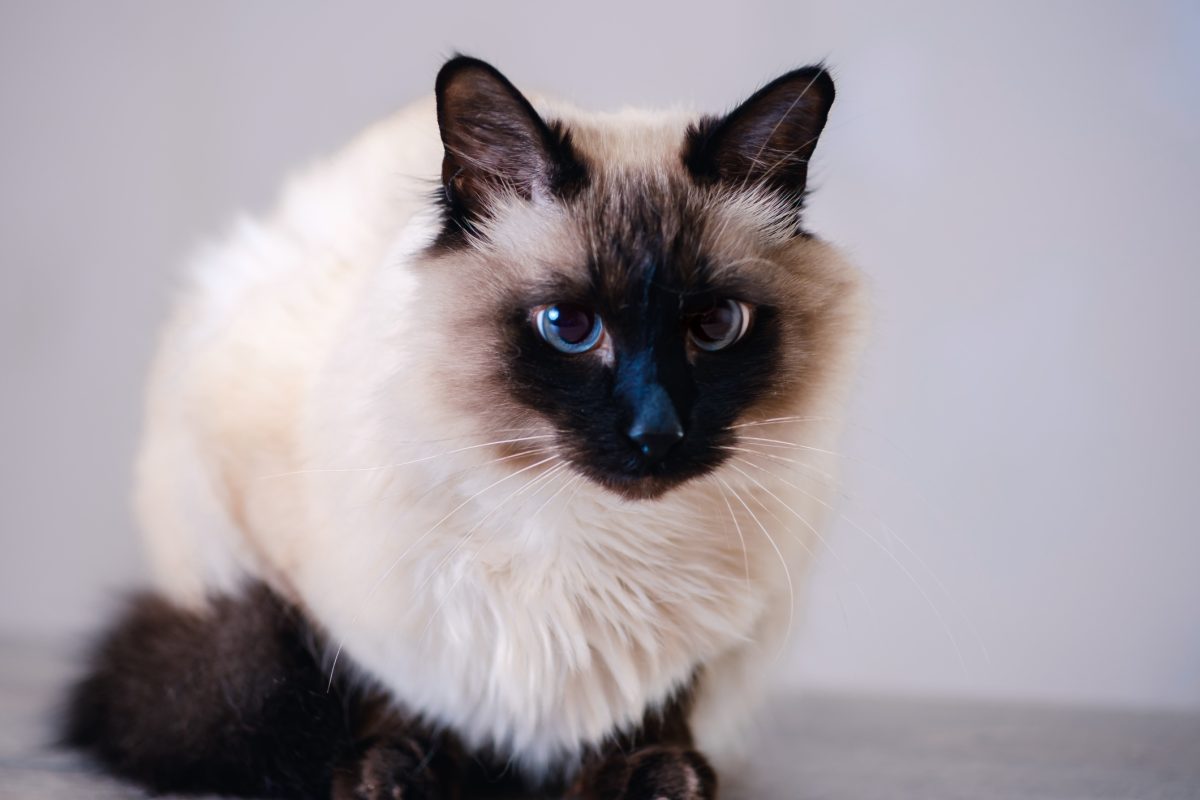 Image showing elegant Balinese cat with long, silky fur and striking blue eyes sitting gracefully(Source:CatTime)
Description:
The Balinese is a graceful, medium-sized cat known for its long, silky coat, deep blue almond-shaped eyes, and elegant Siamese-like appearance. Energetic and highly intelligent, Balinese cats are talkative, affectionate, and people-oriented, often forming intense bonds with their owners. Their acrobatic playfulness and emotional sensitivity make them endearing companions.
Key Facts:
-
Long-Haired Siamese – The Balinese is essentially a long-haired variety of the Siamese, with the same pointed coloration and vocal nature.
-
Not from Bali – Despite the name, the breed has no ties to Bali; the name was inspired by the breed’s elegant, dancer-like movement, reminiscent of Balinese dancers.
-
Deep Blue Eyes – Known for their striking sapphire-blue eyes, a defining and mesmerizing feature.
-
Minimal Shedding – Despite having a long coat, Balinese cats shed less than most long-haired breeds and have no undercoat, making grooming easier.
-
Excellent Communicators – Balinese are highly vocal and expressive, often using their voice and body language to interact with humans.
Fun Facts:
-
Natural Comedians – Balinese cats are incredibly entertaining, often performing silly antics and gymnastic jumps just to get your attention.
-
Human-Centric – They follow their owners around, participate in conversations, and dislike being ignored—some even sulk when left alone.
-
Fetch Fans – Many Balinese cats enjoy playing fetch and learning tricks, showing their dog-like behavior.
-
Emotionally Attuned – They’re known to pick up on your emotions and provide comfort, especially when you’re feeling down.
-
Born White – Like Siamese, Balinese kittens are born completely white and develop their pointed coloration as they grow older.
19.Bambino

Image showing a hairless Bambino cat with short legs and large ears (Source: Pinterest)
Description:
The Bambino is a unique and rare designer cat breed created by crossing the Sphynx and the Munchkin. It’s known for its hairless body, short legs, and oversized ears, giving it an alien-like yet adorable look. Despite their small stature, Bambinos are playful, affectionate, and surprisingly athletic, thriving on human companionship.
Key Facts:
-
Hybrid Origins – The Bambino is a cross between the hairless Sphynx and the short-legged Munchkin cat.
-
Hairless but Warm – Though often completely hairless, their skin feels like warm suede, and they love warm spots due to their lack of fur.
-
Dwarfism Gene – The Bambino’s short legs are caused by a natural genetic mutation associated with feline dwarfism.
-
New and Rare – The breed is not yet fully recognized by all major cat registries due to its recent development (2000s) and ongoing health studies.
-
Low Maintenance Grooming – With no fur to brush, Bambinos need regular skin cleaning instead to avoid oil buildup and infections.
Fun Facts:
-
Little Acrobat – Don’t let their short legs fool you—Bambinos can jump, climb, and dash around just as enthusiastically as longer-legged cats.
-
Velcro Cats – Known to be extremely clingy and people-oriented, they often follow their humans everywhere like shadows.
-
Cold Weather Wardrobe – Because they lack fur, many Bambino owners dress them in cat sweaters during cooler months to keep them warm.
-
No Whiskers? No Problem! – Some Bambinos are born with very short or no whiskers, giving them a more unusual look.
-
Chatterboxes – These cats are known for their talkative personalities, often chirping and meowing to express excitement or affection.
20. Birman
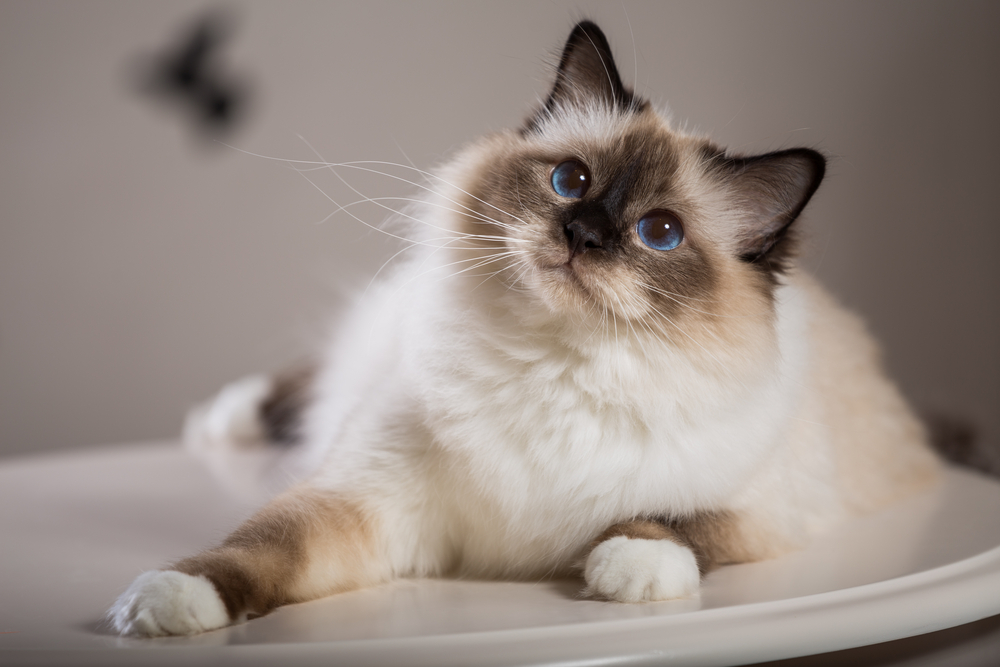 Image showing a fluffy Birman cat with cream-colored fur and dark face, ears, and paws lounging on a cushion (Source:Catster)
Description:
The Birman is a strikingly beautiful cat known for its silky coat, color-point pattern, deep blue eyes, and distinct white-gloved paws. Often called the “Sacred Cat of Burma,” Birmans are affectionate, gentle, and quiet companions. They love being around people, making them ideal for families and relaxed households alike.
Key Facts:
-
Sacred Origins – Birmans are believed to have originated in Burma (now Myanmar), where they were considered sacred temple cats.
-
White Gloves – They are the only color-point breed with pure white paws, a distinctive and required trait in the breed standard.
-
Medium-Length Coat – Birmans have a silky, semi-long coat that doesn’t mat easily and lacks an undercoat.
-
Color Points – Their ears, face, tail, and legs have darker “points” in colors like seal, blue, chocolate, lilac, and more.
-
People-Oriented – Birmans are extremely affectionate and thrive in homes where they receive ample attention and interaction.
Fun Facts:
-
Born White – All Birmans are born completely white, and their color points develop gradually over the first few weeks of life.
-
Dog-Like Loyalty – Birmans often follow their owners around the house and wait by the door, showing dog-like devotion.
-
Voice of an Angel – Unlike Siamese cats, Birmans have a soft, sweet, and quiet voice, making them ideal for people who prefer low-noise pets.
-
Good with Everyone – These cats are known to be gentle with children, friendly with other pets, and even tolerant of strangers.
-
Low Maintenance Beauty – Despite their elegant look, they require minimal grooming, needing only occasional brushing to stay tidy.
21. British Longhair

Image showing a Fluffy British Longhair cat with dense fur and round face(Source:Dreamstim.com)
Description:
The British Longhair is a plush, medium-to-large cat known for its dense, luxurious coat and round, teddy bear-like appearance. A close cousin of the British Shorthair, it combines elegance with sturdy charm. Calm and gentle, these cats enjoy companionship but aren’t overly clingy, making them ideal for quieter, relaxed homes.
Key Facts:
-
Origin – Developed in the United Kingdom by crossing British Shorthairs with long-haired breeds like Persians.
-
Coat Type – Features a thick, semi-longhaired coat that gives it a soft and regal look.
-
Personality – Known for being easygoing, affectionate, and independent—not overly demanding of attention.
-
Body Build – Has a muscular body, broad chest, and rounded face with large expressive eyes.
-
Color Variety – Comes in numerous colors and patterns, including solid, tabby, bicolor, and colorpoint.
Fun Facts:
-
Fluffy Royalty – Nicknamed “the teddy bear cat” due to its fluffy fur, chubby cheeks, and cuddly look.
-
Quiet Companion – This breed is very quiet and communicates more with looks and presence than with meows.
-
Sheds Like a Pro – Its beautiful coat sheds seasonally, so regular grooming helps reduce mats and floating fur clouds.
-
Chill Master – British Longhairs love lounging and observing from cozy corners—a perfect cat for people who work from home.
-
Low Drama Cat – They’re rarely mischievous, preferring to sit back and watch the world calmly pass by.
22.Burmese
 Image showing a sleek Burmese cat with shiny sable coat and golden eyes lounging on a windowsill (Source:Shutterstock)
The Burmese is a compact, muscular cat with a silky coat and an affectionate, outgoing personality. Originally from Southeast Asia but refined in the U.S. and the U.K., the breed is known for its deep, soulful eyes and puppy-like loyalty. Burmese cats thrive on human interaction and are remarkably playful and vocal.
Key Facts:
-
Origin – Native to Burma (Myanmar) but developed into modern breeds in the U.S. and the U.K.
-
Body Type – Has a muscular, compact body with a rounded head and expressive gold or yellow eyes.
-
Coat – Short, sleek, and satin-like coat that lies close to the body and comes in solid or sable tones.
-
Personality – Exceptionally affectionate, people-oriented, and playful, often following owners around like a shadow.
-
Intelligence – Highly intelligent and curious, Burmese cats love interactive play and mental stimulation.
Fun Facts:
-
Velcro Cat – Burmese cats are often called “Velcro cats” because they love being close to their humans 24/7.
-
Vocal but Sweet – While not as loud as Siamese cats, they’re known for their sweet, raspy voices and expressive chatter.
-
Always Kittens at Heart – Burmese cats tend to retain their kitten-like playfulness well into adulthood.
-
Two Breed Standards – There are American Burmese (rounder and stockier) and British/European Burmese (slimmer and more angular).
-
Therapy Cat Favorite – Their loving, calm nature makes Burmese cats excellent candidates for therapy work and emotional support.
23. Burmilla
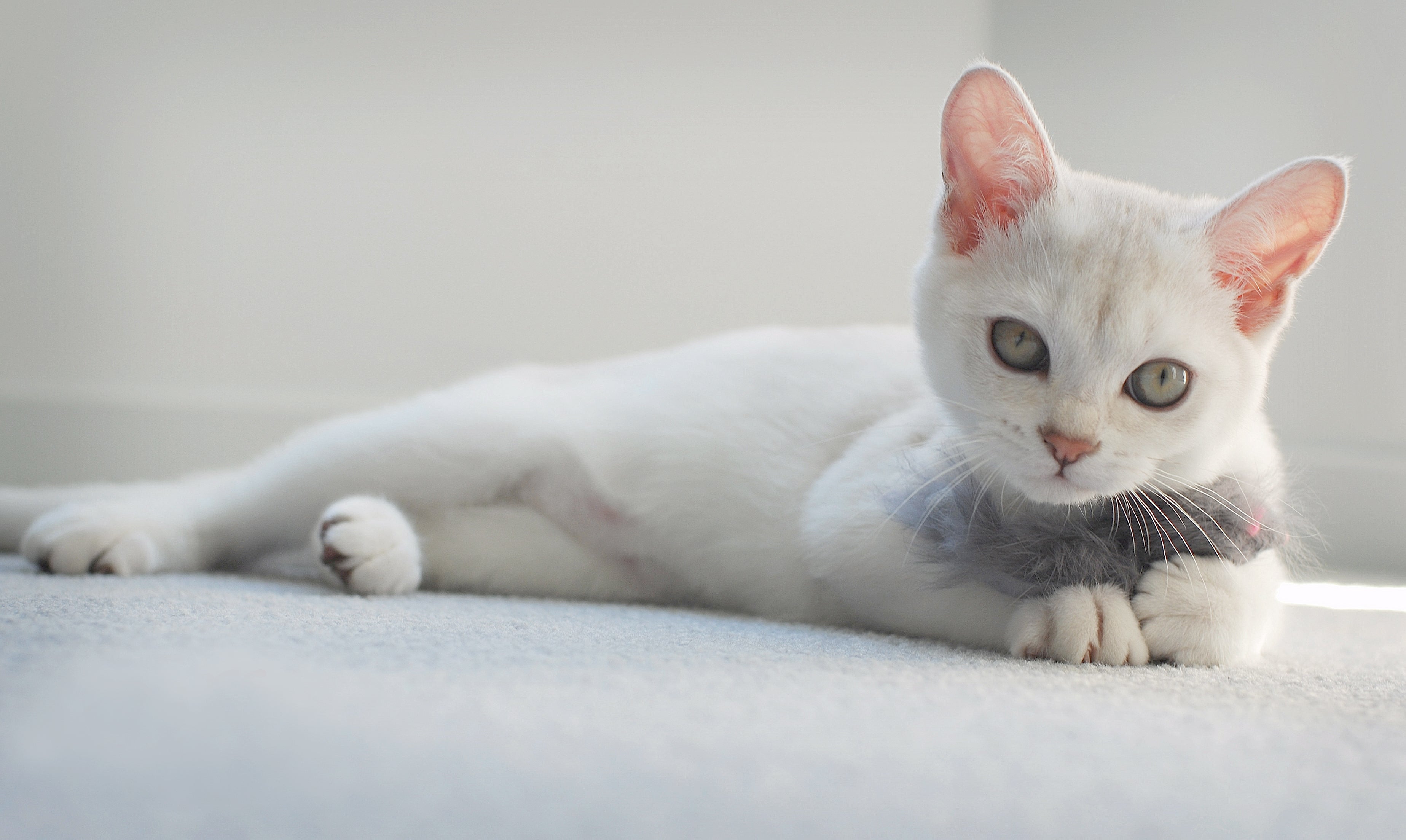 Image showing an Elegant Burmilla cat with silver shaded coat lying gracefully on a couch(Source:Petfinder)
Description:
The Burmilla is an elegant and charming breed that originated from a chance mating between a Burmese and a Chinchilla Persian. With its shimmering silver coat and expressive green eyes, this medium-sized cat combines the affectionate nature of the Burmese with the grace of the Persian. It’s playful, loving, and surprisingly easygoing.
Key Facts:
-
Origin – Developed in the United Kingdom in the early 1980s from a cross between a Burmese and Chinchilla Persian.
-
Appearance – Known for its striking silver coat, often tipped or shaded, and large, expressive green eyes.
-
Coat Type – Typically short-haired, but a semi-longhaired variety (Tiffanie) also exists.
-
Temperament – A gentle and affectionate cat that enjoys both attention and independent playtime.
-
Grooming Needs – Low to moderate, thanks to its smooth, fine coat that doesn’t mat easily.
Fun Facts:
-
Happy Accident – The Burmilla was created accidentally when a Burmese female and a Chinchilla Persian male were left in the same room—romance ensued!
-
Silver Stardust – Their coats often have a metallic sheen, especially noticeable in natural light, earning them comparisons to silver-dusted velvet.
-
Talkative, But Polite – Burmillas are vocal like Burmese, but with a softer, more melodious voice.
-
Playful Charmers – Despite their royal look, they’re clownish and fun-loving, often keeping their playful nature well into old age.
-
Rare and Coveted – Burmillas are still relatively rare outside the UK and Europe, making them a prized breed among cat enthusiasts.
24. California Spangled
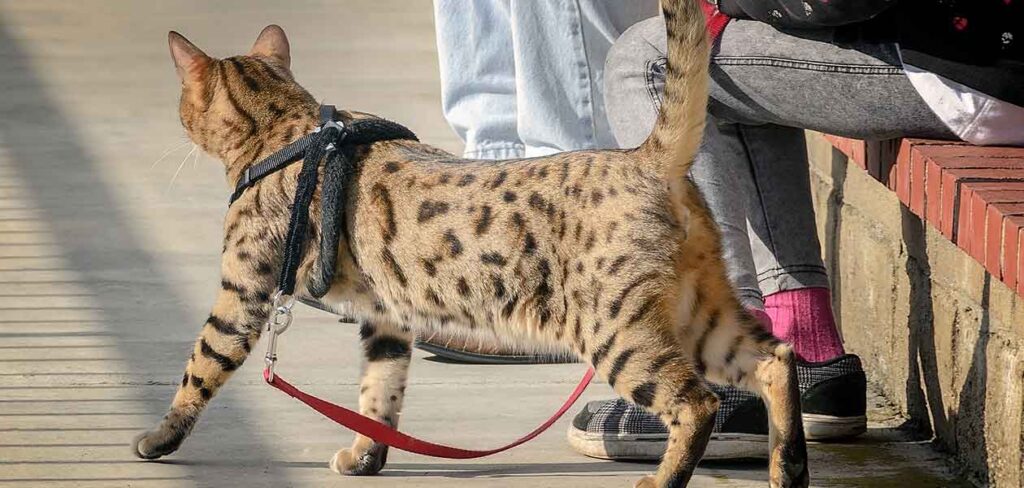 Image showing a Sleek California Spangled cat with leopard-like spots walking confidently outdoors(Source:The Happy Cat Site)
Description:
The California Spangled cat is a rare and eye-catching breed developed to resemble wild spotted cats like leopards, while maintaining a loving domestic temperament. Created in the 1980s in the U.S., it has a muscular, athletic build, short spotted coat, and high energy. Despite its wild appearance, it is deeply affectionate and intelligent.
Key Facts:
-
Origin – Developed in California, USA by Paul Casey to raise awareness about leopard poaching.
-
Appearance – Features a leopard-like spotted coat in various shades like bronze, gold, silver, blue, and black.
-
Body Type – Athletic and muscular, with a long, low-slung profile and rounded head.
-
Temperament – Loyal, playful, and people-oriented, often following their owners around the house.
-
Rarity – Extremely rare, and considered an exotic domestic breed with limited numbers worldwide.
Fun Facts:
-
Fashion Statement with a Purpose – The breed was featured in a Neiman Marcus catalog as a way to promote conservation and discourage wearing real leopard fur.
-
Hollywood Connection – Its creator, Paul Casey, was a screenwriter and anthropologist with ties to celebrities like Audrey Hepburn, who supported the project.
-
Wild Look, Domestic Heart – Despite looking like a mini leopard, the California Spangled is a fully domestic cat with no wild DNA.
-
Energetic Acrobat – Known for their love of heights and tendency to perch on top of doors, bookshelves, and refrigerators.
-
Rare Gem – Due to its low breeding population, it’s considered one of the rarest cat breeds in the world today.
25. Chartreux

Image showing a Chartreux cat with blue-grey fur and bright orange eyes resting peacefully(Source:ASPCA Pet Insurance)
Description:
The Chartreux is a rare and ancient French breed known for its plush blue-grey coat, copper or gold eyes, and quiet intelligence. With a muscular yet agile body, this “smiling cat” is a gentle companion that thrives in calm environments. It’s deeply affectionate, loyal, and bonds strongly with its humans—without being overly clingy.
Key Facts:
-
Origin – Native to France, with roots possibly dating back to the 16th century or earlier.
-
Coat & Color – Short, dense, water-resistant fur in signature blue-grey; eyes are usually copper to gold.
-
Temperament – Quiet, observant, and affectionate, often forming close bonds with one person in particular.
-
Physical Traits – Robust and muscular, with a rounded face and a characteristic “smile” due to their head structure.
-
Low Meower – Known for being nearly silent, making soft chirps or trills rather than full meows.
Fun Facts:
-
The “Smiling Cat” of France – Its slightly upturned mouth gives the Chartreux a constant, serene smile.
-
Monastic Legends – Legend claims Chartreux cats were bred and kept by Carthusian monks for companionship and mouse control in monasteries.
-
War Survivor – The breed was nearly lost during WWII and had to be restored through careful crossbreeding programs.
-
De Gaulle’s Cat – French General and President Charles de Gaulle reportedly had a beloved Chartreux named “Gris-Gris.”
-
Mouser Extraordinaire – Historically prized for their ratting skills, Chartreux cats were valued by farmers and sailors alike.
26. Chausie
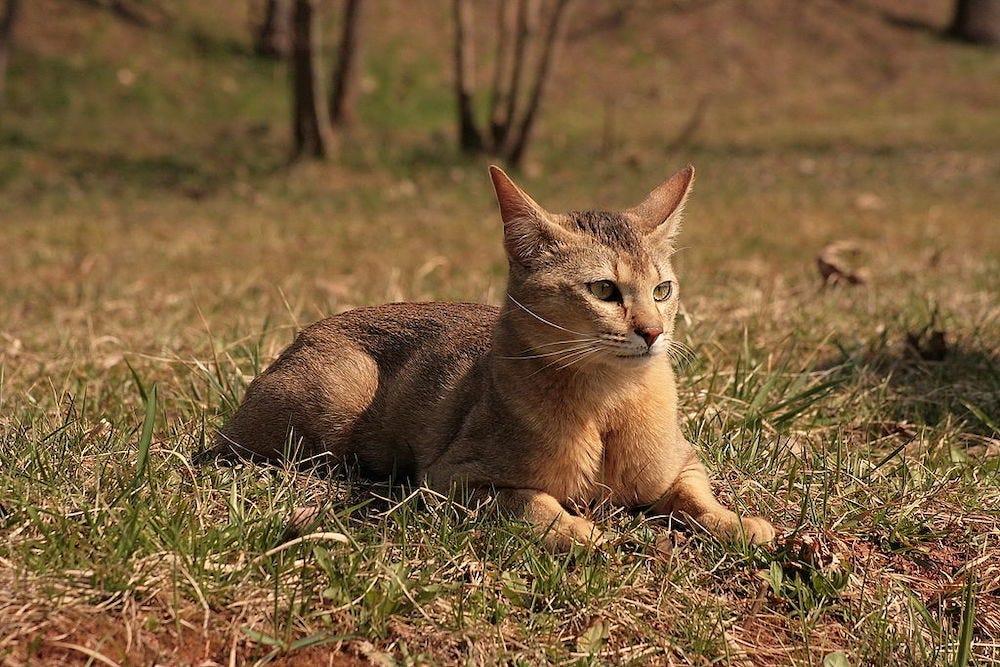 Image showing a Chausie cat with tall ears in a jungle-like setting(Source:Litter-Robot)
Description:
The Chausie is a striking hybrid cat breed developed by crossing domestic cats with the wild jungle cat (Felis chaus). It has a muscular, athletic build, large ears, and an exotic, wild appearance. Despite its wild ancestry, the Chausie is affectionate, playful, and highly intelligent—making it a loyal yet energetic house companion.
Key Facts:
-
Origin – A hybrid breed first developed in the United States, descended from the wild jungle cat (Felis chaus).
-
Size & Build – Large and muscular, often weighing between 15–25 pounds, with long legs and a deep chest.
-
Coat & Color – Short, dense coats that are usually brown-ticked tabby, black, or grizzled tabby (a wildcat trait).
-
Temperament – Loyal, active, and curious; enjoys interactive play and needs mental stimulation.
-
Energy Level – Exceptionally high-energy; not recommended for small spaces or laid-back owners.
Fun Facts:
-
Wild at Heart – The Chausie carries the DNA of the jungle cat, giving it a unique wild look and primal instincts.
-
Born to Jump – Chausies are phenomenal jumpers, often leaping onto high shelves, fridges, or even doors.
-
Dog-Like Loyalty – They form strong bonds with their owners and may even follow them from room to room like a dog.
-
Name Origin – “Chausie” is derived from the species name Felis chaus, which refers to the jungle cat.
-
Talkative but Soft-Spoken – While not as vocal as some breeds, they will “talk” to their humans in chirps, trills, and soft meows.
27. Cornish Rex
 Image showing a sleek Cornish Rex cat striking a playful pose, showing off its curly coat and big ears, against a modern home interior(Source:We Love Catz)
Description:
The Cornish Rex is a distinctive and elegant breed known for its short, wavy coat and slender, athletic build. Its large ears, high cheekbones, and arched back give it a unique and graceful silhouette. Beyond looks, it’s playful, mischievous, and people-loving—often compared to a dog for its loyalty and energy.
Key Facts:
-
Origin – First appeared in Cornwall, England in the 1950s due to a natural genetic mutation.
-
Coat Type – Features a soft, curly coat with no guard hairs, making it one of the softest cat coats.
-
Size – Small to medium, typically weighing between 6–10 pounds.
-
Lifespan – Long-lived breed with an average lifespan of 11–15 years or more.
-
Personality – Active, intelligent, affectionate, and often enjoys being the center of attention.
Fun Facts:
-
Whippet of Cats – The Cornish Rex’s arched back and long legs have earned it the nickname “Whippet of the cat world.”
-
Hypoallergenic Myth – Often thought to be hypoallergenic due to its minimal fur, but it still produces Fel d 1 protein, the real allergen.
-
Clownish Energy – Known for its acrobatic antics and playful personality well into adulthood—some say it never grows up.
-
Always Seeking Warmth – Loves warmth and heat, often found in sunbeams, under blankets, or on top of electronics.
-
Unique Genetics – Its curly coat is caused by a recessive gene, different from the gene that causes curls in the Devon Rex.
28. Cymric
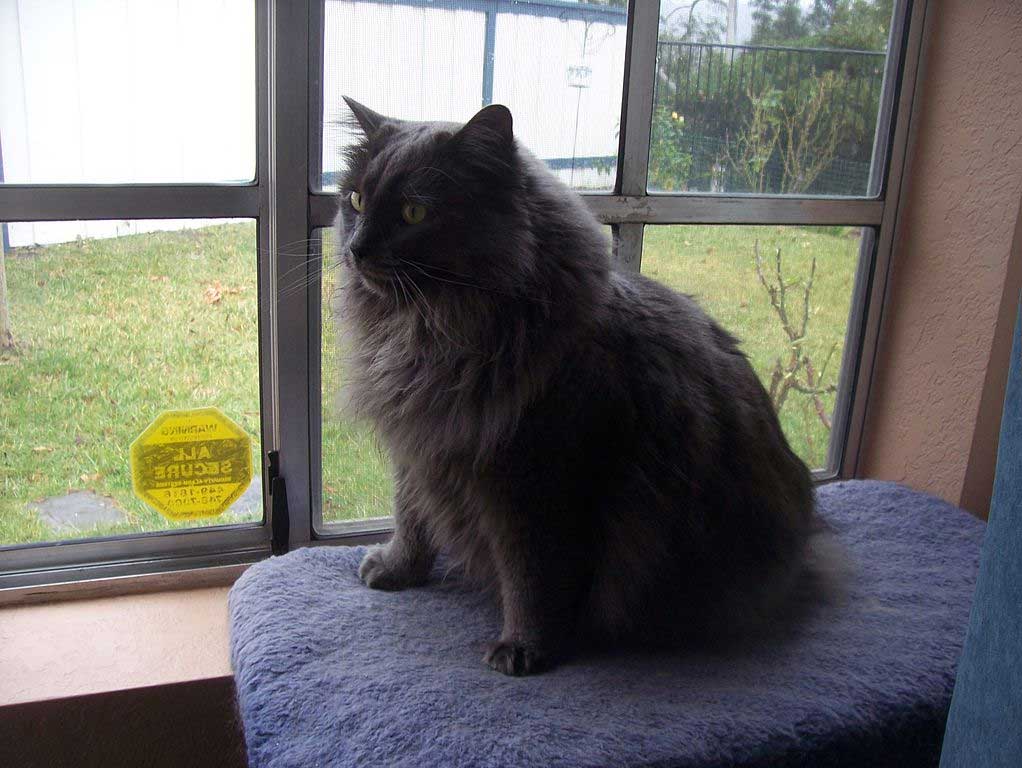
Image showing a round-faced, fluffy Cymric cat sitting proudly on a windowsill(Source:Mascotarios)
Description:
The Cymric is a long-haired variety of the tailless Manx cat, admired for its rounded features, plush double coat, and powerful hindquarters. It has a rabbit-like gait due to its strong back legs. Affectionate and intelligent, the Cymric forms close bonds with family members and enjoys interactive play and companionship.
Key Facts:
-
Origin – Developed from the Manx breed on the Isle of Man, though the Cymric name originated in Canada.
-
Tail Types – Can be tailless (rumpy), have a stump (stumpy), or possess partial/full tails, though taillessness is the standard.
-
Coat – Features a thick, semi-long double coat that requires regular grooming to prevent matting.
-
Build – Medium to large size with a rounded body, broad chest, and muscular hind legs that are longer than the front legs.
-
Temperament – Known for being gentle, loyal, playful, and very people-oriented.
Fun Facts:
-
Rabbit-Like Walk – Because of their powerful, longer back legs, Cymrics often hop like rabbits when they run or play.
-
Tail Lottery – Kittens in a Cymric litter may have varying tail lengths, even within the same litter.
-
Name Origin – “Cymric” is the Welsh word for “Wales,” though the breed is not originally from there.
-
Excellent Mousers – Historically used as barn cats, they are known for their strong hunting instincts.
-
Dog-Like Personality – Cymrics are devoted to their humans, often following them around the house and learning fetch or other tricks.
Fun Fact:
The Cymric is basically the long-haired version of the Manx cat—and like the Manx, many Cymrics are tailless or have only a small stump. Their strong back legs make them excellent jumpers, often surprising their owners with how high they can leap!
29. Devon Rex
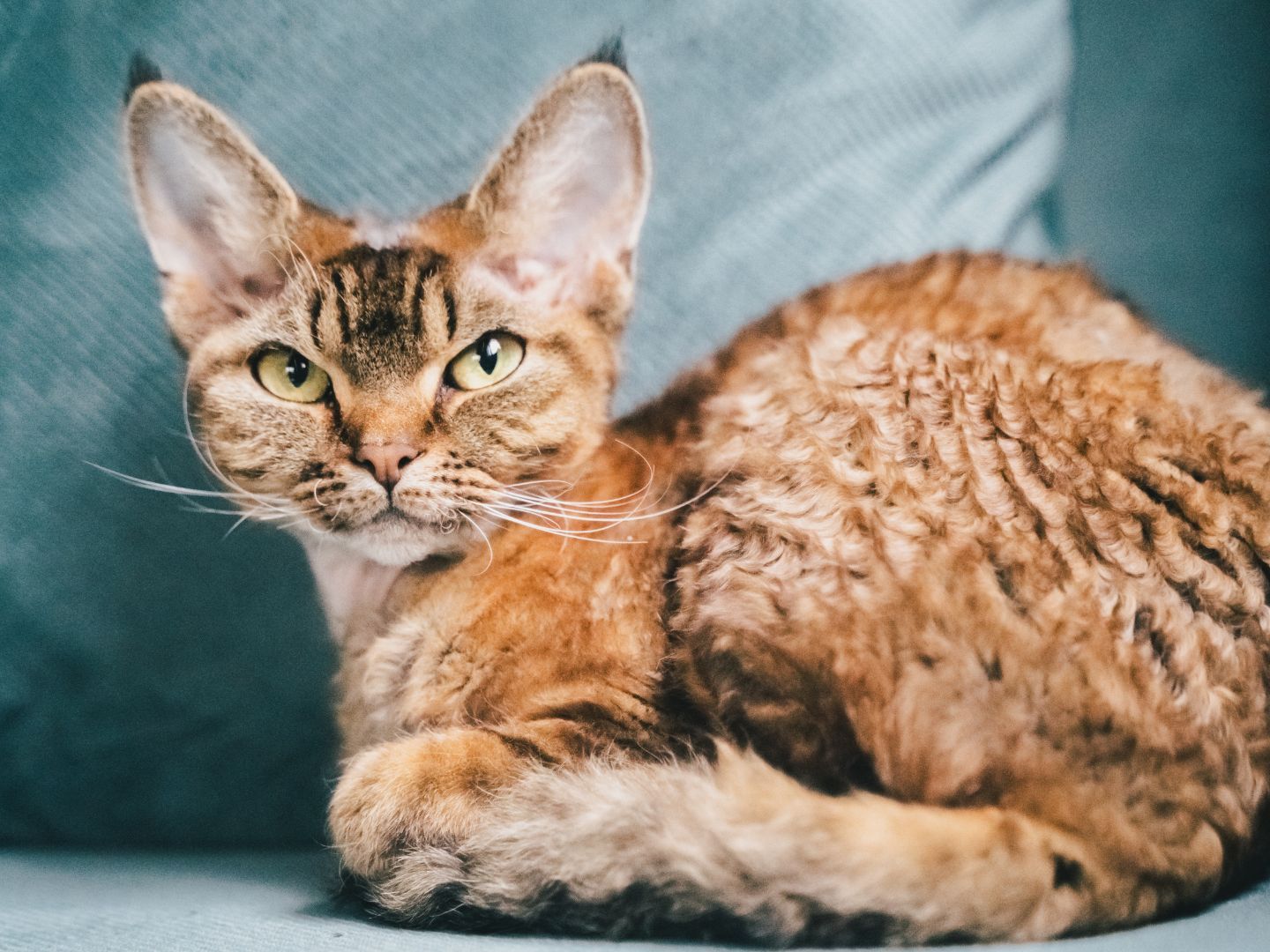 Image showing a playful Devon Rex perched on a couch, showing off its large ears and curly fur(Source:PetsRadar)
Description:
The Devon Rex is a unique and charming cat known for its large ears, slender body, and soft, wavy coat. With an elf-like appearance and impish personality, it is highly affectionate and intelligent. These cats thrive on human attention and are known for their quirky antics, often acting more like a monkey than a cat.
Key Facts:
-
Origin – First appeared in Devonshire, England in the 1960s.
-
Coat – Features a short, curly, and soft coat, due to a mutation in the KRT71 gene.
-
Body Type – Small to medium size with a slender build, long legs, and large bat-like ears.
-
Temperament – Playful, mischievous, affectionate, and very people-oriented.
-
Hypoallergenic? – Not truly hypoallergenic but produces less dander than many other breeds.
Fun Facts:
-
Natural Clowns – Devon Rex cats are often called the “pixie” or “elf” of the cat world because of their looks and goofy behavior.
-
Velcro Cats – They love to cling to their owners, snuggle under covers, or ride on shoulders.
-
Big Ears, Big Personality – Their oversized ears give them a perpetually surprised look, adding to their whimsical charm.
-
Monkey Moves – They’re known for leaping, climbing, and perching in high places with great agility.
-
Low-Shed Coat – Though curly, their coat sheds minimally and needs gentle grooming—brushing too hard can damage the delicate hairs.
30. Donskoy
 Image showing a wrinkled, hairless Donskoy cat highlighting its smooth skin and intelligent eyes (Source:KingPet)
Description:
The Donskoy is a striking and intelligent hairless cat breed originating from Russia. Unlike the North American Sphynx, its baldness is caused by a different genetic mutation. Known for their affectionate and social nature, Donskoys are active, inquisitive, and bond deeply with their humans, often following them around like loyal companions.
Key Facts:
-
Origin – Discovered in Rostov-on-Don, Russia in 1987.
-
Coat – Typically hairless, though some may have a fine peach fuzz; coat types vary (rubber bald, flocked, velour, or brush).
-
Genetics – Hairlessness is caused by a dominant gene, unlike the recessive gene in the Sphynx.
-
Temperament – Friendly, loyal, intelligent, and highly affectionate.
-
Care Needs – Requires regular bathing to remove skin oils that aren’t absorbed by fur.
Fun Facts:
-
Warm to the Touch – Donskoys feel warm and suede-like, making cuddling with them especially comforting.
-
Seasonal Fur Growth – Some Donskoys can grow hair in winter and shed it in warmer months—a phenomenon called seasonal coat fluctuation.
-
Emotional Sensitivity – They are known to pick up on human emotions, often responding with comforting behavior.
-
Wrinkled Charm – Their signature wrinkles, especially around the head and neck, add to their mysterious, ancient appearance.
-
Loyal Companions – They behave like dogs in a cat’s body, following owners, learning tricks, and even playing fetch.
31. Havana Brown
 Image showing a sleek, chocolate-brown Havana Brown cat sitting in a box (Source: Pinterest)
Description:
The Havana Brown is a rare and elegant breed distinguished by its sleek, rich chocolate-brown coat and vivid green eyes. Developed in England, this breed combines Siamese ancestry with a distinct personality. Havana Browns are affectionate, intelligent, and quietly playful, often using their paws to gently touch people and objects with curiosity.
Key Facts:
-
Origin – Developed in England in the 1950s by crossing Siamese and black domestic cats.
-
Coat – Short, smooth, and glossy, always in a rich chocolate brown hue.
-
Eye Color – Bright green, almond-shaped eyes that are uniquely expressive.
-
Temperament – Affectionate, inquisitive, and people-oriented; enjoys human interaction.
-
Rarity – Considered a rare breed, with small populations worldwide.
Fun Facts:
-
Named After Cigars – The name “Havana Brown” is inspired by the color of Havana cigars, which mirrors the cat’s coat.
-
Velvety Fur – Their coat isn’t just beautiful—it’s incredibly soft and velvety, often compared to fine suede.
-
Paw Communicators – Havana Browns are known to reach out with their paws to get your attention, mimicking a gentle tap.
-
Green-Eyed Gaze – Their piercing green eyes give them a mystical and captivating look that draws people in.
-
Loyal Companions – Often referred to as “puppy cats”, they develop deep bonds with their owners and tend to follow them from room to room.
32.Highlander Cat
 Image showing a muscular Highlander cat with curled ears and a bobbed tail (Source:Pinterest)
Description:
The Highlander is a striking and muscular cat breed known for its wild appearance—curled ears, bobbed tail, and large, expressive eyes. Despite their exotic look, they’re friendly, energetic, and people-loving companions. Highlanders are playful, confident, and thrive in active households where they can interact, climb, and explore their surroundings.
Key Facts:
-
Origin – Developed in the United States in the early 2000s by crossing the Desert Lynx and Jungle Curl.
-
Ears – Notably curled backward, giving them a wild, lynx-like appearance.
-
Tail – Usually bobbed or short, though some have medium-length tails.
-
Size – Medium to large with a strong, athletic build.
-
Recognition – Still a rare breed, currently in TICA’s Advanced New Breed class.
Fun Facts:
-
Wild Look, Gentle Heart – Despite their wildcat appearance, Highlanders are gentle giants, known for their affectionate nature.
-
Curled Ears Mystery – Their unique ear curl comes from a natural genetic mutation, making every curl slightly different.
-
Tail Wigglers – Highlanders often wag or wiggle their short tails like dogs when they’re happy or excited.
-
Water Lovers – Many Highlanders enjoy water and will splash in their water bowls or try to join you in the shower.
-
Dog-Like Behavior – They can be leash-trained, fetch toys, and even greet you at the door like a loyal dog.
cats are independent, but they enjoy being close to people they trust. They love to:
-
Play with small objects
-
Climb and jump
-
Sleep for many hours (up to 16 per day!)
-
Groom themselves to stay clean
-
Use a litter box if trained
They communicate using:
-
Meows (to humans)
-
Purring (when happy)
-
Hissing or growling (when scared or angry)
-
Body language like tail flicking or ear movement
What Do Cats Eat?
Cats are carnivores—they need animal-based food to stay healthy.
They eat:
-
Meat (chicken, fish, beef)
-
Dry or wet cat food
-
Clean water daily
Avoid giving:
-
Bones, especially cooked ones
-
Milk (many cats are lactose intolerant)
-
Chocolate, onions, garlic (toxic foods)
Fun Facts
-
Cats can see in low light better than humans
-
They use their whiskers to sense space and objects
-
A group of cats is called a clowder
-
They can land on their feet when falling from a height
-
Some cats have been trained to walk on a leash
Importance to Humans
Cats are both pets and helpers:
-
Control rodents in homes, farms, and shops
-
Provide comfort and companionship
-
Help children and elderly with emotional support
-
Featured in art, stories, and films around the world
In many cultures, cats are seen as symbols of wisdom, luck, or mystery.
Health & Common Issues
Cats need proper care to stay healthy.
Common Health Issues:
-
Fleas and ticks
-
Worms (especially in kittens)
-
Respiratory infections
-
Injuries from fights or accidents
-
Obesity if overfed
Veterinary Needs:
-
Vaccinations (especially for kittens)
-
Deworming and parasite control
-
Spaying or neutering to prevent unwanted litters
-
Clean environment and regular check-ups
Conservation Status
Domestic cats are not endangered, but they can affect wildlife if left to roam freely. They may hunt birds and small animals, especially in forest or farm areas.
Stray or feral cats often suffer from:
-
Disease
-
Starvation
-
Road accidents
-
Abuse or neglect
Solutions include:
-
Adoption programs
-
Spay and neuter clinics
-
Community cat care projects
Cats are quiet, clever, and full of personality. Whether sitting in your lap or climbing on the roof, they always seem to do things their own way. As long as they’re cared for, they make wonderful companions that bring joy, comfort, and even a little mystery into our lives.
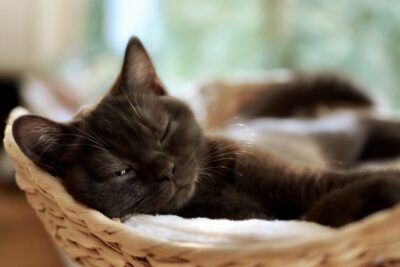
Image showing a happy cat curled up in a cozy basket, eyes half-closed (Source:Catster)
Looking to care for a cat, treat a sick one, or adopt a rescued kitten? 📞 Call Doctor Hulk Veterinary Hospital Today @ 08143397614. We offer full care for cats—from meows to purrs and everything in between.

Reviews
There are no reviews yet.