
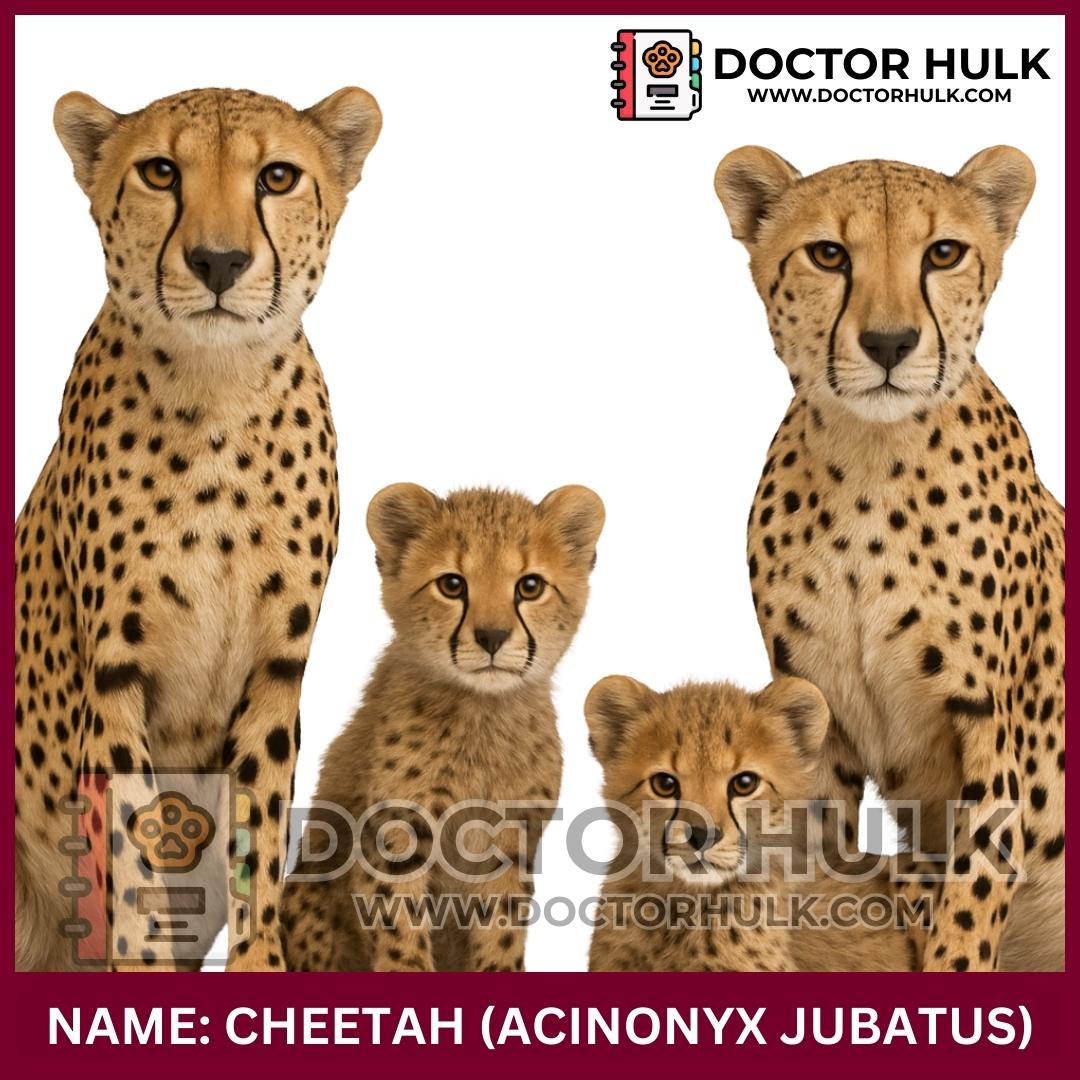
The cheetah is the fastest land animal on Earth. It is known for its slim body, spotted coat, and incredible speed, the cheetah is a skilled hunter and one of Africa’s most admired big cats. Though it looks fierce, the cheetah is shy, quiet, and faces many threats in the wild.
Scientific Classification
-
Kingdom: Animalia
-
Phylum: Chordata
-
Class: Mammalia
-
Order: Carnivora
-
Family: Felidae
-
Genus: Acinonyx
-
Species: Acinonyx jubatus
Common Names
-
Cheetah
-
Speed cat
-
“Guda” or “Zaki mai gudu” (Hausa, meaning “fast lion”)
-
“Ekun ina-irin” (Yoruba)
-
“Chui” or “Duma” (Swahili)
Geographic Distribution
Cheetahs are mostly found in:
-
Eastern and Southern Africa, Kenya, Tanzania, Namibia, South Africa
-
Small numbers in Iran (Asia’s last surviving wild cheetahs)
They prefer:
-
Savannas
-
Open plains
-
Dry grasslands
-
Low shrubs and woodland edges
Image Showing Cheetah standing tall on a mound, scanning the savannah (Source: Dreamstime)
Physical Characteristics
Cheetahs have a sleek, flexible body built for speed.
-
Spotted golden-yellow coat for camouflage
-
Small head with black “tear marks” from eyes to mouth (reduces sun glare)
-
Long, muscular tail for balance while running
-
Deep chest and long legs
-
Non-retractable claws (like running shoes for grip)
Size:
-
Height: 70–90 cm at the shoulder
-
Length: About 1.1–1.5 meters (plus tail)
-
Weight: 35–65 kg
-
Speed: Can run up to 112 km/h (70 mph) for short bursts.
Behavior and Lifestyle
Cheetahs are mainly solitary animals.
-
Females live alone or with their cubs
-
Males may form small groups called “coalitions,” often made up of brothers
-
Hunt during the day, especially early morning and late afternoon
-
Use speed and stealth instead of strength
-
Do not roar like lions, instead, they chirp, purr, hiss, or growl
Cheetahs rest often between hunts and are very careful around bigger predators.
What Do Cheetahs Eat?
Cheetahs are carnivores and expert hunters. They mostly eat:
-
Small to medium antelopes (like gazelles and impalas)
-
Young wildebeest or zebras
-
Hares and birds if needed
They rely on sight and speed, not strength, to catch prey. After a chase, they need time to rest before eating.
Fun Facts
-
Cheetahs can accelerate from 0 to 96 km/h in just 3 seconds, faster than a sports car.
-
Each cheetah’s spots are unique, like fingerprints
-
Their tail works like a steering wheel when turning at high speed
-
Unlike leopards, cheetahs cannot climb trees well
-
Cheetahs need to drink water, but can survive several days without it
Breeds of Cheetah
1. Southeast African Cheetah (Acinonyx jubatus jubatus) also known as Namibian or Southern Cheetah
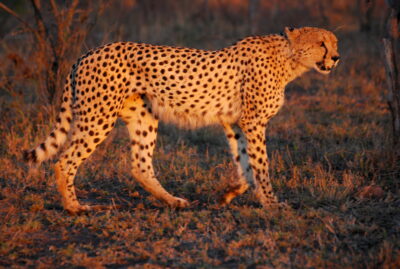
Image Showing Southeast African Cheetah (Source: Wikipedia)
- Region: Southern Africa (Namibia, Botswana, South Africa, Zimbabwe)
- Description: This is the most numerous subspecies, making up over half of the world’s wild cheetah population. They are lean and long-legged, with a light tan coat covered in solid black spots and a white underside. Their build is ideal for speed in the savannah and semi-desert environments.
- Conservation Status: Vulnerable, but the most stable population.
2. Northeast African Cheetah (Acinonyx jubatus soemmeringii) also known as: Sudan or Somali Cheetah
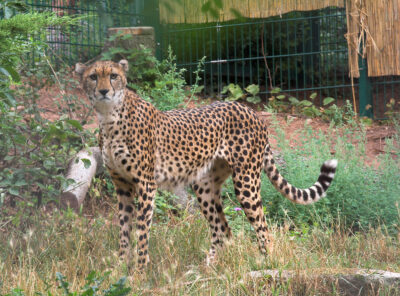
Image Showing Northeast African Cheetah (Source: Wikipedia)
-
Region: Northeastern Africa (Ethiopia, South Sudan, Sudan, and parts of Somalia)
-
Description:
This subspecies has slightly darker fur and more coarse hair than the southern variety. The belly tends to be more spotted. It also features a more distinct tear mark running from the inner corner of the eyes to the mouth. -
Conservation Status: Endangered, with populations scattered and isolated
3. Northwest African Cheetah (Acinonyx jubatus hecki) also known as: Saharan Cheetah
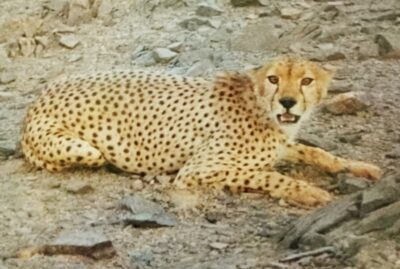
Image Showing Northwest African Cheetah (Source: Wikipedia)
-
Region: West and North Africa (Algeria, Mali, Niger, Benin)
-
Description:
This is a critically endangered and very rare subspecies. They have paler coats with fewer and smaller spots, and their tear marks are less prominent. Their behavior is more nocturnal, likely due to the harsh Saharan conditions. -
Conservation Status: Critically Endangered – fewer than 250 mature individuals remain.
4. Asiatic Cheetah (Acinonyx jubatus venaticus) also known as: Iranian Cheetah
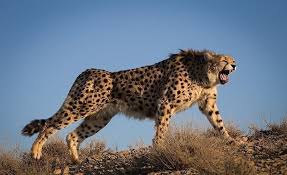
Image Showing Asiatic Cheetah (Source: )
-
Region: Formerly widespread in the Middle East and India, now only found in Iran
-
Description:
The Asiatic cheetah is smaller and paler than its African cousins, with a more wiry frame and thicker fur. It once roamed across Arabia, India, and Iran but is now restricted to a few fragmented areas in Iran. -
Conservation Status: Critically Endangered, with fewer than 20 individuals in the wild.
5. King Cheetah (Genetic Mutation of Acinonyx jubatus jubatus) not a subspecies, but a rare color morph
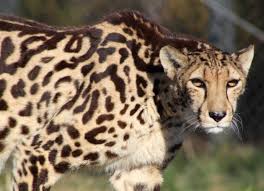
Image Showing King Cheetah (Source: Virginia Safari Park)
-
Region: Mostly seen in Zimbabwe, Botswana, and South Africa.
-
Description:
King cheetahs have the same body structure and speed as the Southeast African cheetah, but their coat features bold, blotchy patterns and three dark stripes down the back instead of small spots. This is caused by a rare genetic mutation (a recessive gene). -
Conservation Status: Not a separate subspecies; appears only in captivity or in areas where the gene is preserved.
Importance to Humans
Cheetahs have long been admired by humans:
-
Symbol of speed and grace in many cultures
-
Tourist attraction in safaris and wildlife parks
-
Once kept by royalty as hunting companions
-
Featured in art, clothing designs, and logos
Today, cheetahs help promote wildlife conservation and eco-tourism across Africa.
Health & Common Issues
Cheetahs, both wild and captive, face several health and survival challenges.
Common Problems:
-
Genetic weakness due to low diversity (makes them prone to disease)
-
Injuries from chasing or fighting
-
Loss of habitat due to farming and roads
-
Conflict with livestock farmers
-
Threats from lions, leopards, and hyenas (especially to cubs)
Veterinary Needs (especially in zoos or sanctuaries):
-
Vaccinations
-
Parasite control
-
Monitoring for injuries and infections
-
Special breeding care to reduce inbreeding problems
Conservation Status
Cheetahs are listed as Vulnerable by the IUCN.
Wild population: Fewer than 7,000 adults left
Threats include:
-
Habitat loss and human encroachment
-
Poaching and illegal pet trade
-
Conflict with farmers
-
Inbreeding due to isolated populations
Conservation Actions:
-
Protected reserves and national parks
-
Relocation programs
-
Community education
-
Anti-poaching patrols
-
Breeding support in captivity
Summary
The cheetah is a graceful, quiet hunter—fast, focused, and fragile. It’s a master of speed, but it needs protection from slow dangers like habitat loss and human threats. With care and understanding, we can help ensure that the world’s fastest cat continues to race across the savannahs for generations to come.
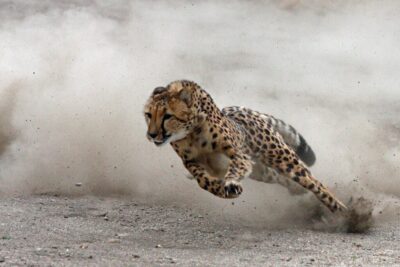
Image Showing Cheetah running full speed with dust flying behind it(Source:Help Change The World)
Do you want to learn more about wild cats or support animal care, you can reach out to us at Doctor Hulk Veterinary Hospital Today or call 08143397614. We’re here for every creature—from purring kittens to roaring lions and sprinting cheetahs.
Reviews
There are no reviews yet.