
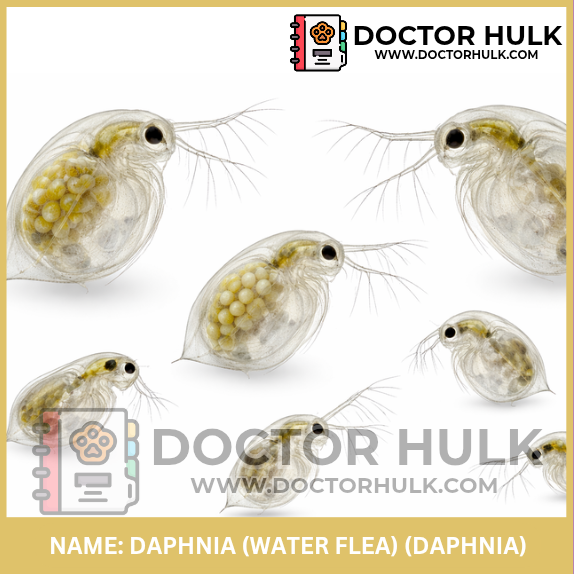
Daphnia, commonly called water fleas, are tiny crustaceans that live in freshwater ponds, lakes, and slow-moving streams. They are known for their jerky swimming movements, which resemble jumping. Daphnia feed on algae and bacteria and serve as food for fish and other aquatic animals. They have existed for millions of years and remain key members of freshwater ecosystems.

Image showing a Daphina (Source: Shutterstock)
Scientific classification
- kingdom: Animalia
- phylum: Arthropoda
- class: Branchiopoda
- order: Cladocera
- family: Daphniidae
- genus: Daphnia
- species: Over 200 recognized species
Physical characteristics
Most Daphnia measure between 0.2 and 5 millimeters in length.
- Their bodies are enclosed in a transparent carapace, which makes it possible to see internal organs, including the beating heart.
- They have a single large compound eye, two pairs of antennae used for swimming, and small appendages near the mouth for filtering food.
- Because of their transparent bodies, scientists often use Daphnia in laboratories to study circulation and toxicology.

Image showing the anatomy detail of a Daphina (Source: Pinterest).
Habitat and distribution
Daphnia are found in freshwater habitats worldwide, except Antarctica.
- They thrive in ponds, lakes, ditches, and slow rivers, often in areas rich in algae.
- They are especially abundant in nutrient-rich water bodies where phytoplankton is plentiful.
Image showing a group of Daphina in a water body (Source: Bug Guide)
Diet and feeding habits
Daphnia are filter feeders:
- They use their thoracic legs to create water currents that draw in algae, bacteria, and small organic particles. These are filtered through fine setae (hair-like structures) and directed to the mouth.
- They are an important link in the food chain, transferring energy from microscopic algae to larger predators such as fish and aquatic insects.
Life cycle and reproduction
Daphnia reproduce through both sexual and asexual means:
- In favorable conditions, females produce eggs that develop without fertilization, creating genetically identical offspring.
- When conditions become harsh, such as during winter or drought, they switch to sexual reproduction.
- Fertilized eggs develop into resting stages called ephippia, which can withstand drying or freezing until conditions improve.

Image showing the reproduction cycle of a Daphina (Source: Rescience)
Behavior and adaptations
Daphnia exhibit vertical migration:
- They often rise toward the water surface at night to feed and sink deeper during the day to avoid predators.
- Their transparent bodies make them less visible, and some species develop protective spines or helmets when exposed to predator chemicals in the water.
Ecological importance
Daphnia are grazers in freshwater ecosystems:
- They consume algae and bacteria, and help regulate water clarity and nutrient cycling.
- They are also a primary food source for many fish species, especially young fish that rely on small prey for growth.
All known species or breeds
There are over 200 recognized species of Daphnia. Some of the most studied include:
1. Daphnia magna – one of the largest species, reaching up to 5 mm, often used in ecotoxicology testing.

Image showing a group of Daphina Magna (Source: Shutterstock)
2. Daphnia pulex – the most widespread species, found across North America, Europe, and Asia. image

Image showing a Daphina pulex (Source: Blades Biological Ltd)
3. Daphnia longispina – common in lakes across Europe, often forming dense populations.
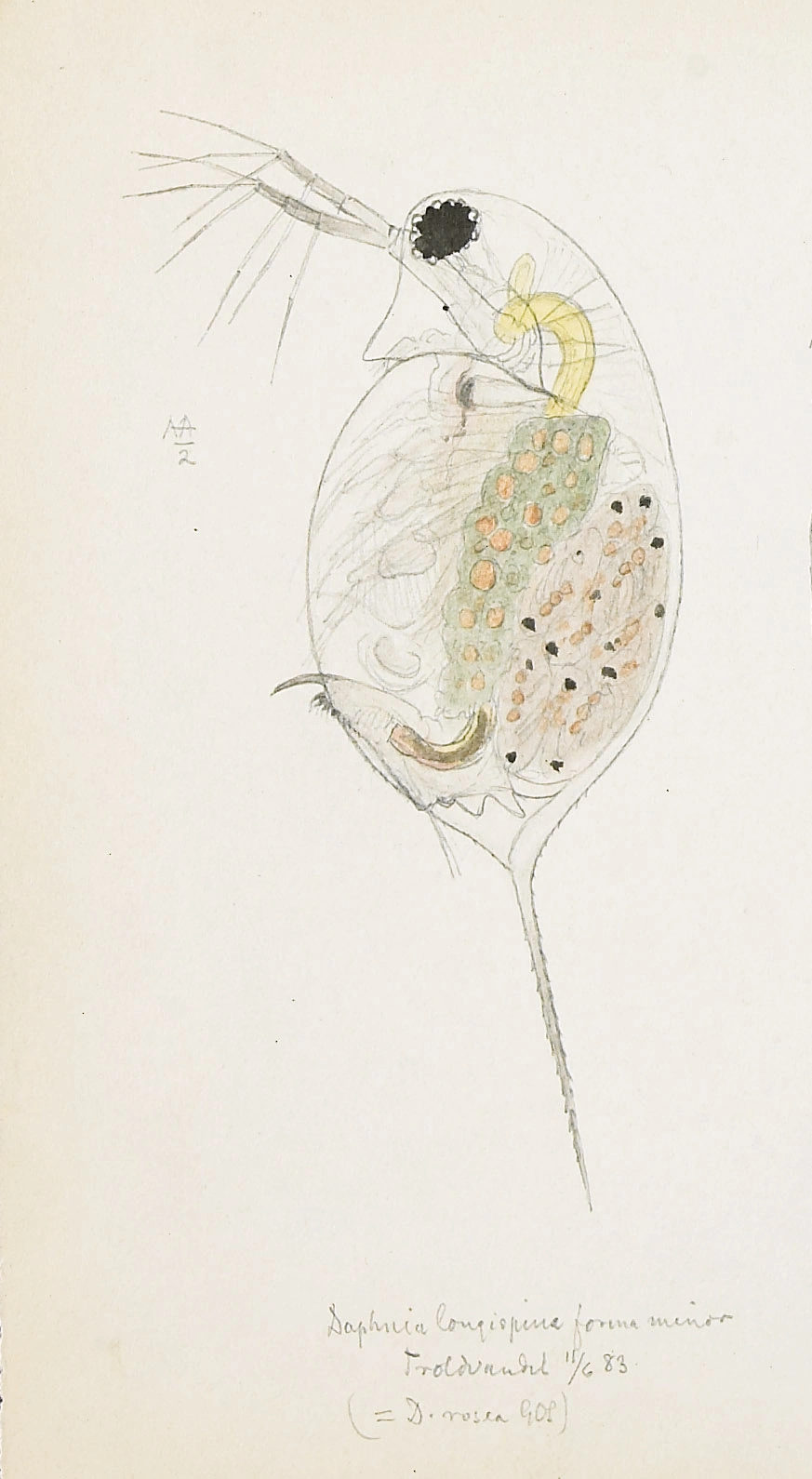

Image showing a Daphnia longispina (Source: Artsdatabanken)
Threats and conservation status
Daphnia populations are affected by pollution, pesticides, nutrient overloading, and climate change. Although they are not considered endangered, their sensitivity to pollutants makes them good indicators of water quality. Many studies use Daphnia to test for toxins, because even slight contamination can affect their survival and reproduction.
Interaction with humans
Daphnia are not harmful to people:
- They are often used in science classes and laboratories to demonstrate heart rate, oxygen consumption, and the effects of chemicals.
- In aquaculture and aquariums, Daphnia are raised as live food for fish and amphibians.
Fun facts
- Daphnia’s heart can beat up to 300 times per minute and is visible under a microscope.
- They can produce dormant eggs that survive droughts and freezing winters.
- Their movement looks like jumping because of their large antennae, which act like paddles.
You can share this post if you feel you learnt something. You can also reach out to us at Doctor Hulk Veterinary Hospital through 08143397614 to learn more or for your animal care and concerns.
Reviews
There are no reviews yet.