
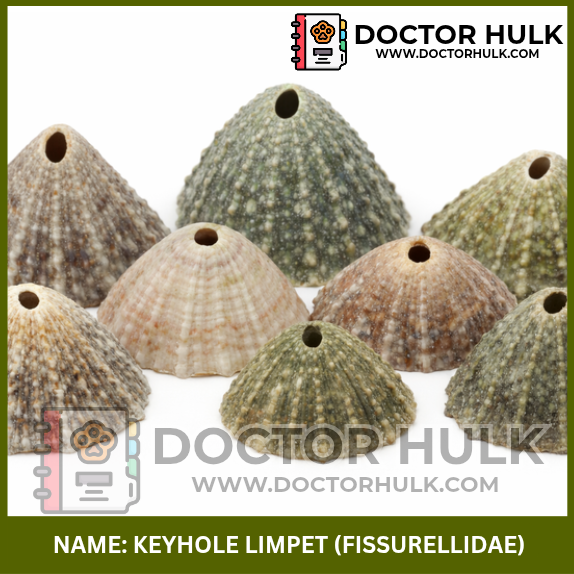
Keyhole limpets are marine mollusks named for the small opening, or “keyhole,” at the top of their shells. They live on rocky seafloors, clinging tightly to surfaces while grazing on algae and detritus. Their simple appearance hides an interesting biology, and one species even provides an important protein used in medical research.
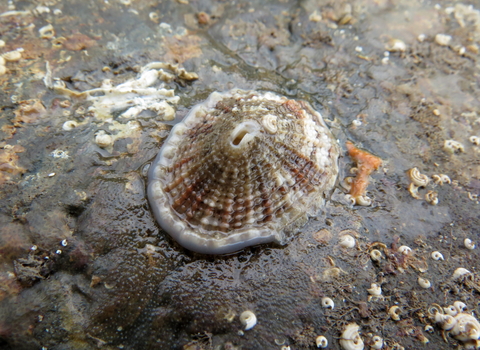
(Source: Devon wildlife trust)
Scientific classification
- Kingdom: Animalia
- Phylum: Mollusca
- Class: Gastropoda
- Order: Lepetellida
- Family: Fissurellidae
- Genus: Megathura
- Species: Megathura crenulata (giant keyhole limpet, the best known)
Physical characteristics
- Keyhole limpets have a conical shell that flares outward and features a round opening near the top.
- The shell is usually gray, brown, or white, often with radiating ridges.
- Beneath the shell is a soft, muscular body with a large foot that allows the animal to grip rocks tightly.
- The giant keyhole limpet can grow up to 12 centimeters long, making it one of the largest in its family.
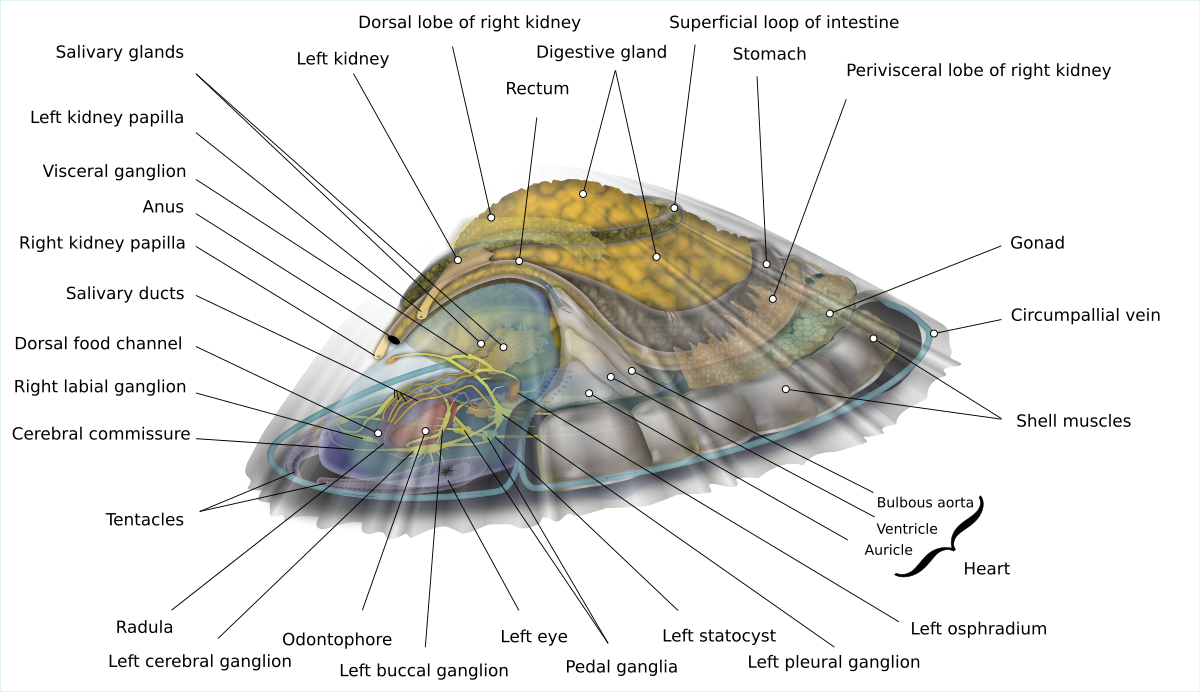
Image showing the Keyhole Limpet Anatomy (Source: Shells of aquarius)
Habitat and distribution
- Keyhole limpets are found mostly in the Pacific Ocean, from California down to Baja California, though related species live worldwide in coastal waters.
- They prefer rocky environments in shallow to moderately deep areas, usually exposed to waves.
- By anchoring firmly to surfaces, they withstand strong currents and tidal changes.
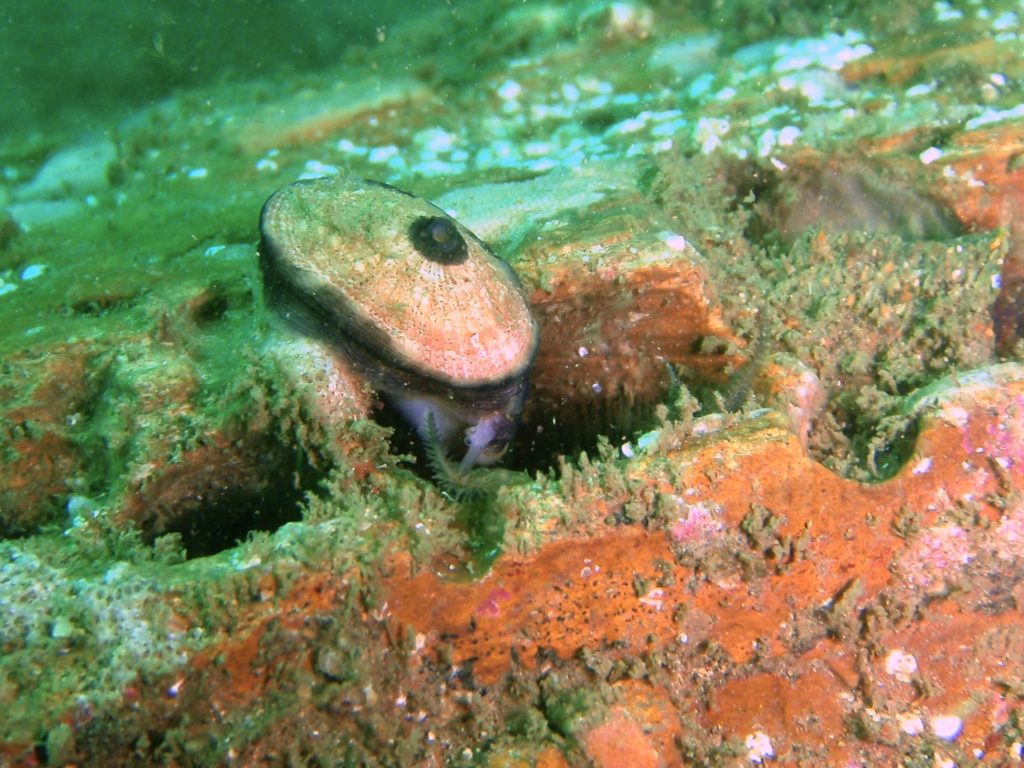
Image showing Keyhole limpet underwater (Source: Jonathan Williams – Biodiversity Atlas of LA)
Diet and feeding habits
- They feed by scraping algae and biofilm from rocks using a radula, which is a tongue-like organ lined with rows of teeth.
- Some also consume detritus and small bits of organic matter carried by the water. Because of this, they help keep rocky surfaces clean and recycle nutrients within their habitat.
Life cycle and reproduction
- Keyhole limpets reproduce by releasing eggs and sperm into the water.
- Fertilized eggs develop into free-swimming larvae, which drift with the currents before settling on rocks and transforming into juveniles.
- Like other gastropods, their development includes both larval and benthic stages, with adults living several years if undisturbed.
Behavior and adaptations
- These limpets are mostly sedentary, but they can move slowly across rocks in search of food.
- The keyhole at the top of their shell is not decorative, it allows water and waste to pass out after circulating through their gills. This adaptation keeps the body ventilated while the limpet stays tightly pressed against a surface, offering both protection and efficiency.
Ecological importance
- As they graze on algae, keyhole limpets help to maintain balance on rocky shores and tidepools.
- They are also prey for fish, crabs, sea stars, and humans in some regions.
Known species
- There are some species in the family Fissurellidae, but the giant keyhole limpet (Megathura crenulata) is the most studied.
- Other smaller species live in different parts of the world’s oceans, with variations in shell size, color, and habitat depth.
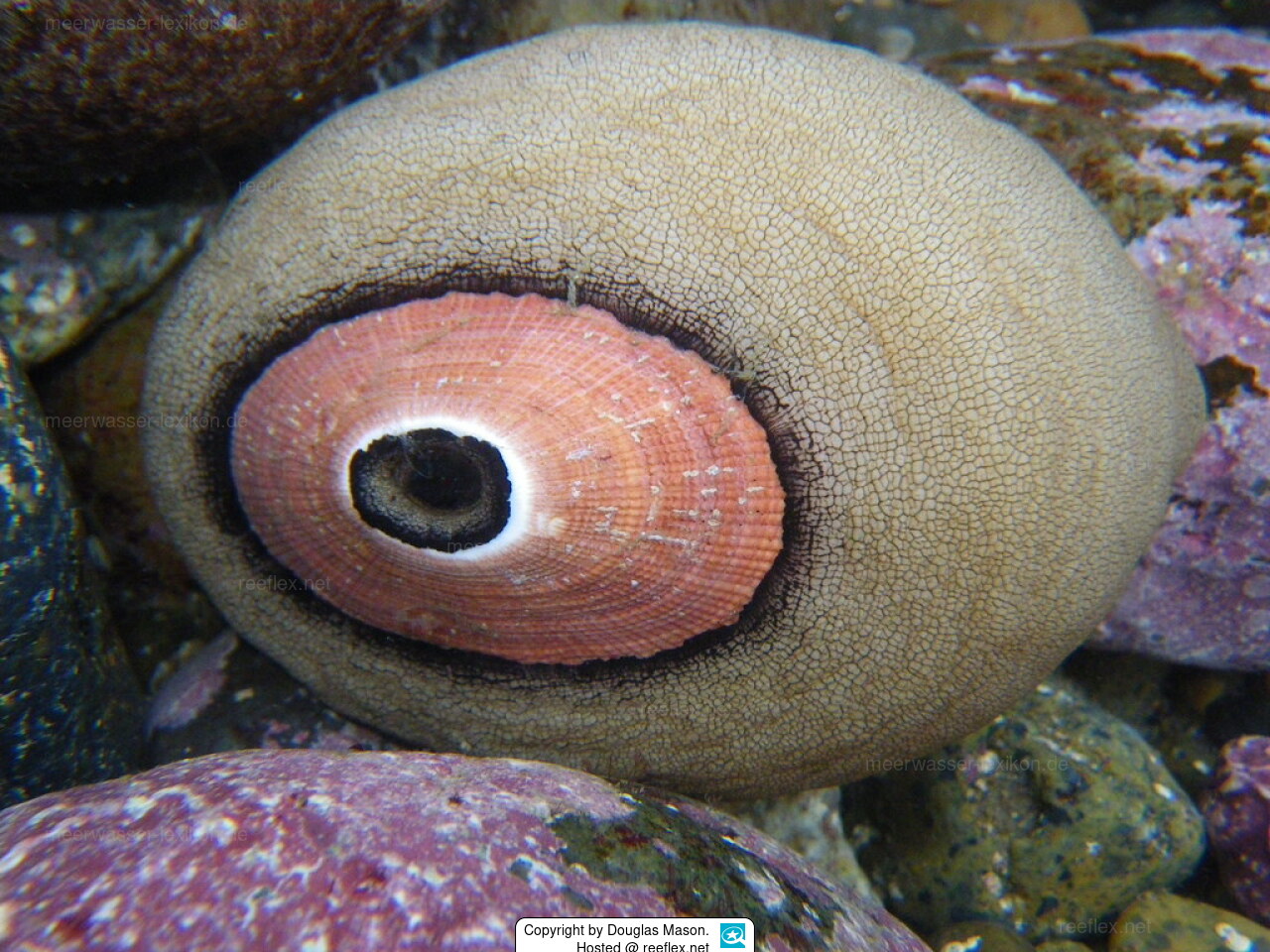
Image showing Giant Keyholder limpet (Source: Douglas Mason – Reeflex )
Threats and conservation status
- Some keyhole limpets are collected for scientific purposes, especially the giant keyhole limpet, which produces a protein called KLH (keyhole limpet hemocyanin).
- This protein is widely used in medical research, vaccine development, and diagnostics.
- Overharvesting, combined with habitat changes, can put pressure on local populations.
Interaction with humans
- The link between keyhole limpets and medicine is significant. KLH, found in their blood, is a powerful immune stimulant.
- It has been used in cancer research, immunology, and vaccine testing.
- They are sometimes collected by shell enthusiasts, though they’re less common in seafood markets compared to other mollusks.
Fun facts
- The keyhole at the top of their shell acts like a chimney, venting waste and water.
- The giant keyhole limpet’s blood contains KLH, one of the most valuable marine proteins in medical research.
- Their grip is so strong that it’s difficult to pry them off rocks without injuring them.
You can reach out to us at Doctor Hulk Veterinary Hospital through 08143397614 for animal health care and questions.
Reviews
There are no reviews yet.