
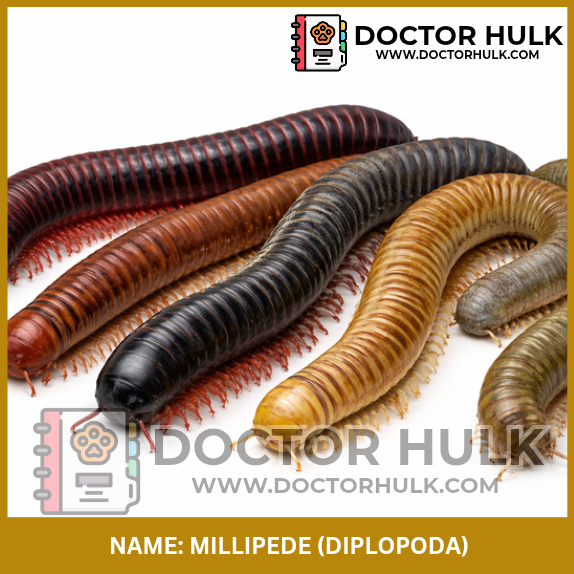

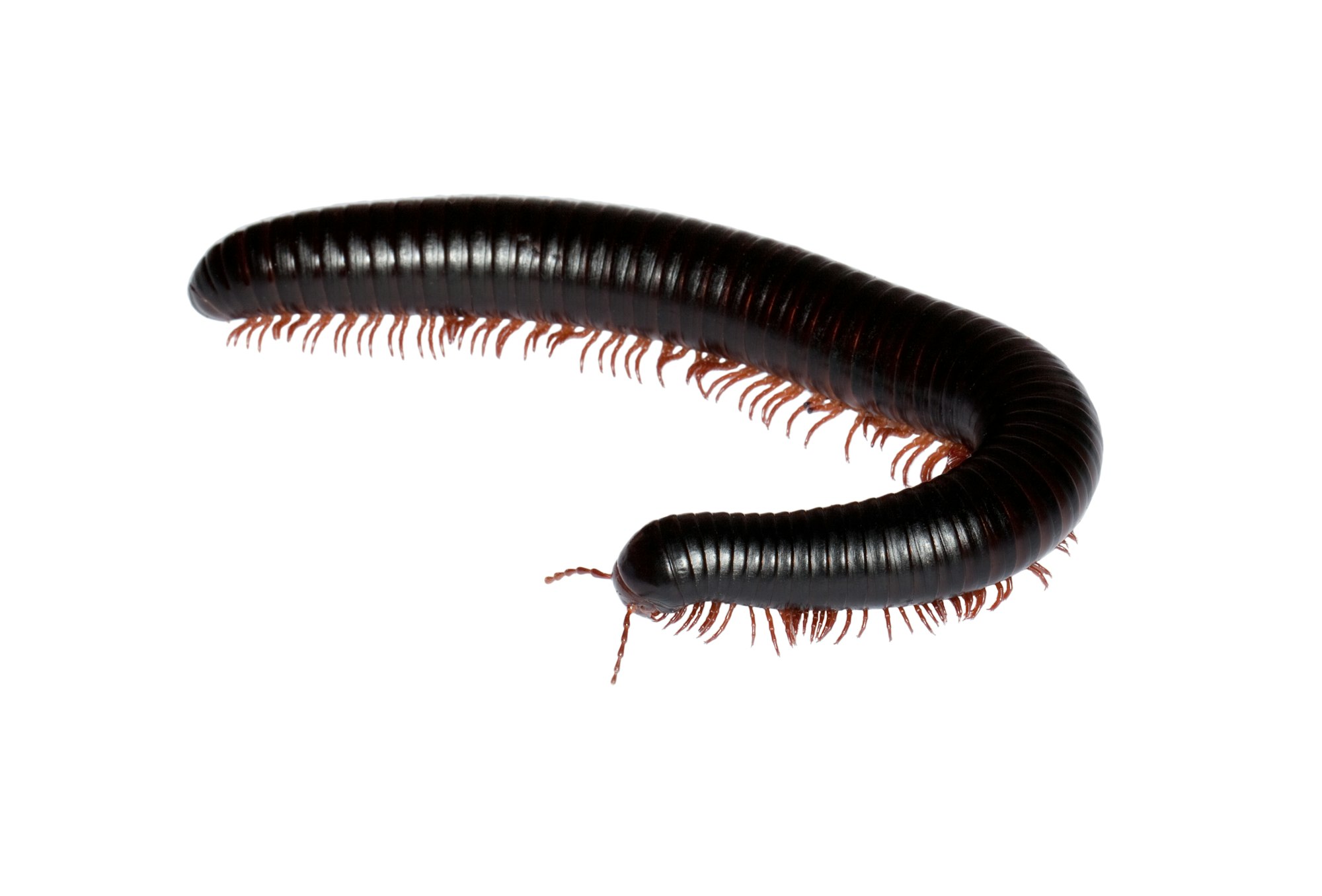
Scientific classification
-
Kingdom: Animalia
-
Phylum: Arthropoda
-
Class: Diplopoda
-
Orders and families: many, including Julida, Polydesmida, Spirostreptida, and more.
Physical characteristics
- Millipedes have two pairs of legs per body segment, unlike centipedes, and may carry anywhere from 30 to over 400 legs.
- One species recently described has a record 1,306 legs.
- Their bodies are usually cylindrical and protected by hardened plates.
- Some species are eyeless. The head features antennae, mouthparts, and sensory organs that might sense humidity or vibration.
- They breathe through spiracles on each segment and carry traits associated with soil dwelling.
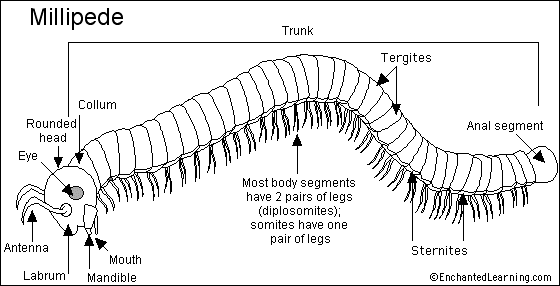
Image showing the anatomy of a millipede (Source: Enchanted learning)
Habitat and distribution
- You can find millipedes in forests, gardens, under rocks, logs, or in leaf litter.
- They prefer damp and dark spots and are not picky. They can stay in tropical or temperate, leaf-strewn woodlands, or urban soils
Diet and feeding habits
- These are detritivores: they munch on decomposing leaves, wood, and organic matter.
- That chewing turns dead plant bits into soil nutrients that plants can use.
- They do not bite or harm living animals, though they may nibble sprouting seedlings now and then.

Image showing a millipede eating a decaying leaf (Source: Shutterstock)
Life cycle and reproduction
- Millipedes hatch from eggs and look like tiny adults.
- They shed their exoskeletons to grow.
- Some last many years, especially the larger tropical kinds.
- Exact timing varies by species and climate, but generally they grow slowly and steadily.

Image showing the life cycle of millipede (Source: Keeping Bugs – Pinterest)
Behavior and adaptations
- Most millipedes curl into a tight coil when something disturbs them, burying their soft middle under their armored shell.
- Some tropical species secrete cyanide or other chemicals that irritate predators, and the bright colors of some warn “don’t eat me”.

Image showing a rolled up millipede (Source: Science photo library)
Ecological importance
- Millipedes break down plant litter, which enriches the soil and feeds fungi, bacteria, and plant roots.
- Birds, small mammals, reptiles, and insects eat them, so they act in the food webs as recyclers and prey.
All known species or breeds
Here are a few you’ll probably bump into or hear about:
1. Giant African millipede (Archispirostreptus gigas): Up to 33 cm long and 256 legs. Lives in East African forests. Common pet in some places.
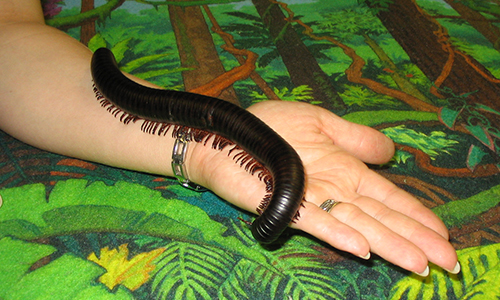
Image showing a Giant African millipede (Source: Franklin Park Zoo)
2. Striped millipede (Ommatoiulus sabulosus): A European species with bright longitudinal stripes. Found in meadows, roadsides, even forests, sometimes in massive migrations.
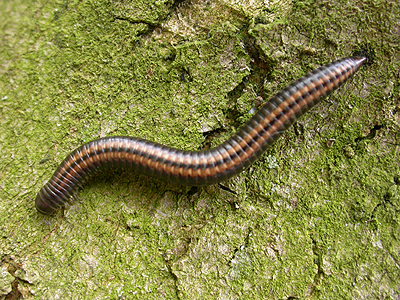
Image showing Striped millipede (Source: Trevor and Dilys Pendleton – Eakringbirds)
3. Yellow-banded millipede (Anadenobolus monilicornis): Dark brown with yellow rings and red antennae and legs. Native to the Caribbean, introduced to parts of Florida. Birds and monkeys rub their secretions on themselves to repel bugs.
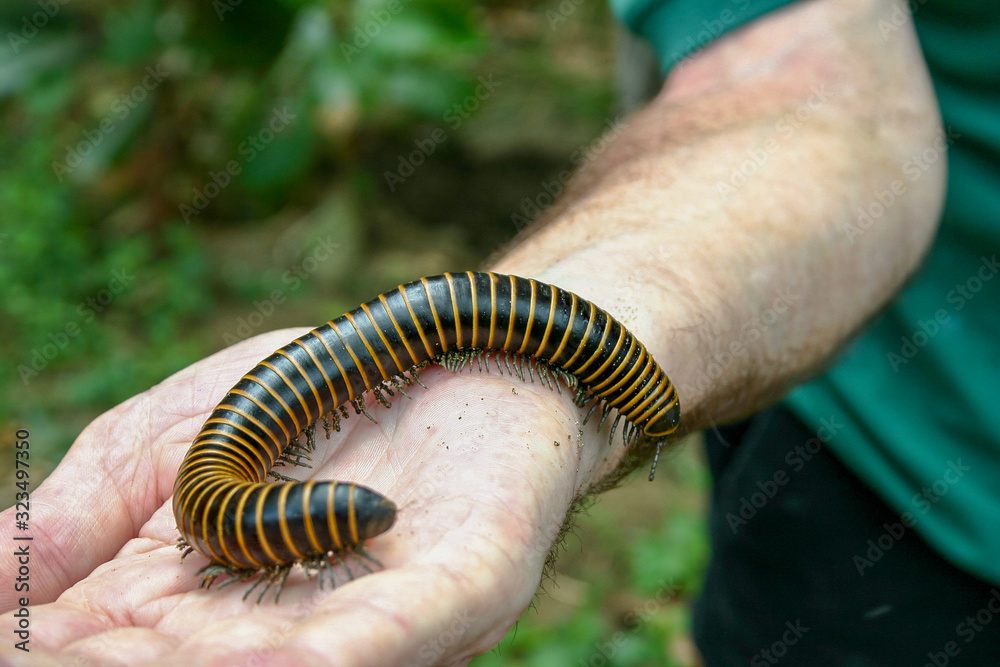
Image showing Yellow-banded millipede (Source: Adobe Stock)
4. Black millipede (Tachypodoiulus niger): Shiny black with white legs. Common across parts of Europe, feeding in moss and leaf litter.

Image showing a black millipede (Source: Stemonitis – Wikipedia)
5. Eumillipes persephone: A newly discovered species in Australia with 1,306 legs, among the highest counts ever recorded. Lives deep underground.
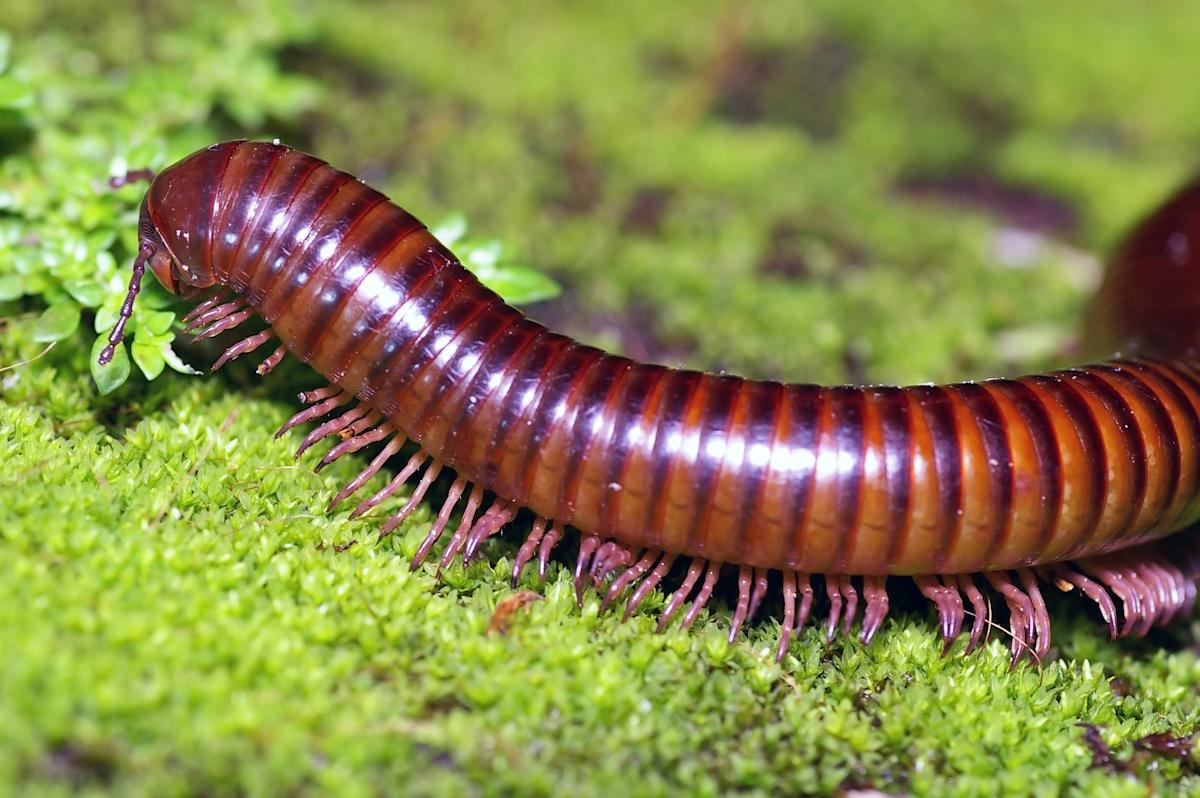
Image showing Eumillipes persephone (Source: Toppers Notes)
Threats and conservation status
- Most millipedes are not endangered, but habitat loss, pollution, and climate shifts may affect species with narrow ranges.
- Two new species were recently found in India’s Western Ghats, a reminder there are more to discover and protect.
Interaction with humans
- Millipedes usually mind their own business.
- They can be gently removed if they wander indoors.
- Some tropical species use defensive chemicals that can irritate skin though most are harmless.
- A few are pets (the giant African), and others intrigue researchers for behavior, biodiversity, or chemical defenses.
Fun facts
-
The name millipede means “thousand feet,” but they rarely reach that, most have under 400 legs, with a few notable exceptions.
-
One fossil relative, Arthropleura, reached lengths over two meters, way larger than any millipede alive today.
-
It’s mind-bending: some millipedes glow, others hiss, and some “sing” despite being deaf.
Share this post with friends and families. You can also reach out to us at Doctor Hulk Veterinary Hospital through 08143397614.
Reviews
There are no reviews yet.