
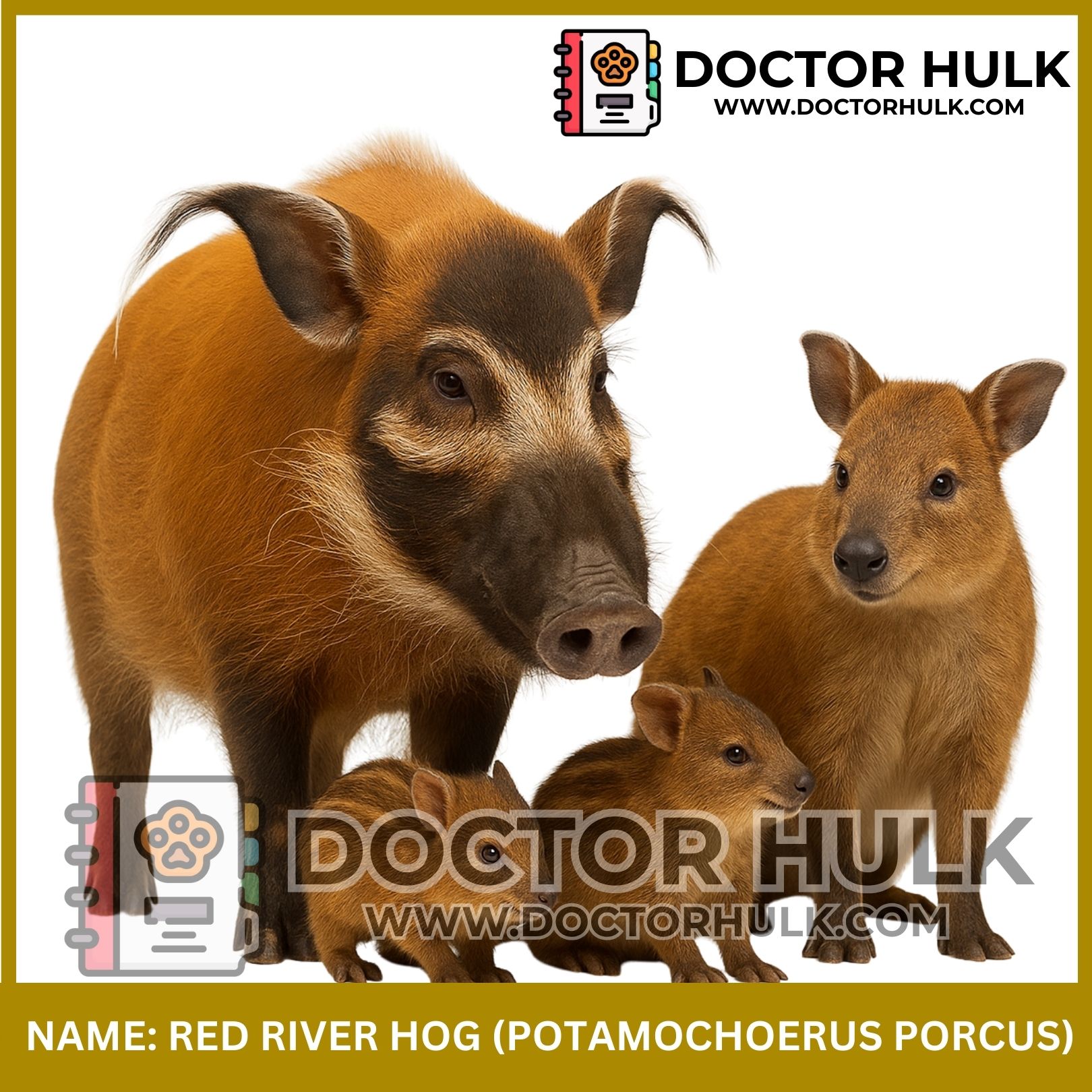
A Red River Hog is a striking wild pig that lives in the forests and savannas of West and Central Africa. Known for its bright reddish-brown coat, white markings, and distinctive, almost “hairy” cheeks, the Red River Hog looks pretty unique compared to other wild pigs. They’re medium-sized and have sharp, curved tusks that are mostly used in foraging and defense.
These hogs are omnivores, which means they eat a wide variety of things, from fruits and plants to small animals like insects or even carrion. They’re great at rooting around in the ground with their snouts to find food, and they use their tusks to help dig. They’re also very agile and fast, which helps them escape predators like lions and leopards.
Scientific Classification
-
Scientific Name: Potamochoerus porcus
-
Family: Suidae (the pig family)
The Red River Hog is a wild pig known for its striking reddish coat and playful nature. It lives mostly in Central and West African rainforests and is one of the most colorful members of the pig family.
Common Names
-
Red River Hog
-
Bush Pig (sometimes used generally for wild pigs)
-
African Red Hog
Geographic Distribution
Red River Hogs are native to Central and West Africa, especially in countries like Nigeria, Cameroon, Congo, and Gabon. They prefer dense forests, swamps, and areas near rivers, where they can root around in the mud.
Physical Characteristics
These hogs are known for their bright reddish-orange fur, black legs, white facial markings, and a tufted white beard. They have long, curved ears with wispy white tassels.
-
Size: 55–80 cm (height at shoulder)
-
Weight: 45–115 kg
-
Lifespan: 10–15 years (in captivity)
-
Males often have small tusks and facial warts (protective pads)
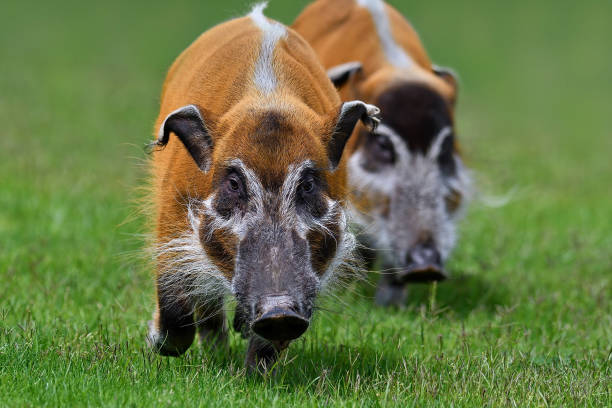 Image showing vivid Red River Hogs rooting around in the forest floor with its reddish coat glowing in the sunlight (Source: iStock)
Temperament and Behavior
Red River Hogs are highly social animals that live in small groups called sounders. They are active mostly at night (nocturnal or crepuscular) and spend much of their time foraging.
-
Communicate using grunts, squeals, and growls
-
Use snouts to dig for roots, bulbs, and insects
-
Good swimmers
-
Very intelligent and curious
Diet
They are omnivores, which means they eat both plant and animal matter.
Wild diet includes:
-
Roots and tubers
-
Fruits and seeds
-
Insects and worms
-
Small reptiles or carrion
In captivity or under veterinary care, their diet is balanced with vegetables, grains, and protein-rich feeds.
Fun Facts
-
Their fur helps them camouflage in forest light.
-
They can produce over 20 types of vocal sounds.
-
Their long ears and white ear tassels help with communication.
-
Unlike domestic pigs, they are excellent runners and jumpers.
Human Relevance
Red River Hogs are not commonly domesticated, but they are admired in zoos and wildlife parks for their beauty and personality.
Cultural Note:
In some African communities, they are hunted for bushmeat, although this raises conservation concerns.
Veterinary & Health Concerns
In captivity (zoos or wildlife rescue), red river hogs may face:
-
Parasites (internal and external)
-
Obesity if not exercised properly
-
Skin issues in non-humid environments
-
Tusk injuries in males
They require enrichment, clean habitats, and regular hoof and dental checks.
Conservation Status
-
IUCN Status: Least Concern. Their populations are stable, but habitat loss and hunting pressure in certain regions could pose future risks.
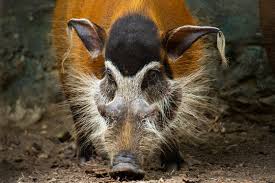
Image showing a close-up of a red river hog’s face showing white whiskers and facial markings (Source: Adobe Stock)
If you need help caring for exotic animals or wildlife rescues, you can reach out to us at Doctor Hulk Veterinary Hospital, or call 08143397614.
Reviews
There are no reviews yet.