
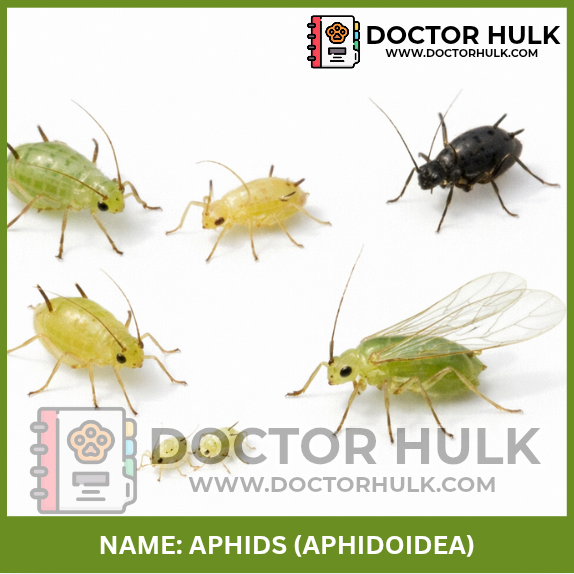

Aphids are tiny, soft-bodied insects that you often find on plants. Think of them like plant “mosquitoes”, they feed by sucking the juices out of leaves, stems, and other parts of a plant.
They are really small (like the size of a pinhead), and they come in different colors: green, black, yellow, or even pink. If you look closely at a plant and see little clusters of bugs on new leaves or stems, those are probably aphids.
Aphids can be a big problem in gardens and farms because:
-
They weaken plants by drinking their sap.
-
They can spread plant diseases.
-
They leave behind a sticky substance called honeydew, which attracts ants and can cause mold to grow on the plant.
Scientific Classification
-
Kingdom: Animalia
-
Phylum: Arthropoda
-
Class: Insecta
-
Order: Hemiptera
-
Family: Aphididae
-
Genus / Species: Thousands, including Aphis pomi, Myzus persicae, Macrosiphum rosae
 Diagram labeling aphid body parts like stylet (feeding tube) and cornicle (Source: ScienceDirect)
Physical Characteristics
Aphids typically range from 1–4 mm in length. Their bodies are soft, pear‑shaped, and often translucent green, yellow, brown, or black. Key features include:
-
Piercing–sucking mouthparts (stylets)
-
Two tiny tubes called cornicles at their back end
-
Winged and wingless forms, depending on environmental conditions
-
Sensory antennae, delicate legs, and soft cuticles
Habitat and Distribution
Aphids are most commonly found on plants, especially young leaves and stems. They are global, thriving in:
-
Gardens, croplands, orchards, forests
-
Greenhouses and indoor plants
-
Temperate, tropical, and subtropical climates
 World map illustrating regions where aphids are identified(Source :MDPI)
Diet and Feeding Habits
Aphids feed exclusively on plant sap, tapping into phloem vessels with their stylets. They prefer young, soft plant tissue and excrete sugary honeydew, which attracts ants.
Multiple aphids feeding on a plant stem emitting honeydew droplets (Source: InfluentialPoints)
Life Cycle and Reproduction
Aphids exhibit a fascinating alternation of generations:
-
Parthenogenetic reproduction: wingless females give live birth to clones, producing multiple generations quickly.
-
Sexual reproduction in fall, resulting in eggs that overwinter on host plants.
-
Seasonal wings develop to disperse when populations overgrow.
 Aphid life cycle diagram including parthenogenesis and sexual reproduction stages(Source: ResearchGate)
Behavior and Adaptations
-
Rapid population growth through asexual reproduction
-
Aphids produce alarm pheromones to warn colony mates
-
Some species are mutualistic with ants, offering honeydew in return for protection
-
Others have defensive toxins or dropping behavior to escape predators
 Ant tending aphid while aphid evades predator (Source: Azim Premji University)
Ecological Importance
While often pests, aphids have ecological roles:
-
Prey for ladybugs, lacewings, birds, and parasitic wasps
-
Honeydew providers, supporting ant populations and some fungal growth
-
Plant health indicators, signaling potential environmental stress or pest presence
Common Aphid Species
| Species | Region | Hosts | Traits |
|---|---|---|---|
| Aphis pomi | Worldwide | Apple trees | Green apple aphid, small clusters |
| Myzus persicae | Worldwide | Peach, potato, tobacco | Also transmits plant viruses |
| Macrosiphum rosae | Temperate zones | Roses | Large, red or pink aphids with long cornicles |
| Cinara pinea | Northern forests | Pine trees | Large, heavy-bodied pine aphid populations |
Images depicting several aphid species on plants (Source: Research Gate)
Threats and Conservation Status
-
Most aphids are abundant pests rather than threatened species.
-
They face threats from pesticides, climate extremes, habitat loss, and introduced predators.
-
No aphid species are listed by the IUCN as endangered, but local populations vary.
Interaction with Humans
Negative impacts:
-
Aphids can damage crops by feeding, honeydew buildup, and the spread of plant diseases.
Positive impacts:
-
Serve as food source for beneficial insects like ladybugs
-
Some plants produce aphid-resistant compounds valuable in pest management research
Some cultures harvest aphids (like lac insects, relatives of aphids) to produce shellac for wood polish.
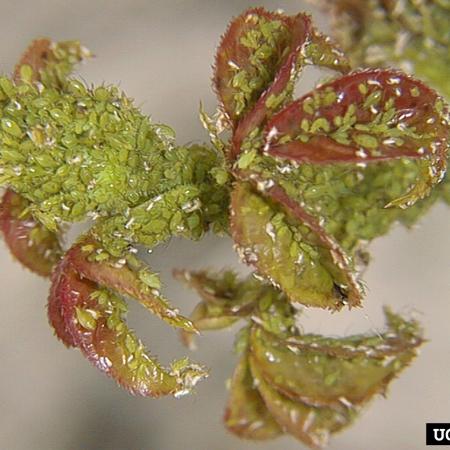 Rose leaves curled and sticky with aphid infestation and honeydew (Source: Solve Pest Problems)
Fun Facts
-
Fact: Aphids are born with their grandchildren already developing inside—three generations at once!
-
Fact: Aphid wings form only when overcrowding or poor nutrition triggers dispersal.
-
Fact: Some aphids can freeze their metabolism to survive cold winters in egg form.
-
Fun icon call out: Aphids communicate via vibrational signals on stems to coordinate movement.
If you enjoyed this introduction to aphids, share this post with others! Visit our Anipedia section for more invertebrate species profiles, or call Doctor Hulk Veterinary Hospital at 08143397614 to learn about pest management and plant health strategies.
Reviews
There are no reviews yet.