
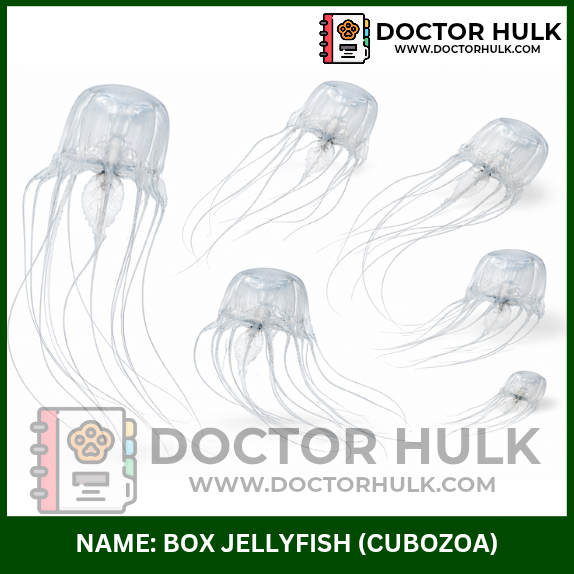
Box jellyfish are some of the most fascinating, and dangerous creatures in the ocean. At first glance, they don’t look like much. Their bodies are mostly transparent and shaped like a cube or a bell, which is where they get their name. They drift through the water with long, delicate tentacles streaming behind them, almost ghost-like in the way they move. But despite their soft appearance, box jellyfish are powerful hunters, and they’re best known for their venom, which can be extremely painful and, in some cases, even deadly to humans.
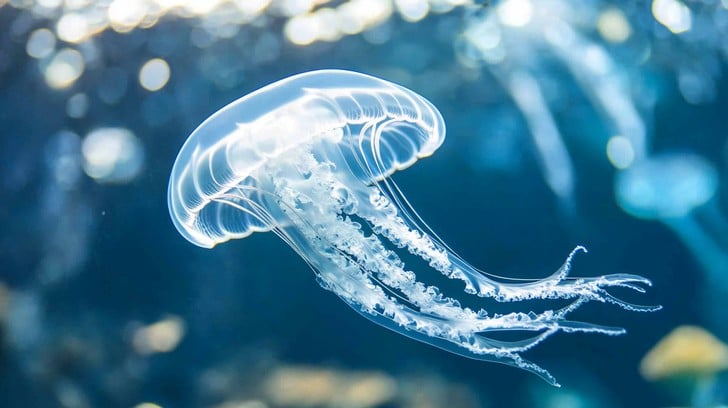
Transparent box jellyfish swimming in clear blue water with trailing tentacles (Source: StockCake)
Scientific classification
-
Kingdom: Animalia
-
Phylum: Cnidaria
-
Class: Cubozoa
-
Order: Carybdeida (typical box jellyfish)
-
Families & Species: Notable species include Chironex fleckeri (Australian box jellyfish), Chiropsalmus quadrumanus (Caribbean), and Tripedalia cystophora
Physical Characteristics
-
Bell-shaped (cube-like), up to 30 cm tall
-
Four “arms” each with clusters of slender tentacles numbering in the hundreds
-
Transparent body, sometimes tinted pale blue or yellow
-
Sense organs called rhopalia, giving them surprisingly skilled navigation
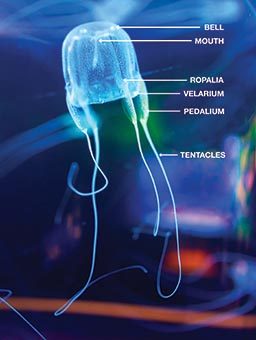
Illustration of box jellyfish showing bell, tentacles, and eyes (Source: Divers Alert Network)
Habitat and distribution
Box jellyfish occupy:
-
Warm coastal waters of the Indo-Pacific (especially northern Australia, Southeast Asia), the Caribbean, and Gulf of Mexico
-
Often found near mangroves, estuaries, and sandy shores
 Global map highlighting regions inhabited by box jellyfish (Source: ResearchGate)
Diet and feeding habits
Box jellyfish are voracious predators, feeding on:
-
Small fish, shrimp, and other plankton
-
Using sting-filled tentacles loaded with nematocysts to deliver venom
-
Tentacles double as food trappers—they curl in and deliver prey to the bell
Life cycle and reproduction
Box jellyfish follow a polyp-to-medusa life cycle:
-
Fertilized eggs → settle and become polyps
-
Polyps clone and metamorphose into miniature medusae
-
Juvenile medusae grow into fully armed box jellyfish
Sexual reproduction produces tiny larvae; early survival depends on clean water and prey availability.
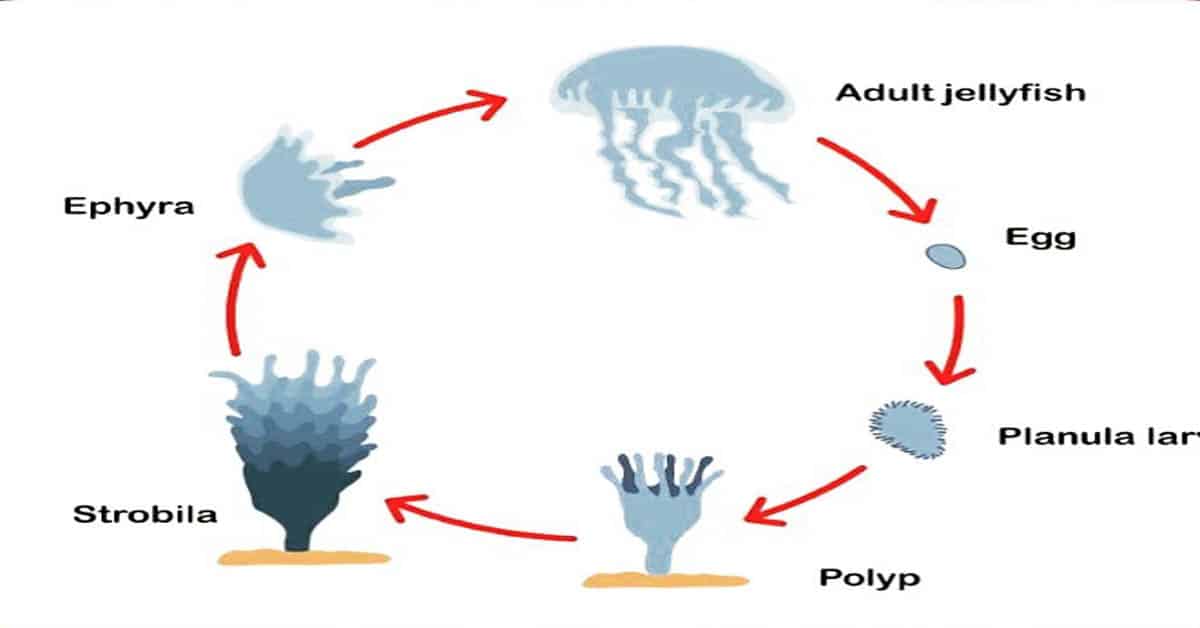 Lifecycle chart of box jellyfish including polyp and medusa stages(Source: Learn About Nature)
Behavior and adaptations
-
Among the only jellyfish that swim actively (not drifting) using bell contractions
-
They have 24 eyes—some species can form images and detect obstacles
-
Among the fastest jellyfish, swimming up to 4 knots
-
Venom discharge occurs automatically when contact is detected

Box jellyfish gliding with tentacles trailing (Source :Ocean info)
Ecological importance
Box jellyfish play roles in coastal ecosystems:
-
Control populations of small fish and plankton
-
Serve as prey for turtles, larger jelly species, and some fish
-
Their presence signals healthy warm-water zones
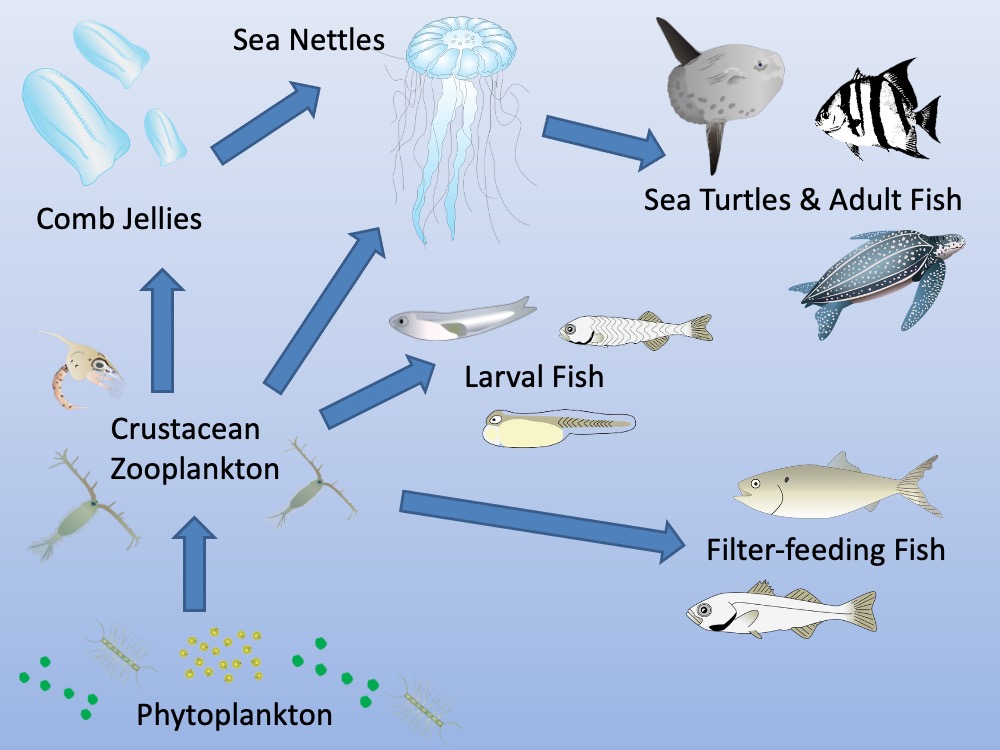
Food web showing box jellyfish as predator of fish and prey of turtle (Virginia Institute Of Marine Science)
Notable box jellyfish species
| Species | Region | Bell Size | Notable Hazard |
|---|---|---|---|
| Chironex fleckeri | Northern Australia | up to 30 cm | Causes rapid, fatal stings in humans |
| Chiropsalmus quadrumanus | Caribbean waters | ~20 cm | Highly venomous; causes pain and tissue damage |
| Tripedalia cystophora | Indo-Pacific mangroves | ~3 cm | Small; light-sensitive; lives near roots |
Images of different box jellyfish species in their habitats (Source: MDPI)
Threats and conservation status
Though feared, box jellyfish face pressures from:
-
Habitat loss, coastal development, pollution
-
Climate change influencing jellyfish bloom frequency
-
Some locals harvest them for aquaculture or bait
Interaction with humans
-
Notorious stings: Their venom can cause pain, cardiac issues, and even death within minutes
-
Preventive measures: Sting nets, protective suits, vinegar rinses (for Chironex)

Beach sign warning swimmers of box jellyfish risk (Source: The Guardian)
Fun facts
-
Fact: Box jellyfish “see” with sets of 24 eyes, including two that form an image, unique in jellyfish.
-
Fact: A single sting can release tens of thousands of nematocysts in <0.01 sec.
-
Fact: They tend to hunt at dusk and dawn when prey is most active.
 Box jellyfishes drifting peacefully among underwater vegetation (Source: National Geographic)
To learn more about marine creatures or venomous species or other animals, don’t hesitate to reach out to us at Doctor Hulk Veterinary Hospital through 08143397614.
Reviews
There are no reviews yet.