
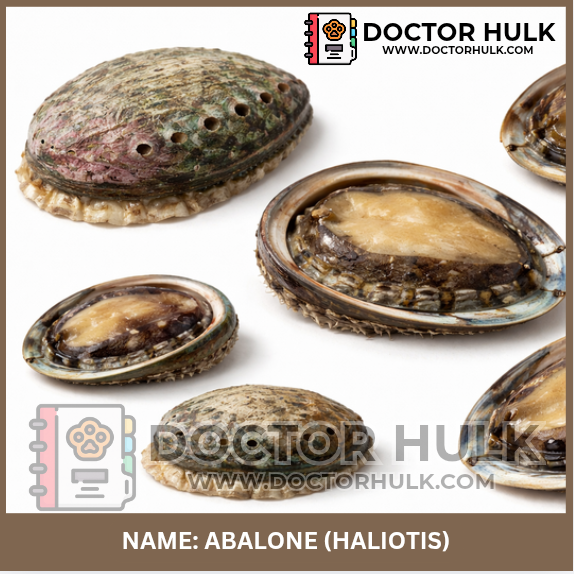
Abalone is a type of sea snail that lives in the ocean. Imagine a shell that’s kind of flat and round with a bunch of little holes along one side, that’s the shell of an abalone. Inside the shell is a soft creature that can stick really tightly to rocks. People love abalone because its meat is considered a tasty delicacy in many parts of the world, and also because the inside of its shell is shiny and colorful, usually used to make jewelry or decorations. Abalone moves slowly by using a big, muscular foot to crawl along rocks underwater. They feed on algae, which is like the sea’s version of plant food.
Scientific Classification
-
Kingdom: Animalia
-
Phylum: Mollusca
-
Class: Gastropoda
-
Order: Vetigastropoda
-
Family: Haliotidae
-
Genus: Haliotis
-
Species: 56+ worldwide, including Haliotis rufescens (Red Abalone), H. tuberculata (European Abalone)
Physical Characteristics
-
Shell diameter: 5–20 cm, highly iridescent inner layer (“mother‑of‑pearl”)
-
Shell exterior: flattened, ear-shaped spiraled shell with 5–8 breathing holes
-
Body: soft, muscular foot for strong adhesion, and a rasping tongue (radula) to scrape algae
-
Colors: dark mottled exterior; interior shows vibrant blue, green, pink, silver
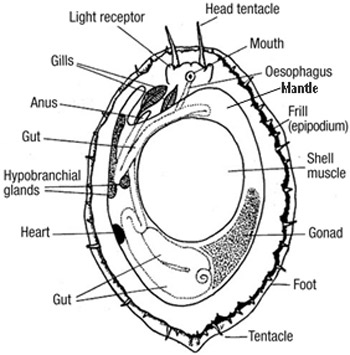 Diagram of external and internal abalone anatomy (Source: The Worlds of David Darling)
Habitat and Distribution
Abalones are marine snails inhabiting:
-
Rocky coastal waters from intertidal zones to depths of ~20 m
-
Cold‑water regions: California, New Zealand, South Africa, Japan, Europe
-
Prefer kelp beds, reefs, or underwater ledges
Global map highlighting major abalone habitats along coasts (Source: Research Gate)
Diet and Feeding Habits
Abalones are herbivorous grazers, feeding mainly on kelp and macroalgae:
-
Using a ribbon‑like radula, they rasp algae off rocks
-
Some species feed at night to avoid predators and conserve energy
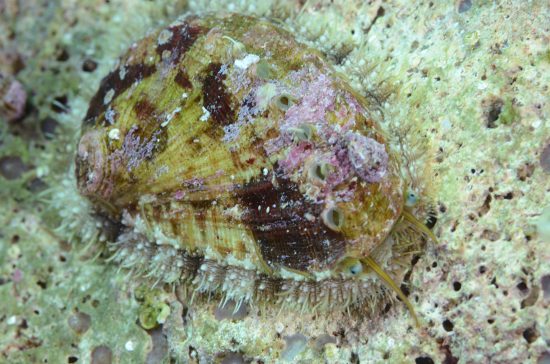 Abalone scraping algae from a rock with its radula (Source: Mares Blog)
Life Cycle and Reproduction
-
Abalones reach maturity at 3–5 years
-
Sexual reproduction: release eggs and sperm into the sea — fertilized larvae drift as plankton for weeks
-
Settle and metamorphose into juvenile abalones, attach to rocks, and grow shells
-
Larval settlement and survival depend on water quality and habitat conditions
Illustrated abalone life cycle from egg to juvenile to adult (Source: ResearchGate)
Behavior and Adaptations
-
Strong attachment: Use suction-like foot to cling to waves and resist predators
-
Camouflage: Shells and soft tissues blend with rocky, kelp environments
-
Sensory structures: Tentacles and eyes along the edge detect movement
Abalone on a rock (Source: Facebook)
Ecological Importance
Abalones play key roles in coastal marine ecosystems:
-
Algae control: Grazing helps maintain kelp and reef health
-
Prey species: Food for sea stars, wrasse, lobsters, fish, sea otters
-
Ecosystem engineers: Create microhabitats for small organisms
Notable Abalone Species
| Species | Region | Shell Size | Notable Trait |
|---|---|---|---|
| Haliotis rufescens | California coast | Up to 20 cm | Largest and commercially valuable |
| Haliotis midae | South Africa | ~10–15 cm | Valuable green abalone |
| Haliotis diversicolor | Southwest Pacific | ~8 cm | Multi‑colored shell |
| Haliotis tuberculata | Europe/Mediterranean | ~8–12 cm | Strong shell, common in Europe |
 Collage of red, green, and multi-colored abalone species shells (Source: A Snail’s odyssey)
Threats and Conservation Status
-
Overfishing and poaching
-
Habitat loss, pollution, ocean warming, disease (e.g., withering syndrome)
-
IUCN statuses: many species are Endangered, such as California and South African abalones
-
Restoration efforts include aquaculture, protected zones, and legal fishing limits
Interaction with Humans
-
Commercially harvested for food, jewelry (mother‑of‑pearl), and luxury shellcraft
-
Medical research: abalone shells inspire biomimetic designs in materials and prosthetics
-
Handling: undercooked or raw abalone can host parasitic bacteria, so cooking is essential
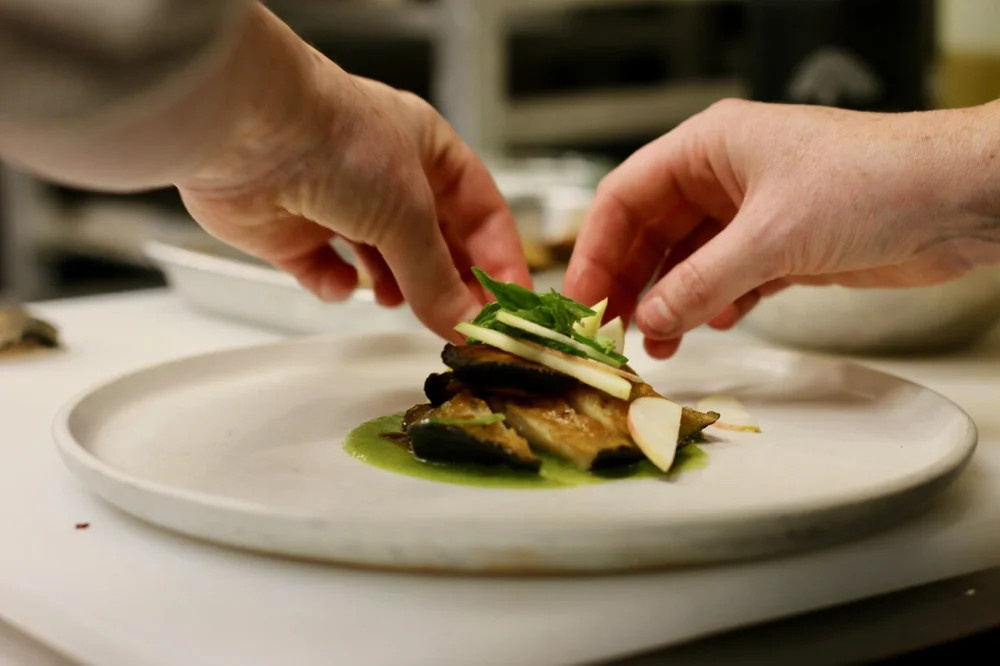 Cook preparing abalone dish in a professional kitchen (Source: Monterey Abalone Company)
Fun Facts
-
Fact: Abalone shells produce an iridescent shimmer used in jewelry and piano keys.
-
Fact: An abalone’s foot suction can exceed 200 kg of force.
-
Fact: Abalones “sing” (vibrate) very faintly to communicate underwater, a phenomenon still under study.
 Abalone nestled in kelp (Source: East Bay Express)
If you enjoyed learning about abalones, share this post with students, educators, and ocean lovers. If you want to learn more about marine species or other animals, reach out to us at Doctor Hulk Veterinary Hospital at 08143397614.
Reviews
There are no reviews yet.