Select category
  • Select category
  • Invertebrates
    • A
    • B
    • C
    • D
    • E
    • F
    • G
    • H
    • I
    • J
    • K
    • L
    • M
    • N
    • O
    • P
    • Q
    • R
    • S
    • T
    • U
    • V
    • W
    • X
    • Y
    • Z
  • Vertebrates
    • A
    • B
    • C
    • D
    • E
    • F
    • G
    • H
    • I
    • J
    • K
    • L
    • M
    • N
    • O
    • P
    • Q
    • R
    • S
    • T
    • U
    • V
    • W
    • X
    • Y
    • Z
Menu
Search
Click to enlarge
Home Invertebrates A Anemone (Sea Anemone)
Ant
Ant
Back to products
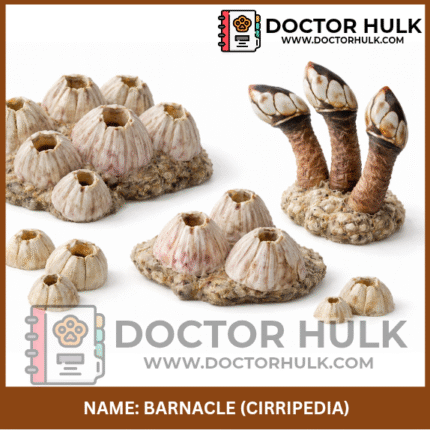
Barnacle
Barnacle

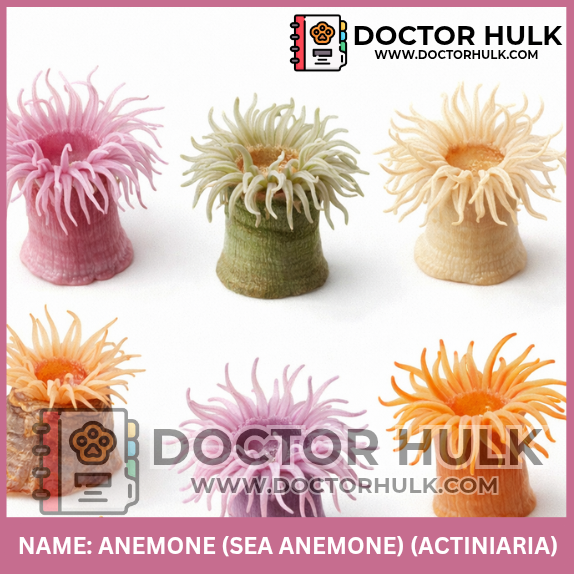
Anemone (Sea Anemone)

Sold By: Zoopedia by Doctor Hulk Category: A
Share:
  • Description
  • Reviews (0)
  • Shipping & Delivery
Description

A sea anemone is a marine creature that looks a bit like a colorful flower but is actually an animal. They’re related to jellyfish and corals and have a soft, cylindrical body with a central mouth surrounded by a ring of stinging tentacles. These tentacles are what make sea anemones dangerous to smaller creatures, they use them to capture prey like fish and shrimp.

The body of a sea anemone is typically attached to the seafloor, rocks, or coral reefs by a base called a “pedal disc.” When you look at them, they often appear as though they’re waving in the water, with their tentacles flowing with the current. The tentacles contain tiny cells called “nematocysts” that release venom to immobilize their prey. But they can also sting humans if touched, causing a painful reaction.

 Scientific Classification

Rank Name
Kingdom Animalia
Phylum Cnidaria
Class Anthozoa
Order Actiniaria
Families e.g., Actiniidae, Metridiidae
Genus Actinia, Nematostella, etc.
Species Thousands worldwide

Physical Characteristics

Sea anemones resemble upside-down flowers with:

  • A column-shaped body topped by a ring of tentacles

  • Tentacles armed with nematocysts, tiny venomous harpoons

  • A mouth at the center that leads to an internal cavity

  • Sizes range from 1 cm to over 1 meter in diameter

  • Colors vary widely: red, green, blue, brown, and multicolored


Sea Anemone | PACIFIC RAYADiagram showing body column, tentacles, mouth, nematocysts of sea anemone (Source:WordPress site)

 Habitat and Distribution

Sea anemones thrive across the world in:

  • Tropical reefs, temperate rocky shores, and deep-sea vents

  • Attached to rocks, coral, shells, or submerged structures

  • Found in all oceans and seas, from intertidal zones to depths of over 2,000 m


Map of the native distribution of species of sea anemones (circles or... | Download Scientific Diagram World map highlighting coastal and reef areas where sea anemones are found (Source: ResearchGate)
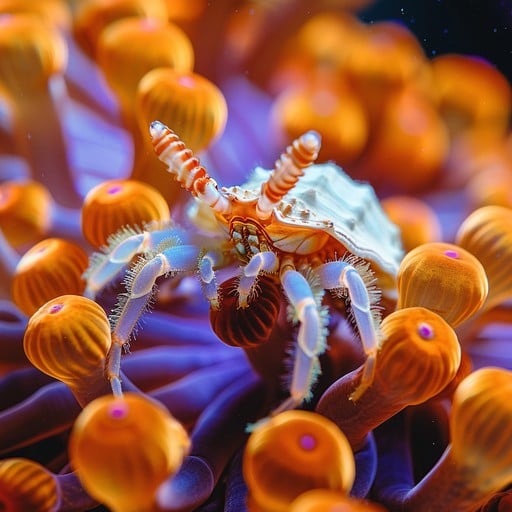
 Diet and Feeding Habits

As sit-and-wait predators, sea anemones feed on:

  • Fish, shrimp, zooplankton, and small invertebrates

  • Using tentacles laden with nematocysts, they sting and paralyze prey before drawing it into their mouth

Some species harbor symbiotic algae (zooxanthellae) in their tissues, getting nutrients from photosynthesis.


Free Colorful Marine Life Image | Download at StockCakeSea anemone capturing a shrimp with its tentacles (Source: StockCake)
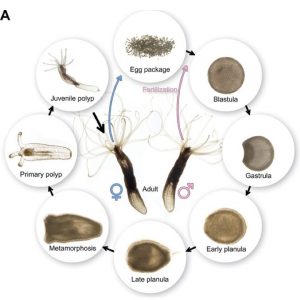
 Life Cycle and Reproduction

Sea anemones reproduce both sexually and asexually:

  • Sexual reproduction: Releases eggs and sperm into water—forming a free-swimming larva (planula) that settles and transforms into an adult.

  • Asexual reproduction: Through budding, fission, or pedal laceration (leaving bits of foot behind that grow into new individuals).


Venomous sea anemones “pick their poison” depending on their life stage – oceanbites Diagram showing egg, planula larva, juvenile, and adult stages of sea anemone(Source:Oceanbites)

 Behavior and Adaptations

  • Defense: Their nematocysts can deter predators—some even host clownfish that are immune to stings.

  • Camouflage: Some anemones mimic coral or rock textures.

  • Movement: While usually sessile, they can slowly glide or detach to drift elsewhere.

  • Symbiosis: Clownfish clean the anemone and gain protection; the anemone gets food scraps.


Free Clownfish in Anemone Image | Download at StockCakeClownfish nestled safely among sea anemone tentacles (Source: StockCake)

Ecological Importance

Sea anemones contributes ecologically as they :

  • Form symbiotic relationships with fish and crustaceans

  • Act as predators controlling populations of small fish and invertebrates

  • Help structure reef communities by providing habitat


Sea anemone venom: Ecological interactions and bioactive potential - ScienceDirectFood web diagram showing sea anemone as predator and habitat provider (Source: ScienceDirect.com)

Notable Species of Sea Anemones

Species Region Size Notable Trait
Actinia equina Eastern Atlantic ~5 cm Bright red “beadlet” anemone
Heteractis magnifica Indo-Pacific reefs 10–25 cm Hosts clownfish, colorful tentacles
Metridium senile North Atlantic coasts Up to 30 cm Long frilly tentacles
Anthopleura elegantissima Pacific coast (US) ~20 cm Forms dense “anemone beds”


variety Collage thumbnails showing several sea anemone species (Source: Pinterest)

 Threats and Conservation Status

While many sea anemones are abundant, threats include:

  • Habitat destruction from reef decline, coastal development

  • Pollution and climate change causing bleaching

  • Overcollection for aquariums

Most species aren’t evaluated by the IUCN, but sensitive species face local declines.

 Interactions with Humans

  • Kept in saltwater aquariums, but require care and cannot sting all tankmates.

  • Some species’ nematocysts cause painful stings to swimmers or collectors.

  • Clownfish-anemone symbiosis is popular in culture, from movies to educational exhibits.

 Fun Facts

  • Sea anemones may not age, they could live centuries.

  • Their stings (nematocysts) fire in just one-fortieth of a nanosecond.

  • Some species can clone themselves by splitting in two.

  • The “sea anemone” name comes from its flower‑like appearance, though they aren’t plants.


Free Vibrant Sea Anemone Image | Download at StockCake Colorful sea anemone waving gently on ocean floor(Source: StockCake)
If you enjoyed this highlight about the underwater world of sea anemones, feel free to share this post with others.
Explore more at Anipedia or reach out to us at Doctor Hulk Veterinary Hospital to learn more about marine invertebrates. You can also contact us through 08143397614.

Reviews (0)

Reviews

There are no reviews yet.

Be the first to review “Anemone (Sea Anemone)” Cancel reply

Your email address will not be published. Required fields are marked *

Shipping & Delivery

THIS IS A VIRTUAL PRODUCT, IT DOESN'T SHIP. IN CASE ITS A DOWNLOADABLE FILE, THE DOWNLOAD LINK WILL BE AVAILABLE AFTER CHECKOUT

Related products

Abalone

A
Abalone is a type of sea snail that lives in the ocean. Imagine a shell that’s kind of flat and
Sold By: Zoopedia by Doctor Hulk
Quick view

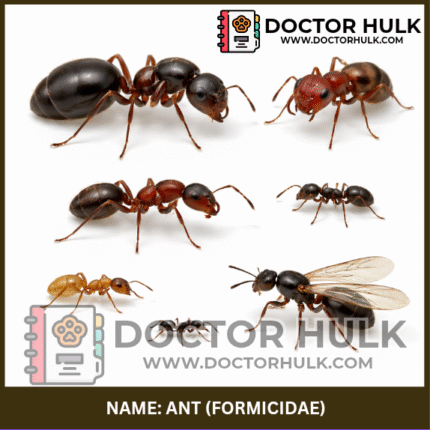
Ant

A
An ant is a tiny, social insect that’s found almost everywhere in the world. They live in large colonies or
Sold By: Zoopedia by Doctor Hulk
Quick view

Aphids

A
Aphids are tiny, soft-bodied insects that you often find on plants. Think of them like plant “mosquitoes”, they feed by
Sold By: Zoopedia by Doctor Hulk
Quick view

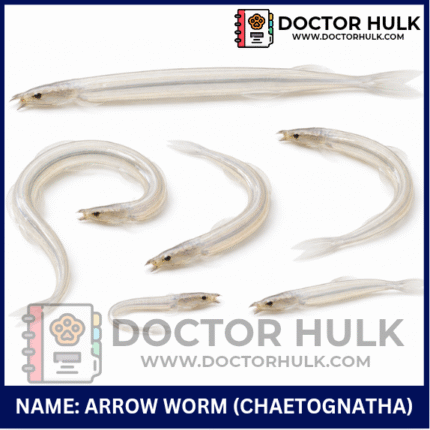
Arrow Worm

A
Arrow worms are small, transparent, worm-like animals that live in the ocean. They get their name because their long, narrow
Sold By: Zoopedia by Doctor Hulk
Quick view

    You may reach our team via any of the channels below.

    • Akure Mall, Akure
    • Number 3, Olatunde Ibuola Lane, Ijoka Road , Akure
    • Opposite Obaile First Gate, Obaile Road Akure
    • Phone: 08143397614
    • Mail: [email protected]
    ZOOPEDIA 2025 POWERED BY DOCTOR H.U.L.K.
    payments
    • Menu
    • Categories
    • Vertebrates
    • Login / Register