
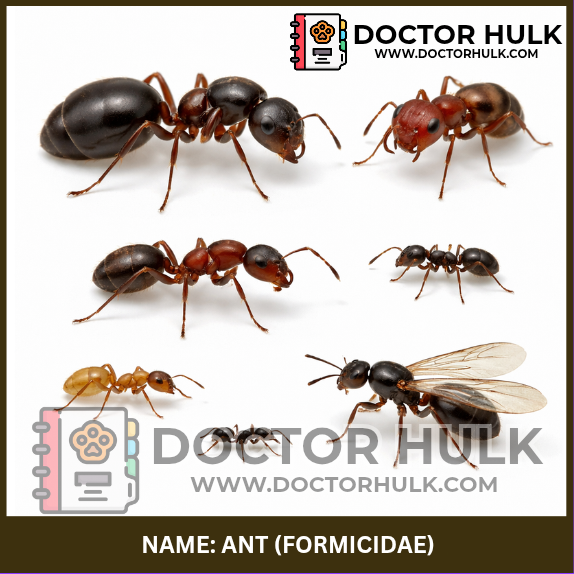
An ant is a tiny, social insect that’s found almost everywhere in the world. They live in large colonies or nests, which can range from just a few ants to millions, depending on the species. Ants have three distinct body parts: the head, thorax (middle part), and abdomen. They also have six legs and antennae that they use to sense their environment and communicate with each other.
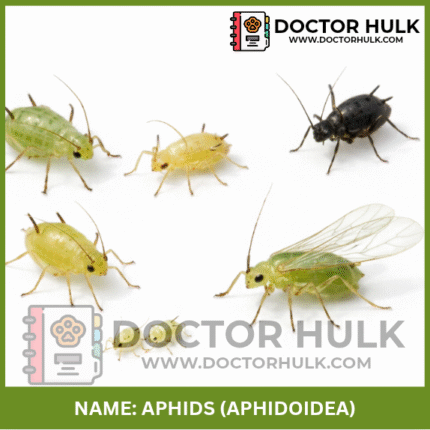
Ants are most famous for their teamwork. They work together to find food, protect their colony, and care for their young. They often leave scent trails that help other ants follow them to food sources. Some species of ants are even known to “farm” other insects, like aphids, to harvest the sweet liquids they produce.
Scientific Classification
-
Kingdom: Animalia
-
Phylum: Arthropoda
-
Class: Insecta
-
Order: Hymenoptera
-
Family: Formicidae
-
Genus: Various (e.g., Solenopsis, Camponotus, Formica)
-
Species: Over 12,000 known species (possibly up to 20,000!)
Physical Characteristics
Ants have three main body segments: head, thorax, and abdomen. They typically measure 2–25 mm long, though some species like the Dinoponera can grow up to 40 mm. Most ants are reddish-brown, black, or yellowish in color.
-
Antennae: Elbowed and used for sensing smell and touch.
-
Eyes: Compound eyes for detecting movement.
-
Limbs: Six legs with claws for climbing and gripping.
-
Mandibles: Strong jaws for cutting, carrying, and fighting.
 Diagram labeling parts of an ant including head, thorax, abdomen, antennae, and legs (Source: Antark)
Habitat and Distribution
Ants are one of the most widely distributed animals on Earth. They live in almost all terrestrial environments, from forests and grasslands to deserts and even cities.
-
Habitats: Underground tunnels, inside trees, under rocks, or inside homes.
-
Geographical spread: All continents except Antarctica.
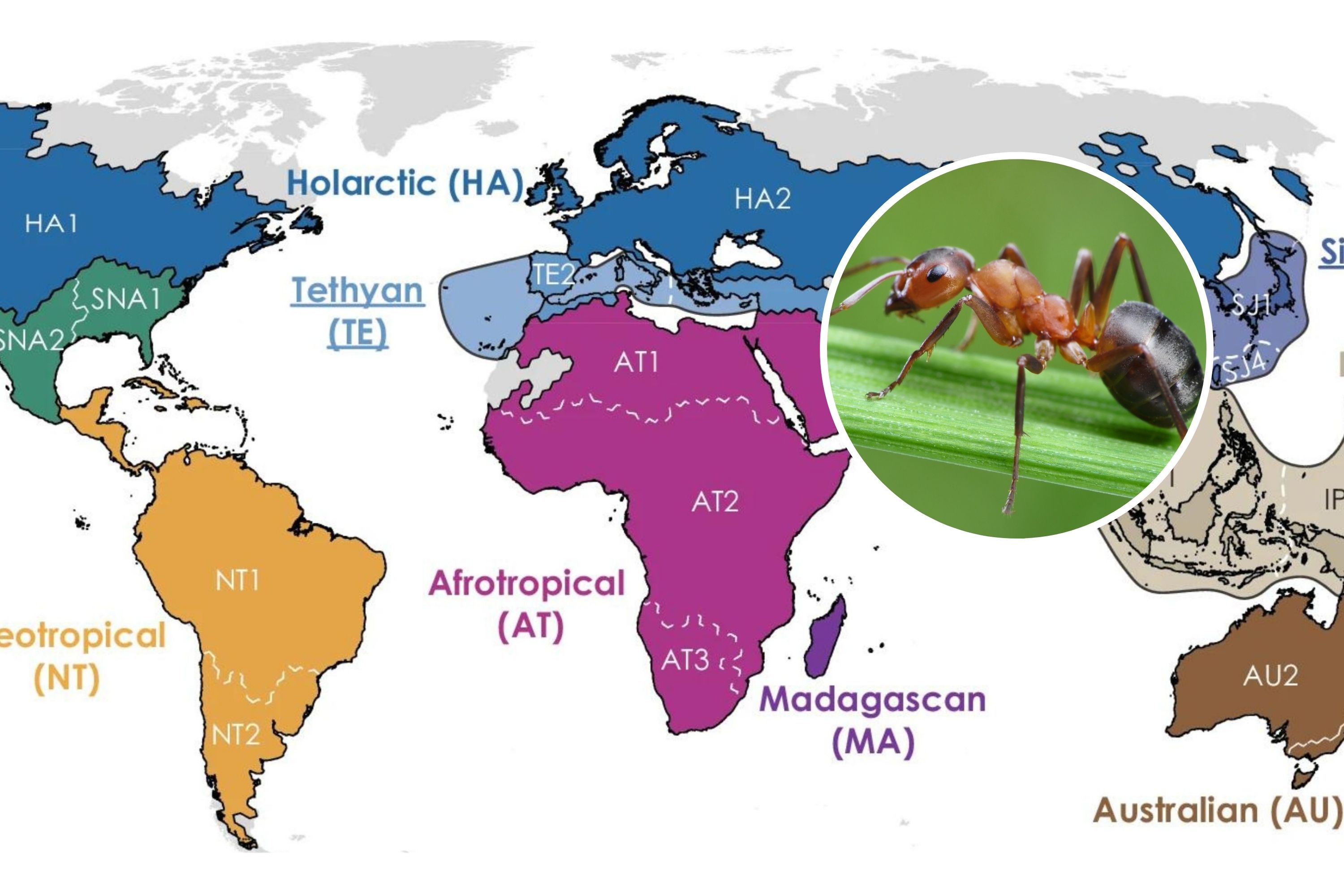 Global map showing areas where ants are found (Source: Newsweek)
Diet and Feeding Habits
Ants are omnivorous and opportunistic eaters. Their diet includes:
-
Sugary substances (like nectar and honeydew)
-
Fungi
-
Insects and other arthropods
-
Seeds and grains
They use specialized mandibles to bite and chew and pheromone trails to guide other ants to food sources.
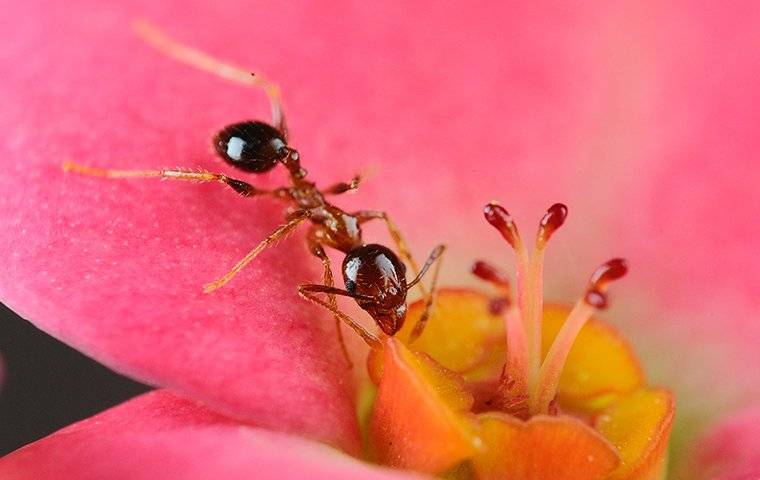 Ant feeding on nectar from a flower (Source: Go-Forth)
Life Cycle and Reproduction
Ants undergo complete metamorphosis, meaning they grow through 4 distinct stages:
-
Egg
-
Larva
-
Pupa
-
Adult (Queen, male, or worker)
Queens lay thousands of eggs. Workers do not reproduce but support the colony. Some ants, like army ants, have coordinated reproductive cycles.
 Diagram showing egg to adult ant life cycle(Source: Antcube shop)
Behavior and Adaptations
Ants are known for:
-
Social behavior: Living in large colonies with division of labor.
-
Communication: Using chemical pheromones.
-
Burrowing: Building complex underground nests.
-
Defense: Biting, stinging, or spraying formic acid.
They are incredibly adaptive, surviving floods, droughts, and even predators by cooperating in vast numbers.
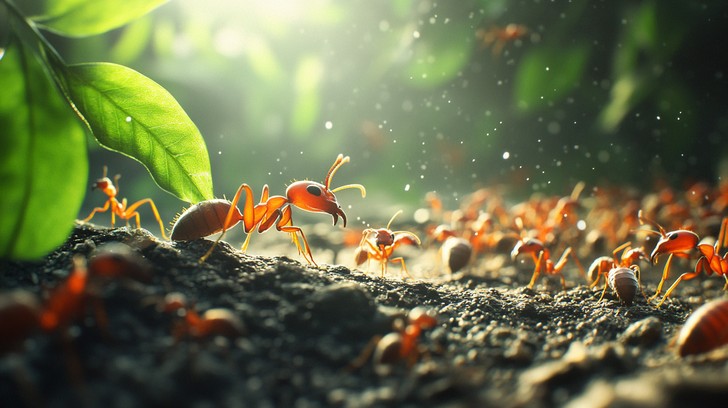 Army ants displaying coordinated movement across forest floor(Source: StockCake)
Ecological Importance
Ants are essential to healthy ecosystems.
-
Decomposers: Break down dead animals and organic material.
-
Soil aeration: Improve soil structure with tunneling.
-
Seed dispersal: Help plant reproduction (especially in forests).
-
Predators & prey: Help control pest populations and serve as food for birds and reptiles.
 Diagram showing ants’ role in a food chain(Source: NicePNG)
All Known Species or Breeds
With over 12,000 described species, here are some notable groups:
1. Fire Ants (Solenopsis spp.)
-
Region: Worldwide (esp. Americas)
-
Trait: Painful stings, aggressive
2. Carpenter Ants (Camponotus spp.)
-
Region: Worldwide
-
Trait: Nest in wood, large size
5. Argentine Ants (Linepithema humile)
-
Region: South America, invasive globally
-
Trait: Massive colonies, no inter-nest aggression
6. Leafcutter Ants (Atta spp.)
-
Region: Central & South America
-
Trait: Cut leaves to farm fungus
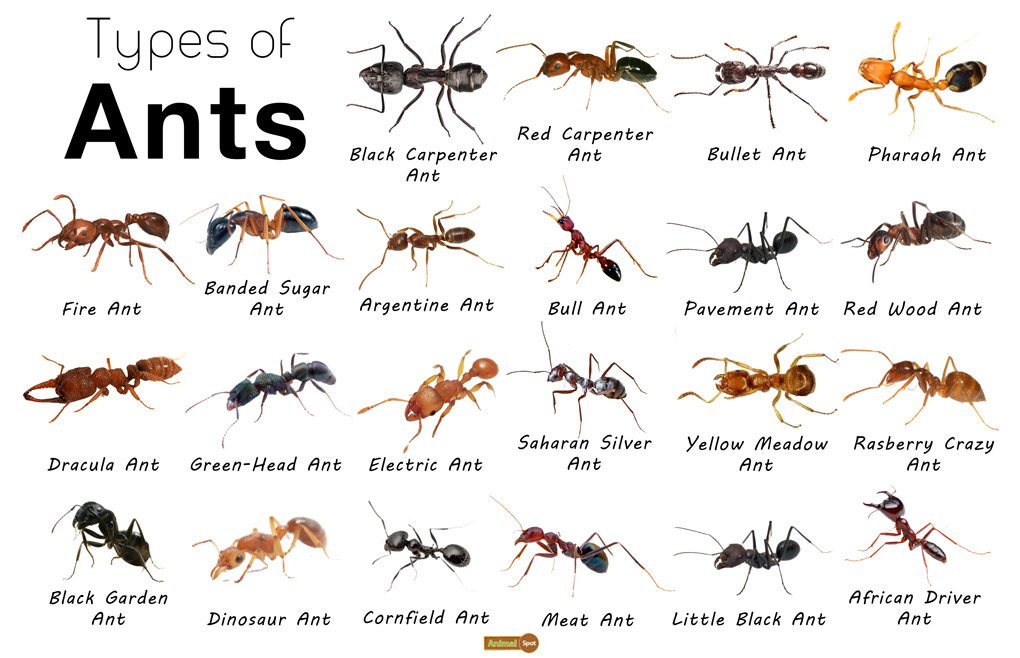 Various ant species including fire ant, carpenter ant, and leafcutter ant (Source : Animal Spot)
Threats and Conservation Status
Most ants are abundant, but some face threats:
-
Habitat destruction (deforestation, urbanization)
-
Pesticides and pollution
-
Invasive species displacing native ants
IUCN Status: Most species not threatened, but some local populations are vulnerable.
Interaction with Humans
-
Helpful: Control pests, enrich soil, pollinate some plants.
-
Harmful: Can invade homes, sting, or damage wooden structures.
-
Medical use: In some cultures, army ants’ jaws are used as surgical sutures!
Ants crawling on kitchen counter illustrating human interaction(Source :Adobe Stock)
Fun Facts
- Ants have been farming fungi for over 50 million years, long before humans.
- Some ants “milk” aphids for honeydew, like farmers with cows.
- Ants don’t have lungs, they breathe through tiny holes in their body called spiracles.
- The largest ant colony ever discovered stretched over 6,000 km across Europe.
Ant walking on a sunlit leaf symbolizing harmony with nature(Source:Dreamstime.com)
If you want to learn more about insect or biodiversity, you can reach out to us at Doctor Hulk Veterinary Hospital, or simply call us through 08143397614.
Reviews
There are no reviews yet.