
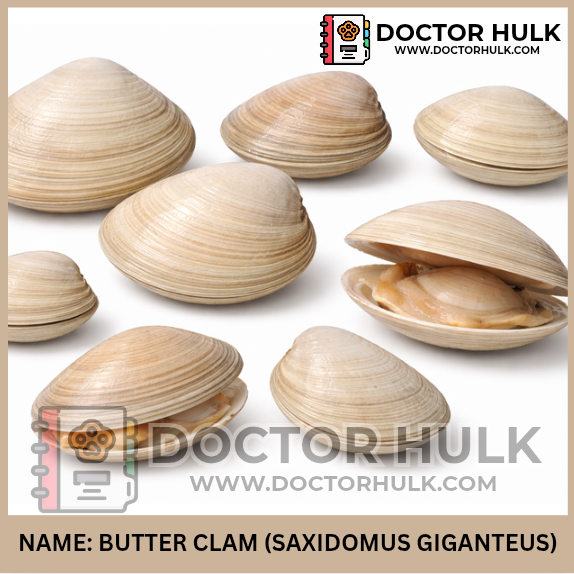
Butter clams are thick-shelled, burrowing shellfish that live in sandy or muddy coastal waters, usually just below the surface. They are named for their soft, creamy-colored meat, which is considered mild and sweet in flavor, almost buttery, which is where the name comes from. From the outside, they don’t look like much, just solid, oval-shaped shells that blend in with the seafloor, but inside is a slow-moving animal that filters water to feed on tiny particles like plankton.
They spend most of their lives buried a few inches beneath the sand, using a muscular foot to dig down and stay anchored in place. A pair of siphons stretch up through the sand to pull in water, allowing the clam to breathe and eat without ever needing to move much. It’s a simple lifestyle, but it works. Butter clams can live for decades if left undisturbed, quietly helping to clean the water as they filter it.
Scientific classification
-
Kingdom: Animalia
-
Phylum: Mollusca
-
Class: Bivalvia
-
Order: Veneroida
-
Family: Veneridae
-
Genus: Saxidomus
-
Species: Saxidomus gigantea
Physical characteristics
Butter clams feature oval, heavy shells with concentric rings and lack radial ridges. Exterior color ranges from pale white to stained rusty brown; the interior is smooth and white. The siphons measure about 4 cm long, are united, and end in a distinctive black tip.
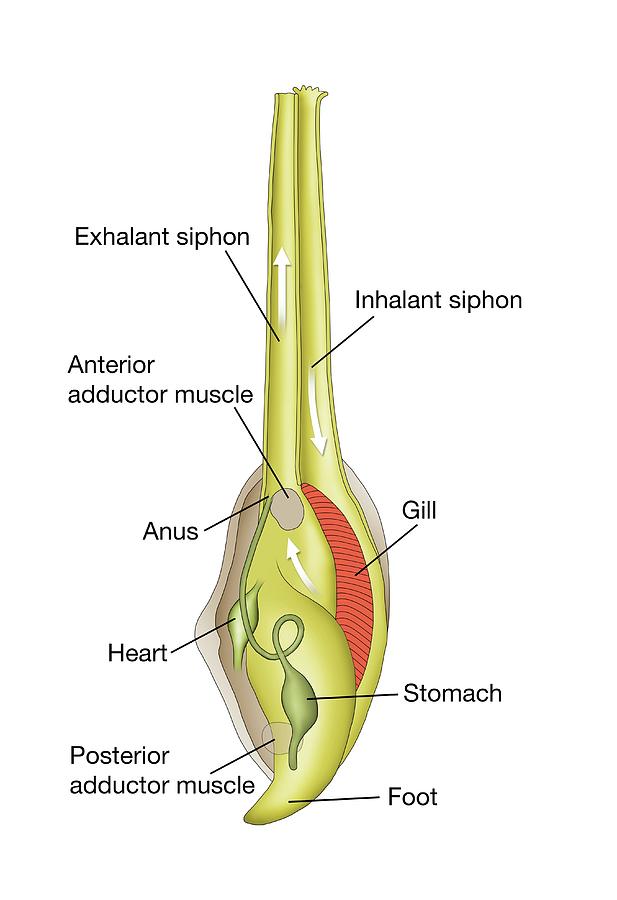
Image showing the anatomical structure of a butter clam (Source: Fine art America)
Habitat & distribution
These clams bury themselves 6–35 cm deep in soft sediments like sand or gravel, from intertidal zones to depths of 40 m (130 ft). Their native range spans the Aleutian Islands to San Francisco Bay—favoring sheltered estuaries and bays.
Diet & feeding habits
As filter feeders, butter clams draw in seawater through their siphons, extract tiny plankton and organic particles via their gills, and expel the rest. This helps maintain healthy coastal water clarity.

Image of a clam extending its siphon (Source: Wikipedia)
Life cycle & reproduction
Butter clams spawn in spring to early summer. They are gonochoric (separate sexes) with external fertilization. Larvae develop into trochophore, then veliger stages—free-swimming for up to 30 days, before settling into the substrate. Maturity typically reaches around 3–5 years, with a lifespan up to 20+ years.

Image showing the life cycle chart of a butter clam (Source: Eco Spark).
Behavior & adaptations
-
Masters of burrowing, with their shell and siphons adapted for deep sediment life.
-
Dense, heavy shells and black-tipped siphons deter predators.
-
Some host tiny pea crabs in their mantle cavity, a symbiotic relationship.
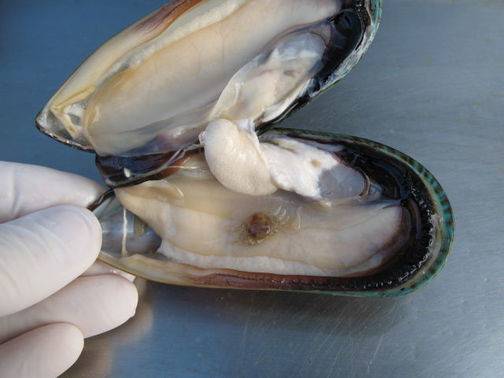
Photo of a clam showing pea crab interaction (Source: LabXchange)
Ecological importance
-
They are great filter feeders, and they improve water quality.
-
They provide food for predators like Dungeness crabs, moon snails, sea stars, seabirds, and sea otters.
Known species
Species in the Saxidomus genus:
-
S. gigantea – Pacific Northwest — large, heavily harvested
-
S. nuttalli – California/Baja — purple-stained interior
-
S. purpurata – Western Pacific — distinctive purple shell tone
Threats & conservation status
-
Risk of paralytic shellfish poisoning (PSP): Butter clams accumulate saxitoxin in their siphons for months, which can be hazardous to humans.
-
Heavy harvesting and habitat impacts. Designated Priority Species in some regions due to ecological and cultural value.
Interaction with humans
-
Edible and prized, especially in chowders, but caution is vital due to toxin risks; always remove siphon tips and check local advisories.
-
Culturally important: Indigenous communities dried and traded them widely, using them as currency in ancient trade networks.
Fun facts
-
Toxin origin: The term “saxitoxin” comes from the genus name Saxidomus.
-
Ancient relics: Clam shells found in archaeological middens date back thousands of years.
-
Deep burrowers: Leave a rectangular “show” in sand, like a flathead screwdriver mark, hinting at their hidden location.
 Two clams partially submerged in wet sand (Source: Freepik)
If you are curious to know more about sea animals or any other animal and their health care, you can reach out to us at Doctor Hulk Veterinary Hospital through 08143397614.
Reviews
There are no reviews yet.