
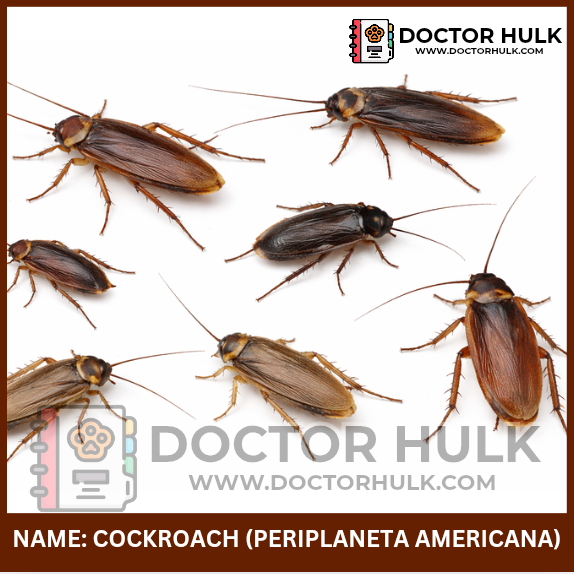
Cockroaches are hardy, flat-bodied insects that most people recognize instantly. They have been around for hundreds of millions of years, and part of what makes them so well-known is just how good they are at surviving. With their long antennae, quick movements, and tough exoskeletons, cockroaches can slip into tiny spaces and scavenge just about anything. They are not picky eaters at all rotting food, paper, fruits, almost nothing is off-limits. That’s one reason they do so well in human homes, especially in warm, dark, and damp places like kitchens and basements.
Despite their reputation, cockroaches don’t bite, and they are not aggressive. Still, they can be a problem indoors because they are known to carry bacteria and allergens, especially when infestations get out of hand. But outside of human spaces, many species of cockroaches live relatively unnoticed, doing important ecological work. In forests, for example, they help break down decaying plant material, speeding up the process of nutrient recycling.

High-resolution image of a cockroach on a wooden surface (Source: Vecteezy)
Scientific classification
| Level | Classification |
|---|---|
| Kingdom | Animalia |
| Phylum | Arthropoda |
| Class | Insecta |
| Order | Blattodea |
| Family | Various (e.g., Blattidae, Blattellidae) |
| Genus | Periplaneta, Blattella, Blatta, and others |
| Species | Over 4,500 known species |
Physical characteristics
Cockroaches are flattened, oval-bodied insects with:
-
Length: 0.6 cm to over 8 cm, depending on species
-
Color: Brown, reddish-brown, black, or greenish in rare tropical species
-
Wings: Some species have fully developed wings, others are wingless
-
Antennae: Long, slender, and highly sensitive
-
Legs: Six spiny legs adapted for fast running (up to 5 km/h)

Diagram labeling cockroach head, thorax, abdomen, wings, and legs (Source: GeeksforGeeks)
Habitat & distribution
Cockroaches thrive almost everywhere except extreme cold regions.
-
Common habitats: Kitchens, sewers, decaying wood, forest litter
-
Distribution: Found on every continent except Antarctica
-
Preferred climate: Warm, humid areas with access to food and water
 Global distribution map showing cockroach presence worldwide (Source: ResearchGate)
Diet & feeding habits
Cockroaches are omnivorous scavengers. They eat:
-
Decaying plant matter
-
Starches, sweets, meat scraps
-
Dead insects
-
Paper and cardboard in extreme cases
They use chewing mouthparts to grind food and can survive on very little, sometimes just glue or soap.
 Cockroaches eating leftover crumbs on a kitchen counter (Source: Greenhouse Termite and Pest Control)
Life cycle & reproduction
Cockroaches undergo incomplete metamorphosis:
-
Egg – Produced in a protective case (ootheca)
-
Nymph – Smaller, wingless, molts several times
-
Adult – Fully developed wings in many species
Females can produce multiple oothecae containing 10–50 eggs each.
Some species can reproduce without males (parthenogenesis).
 Image illustrating life cycle of a cockroach from egg to nymph to adult (Source: Shutterstock)
Behaviour & adaptations
-
Speed: Can sprint to escape predators
-
Nocturnal: Most active at night
-
Resilience: Can survive weeks without food and days without a head
-
Flattened body: Allows them to squeeze into tight spaces
 Cockroach quickly moving across the floor (Source: Shutterstock)
Ecological importance
Cockroaches act as:
-
Decomposers – Breaking down organic waste
-
Prey – For birds, amphibians, reptiles, and mammals
-
Nutrient recyclers – Returning nitrogen to soil
Notable species
| Species | Region | Size | Notable Trait |
|---|---|---|---|
| Periplaneta americana (American cockroach) | Worldwide | Up to 5 cm | Large, reddish-brown |
| Blattella germanica (German cockroach) | Worldwide | 1.3–1.6 cm | Common indoor pest |
| Blatta orientalis (Oriental cockroach) | Temperate regions | 2–3 cm | Prefers damp areas |
| Gromphadorhina portentosa (Madagascar hissing cockroach) | Madagascar | 5–7 cm | Produces hissing sound |
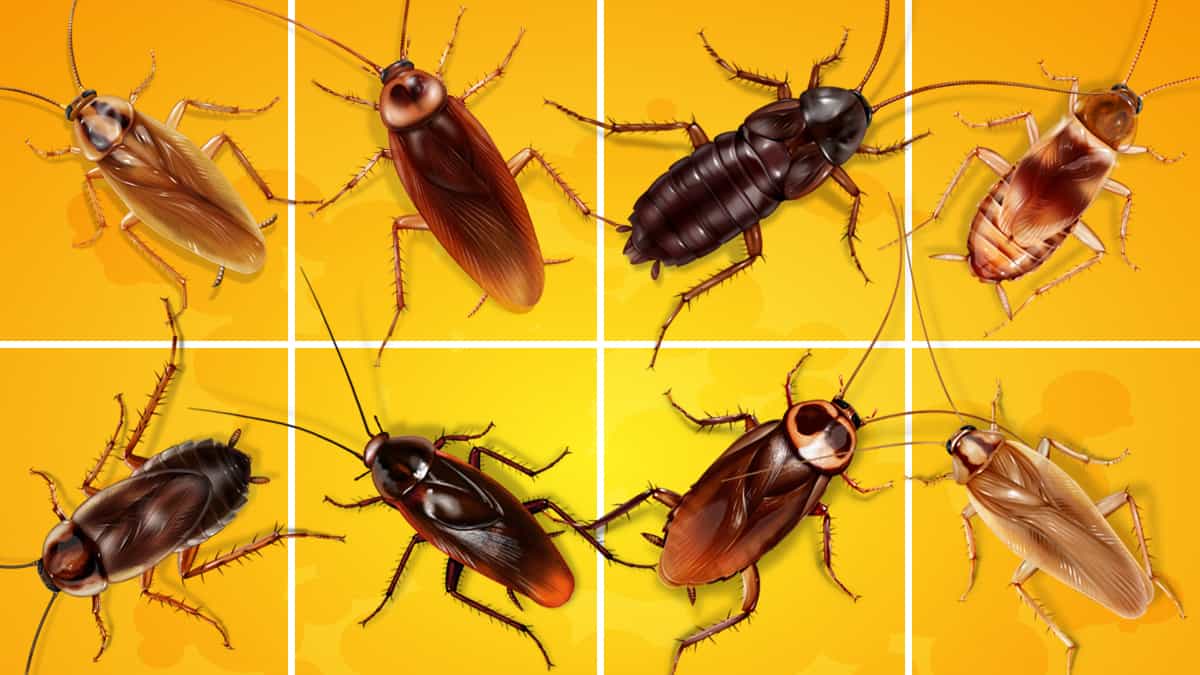 Photo grid of different cockroach species (Source: Cockroach Facts)
Threats & conservation status
While most cockroach species are abundant, some rare tropical species face threats from:
-
Habitat loss
-
Pollution
-
Climate change
IUCN Status: Most are Least Concern.
Interaction with humans
-
Harmful: Some species spread disease-causing bacteria and trigger allergies
-
Helpful: Key decomposers in natural environments; used in scientific research
-
Cultural uses: In traditional medicine in some Asian cultures
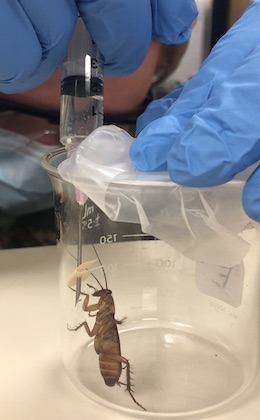 Cockroach being studied in a science lab (Source: Idaho State University)
Fun facts
- Some cockroaches can hold their breath for 40 minutes.
- They can survive decapitation for days until dehydration kills them.
- The largest cockroach species (Megaloblatta longipennis) can have a wingspan over 18 cm.
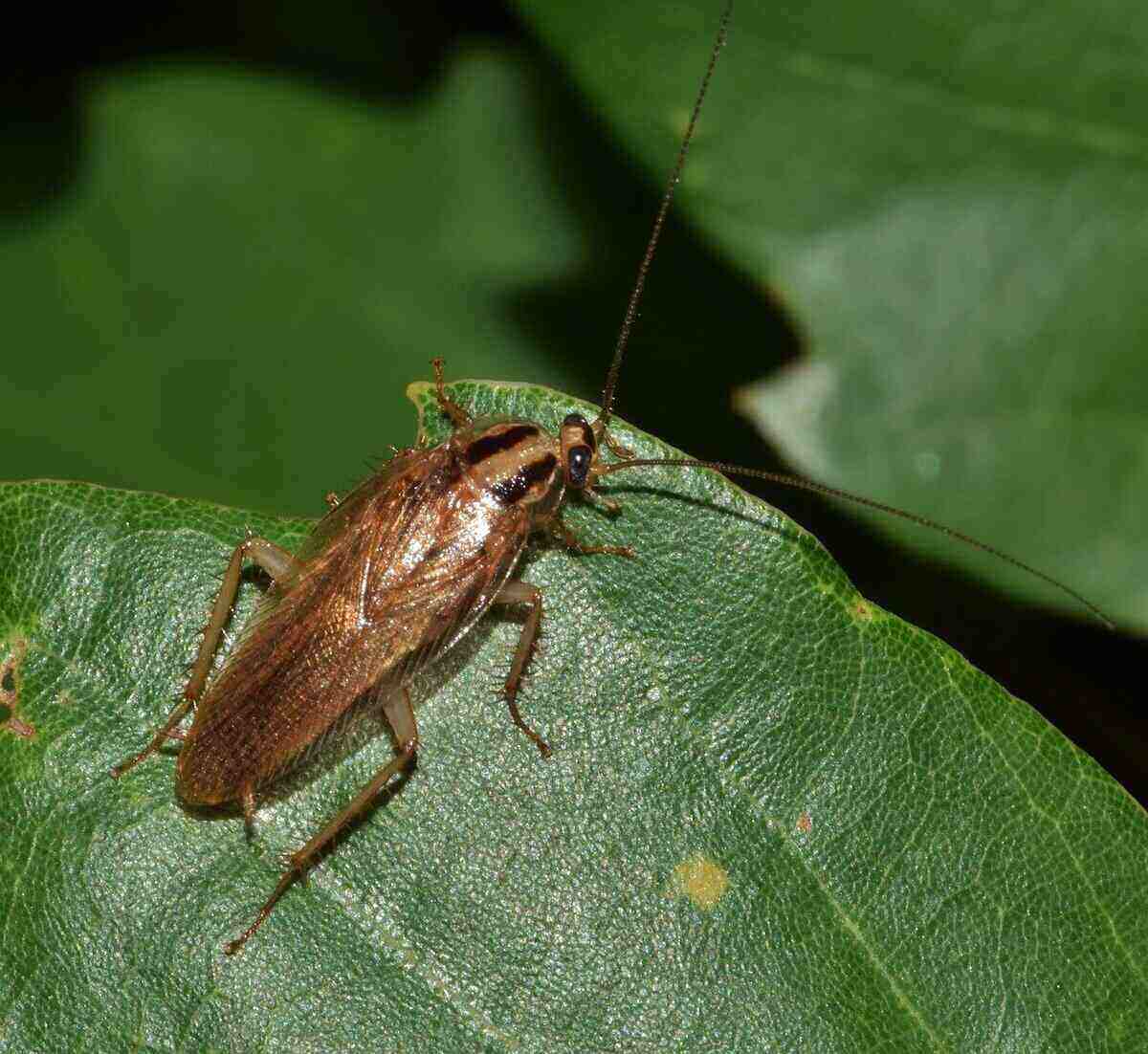
Cockroach walking on a leaf (Source: Lawn Love)
If you want to know more about insects or other animals, or you have issues with pest control, you can reach out to us at Doctor Hulk Veterinary Hospital through 08143397614.
Reviews
There are no reviews yet.