
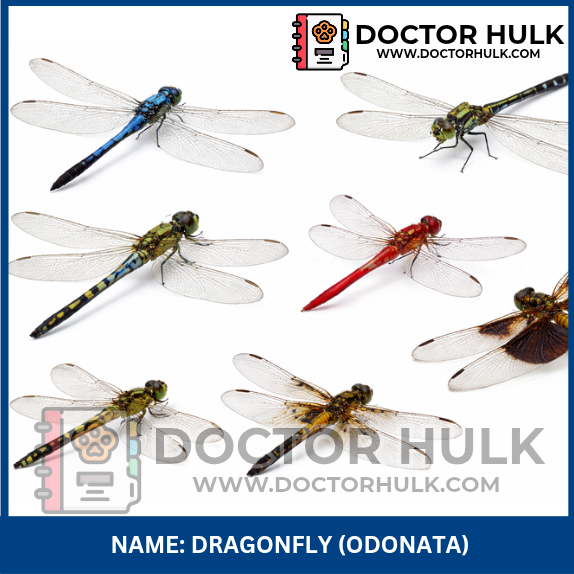
Dragonflies are large, fast-flying insects known for their long, slender bodies, broad wings, and striking colors. They live near freshwater habitats such as ponds, lakes, and rivers, where they hunt mosquitoes and other small insects. Dragonflies have existed for more than 300 million years, making them one of the oldest insect groups still alive today.
Image showing a dragon fly (Source: Discovery).
Scientific classification
- kingdom: Animalia
- phylum: Arthropoda
- class: Insecta
- order: Odonata
- family: Varies (e.g., Libellulidae, Aeshnidae, Gomphidae)
- genus: Multiple (Anax, Libellula, Sympetrum, etc.)
- species: Over 5,000 species documented
Physical characteristics
Dragonflies are among the largest insects, with body lengths ranging from 2.5 to 12 centimeters.
- They have two pairs of long, transparent wings that can move independently, allowing swift changes of direction and even hovering.
- Their bodies are usually elongated and segmented, with vivid colors such as metallic greens, blues, reds, or yellows.
- Dragonflies have large compound eyes that take up most of their head, giving them nearly 360-degree vision.
- Their six legs are adapted for catching prey in midair, though they are not suited for walking.
A clear image of a dragon fly showing its physical characteristics (Source: British Dragon fly society).
Habitat and distribution
Dragonflies survive in freshwater ecosystems.
- Their life cycle depends on water, so they are commonly found near lakes, ponds, marshes, rivers, and streams.
- They are present on every continent except Antarctica.
- The greatest diversity occurs in tropical regions, where humid environments support a wide variety of species.
Diet and feeding habits
Dragonflies are predators.
- As adults, they eat mosquitoes, flies, midges, bees, butterflies, and other small insects.
- They catch prey in mid-flight using their legs, forming a kind of basket to scoop the insect. Their strong jaws quickly crush and consume the catch.
- Dragonfly larvae (called nymphs) live underwater and feed on mosquito larvae, tadpoles, and even small fish.
Image showing a dragon fly eating (Source: Dreamstime).
Life cycle and reproduction
Dragonflies undergo incomplete metamorphosis.
- Eggs are laid in or near water.
- The eggs hatch into aquatic nymphs, which spend months or years underwater before becoming adults.
- Nymphs are fierce predators, using extendable jaws to grab prey. When ready, the nymph climbs out of the water and sheds its skin, emerging as a winged adult.
- Adult dragonflies typically live a few weeks to several months, depending on the species.

Image showing the life cycle of a dragon fly (Source: geeks for geeks)
Behavior and adaptations
Dragonflies are powerful fliers.
- They can fly forward, backward, and sideways, and can hover in place like a helicopter.
- Their large eyes give them excellent vision to detect movement and avoid predators.
- Nymphs use jet propulsion by expelling water from their rectum to dart away from threats.
- Adults rely on speed and agility to escape birds, frogs, and larger insects.
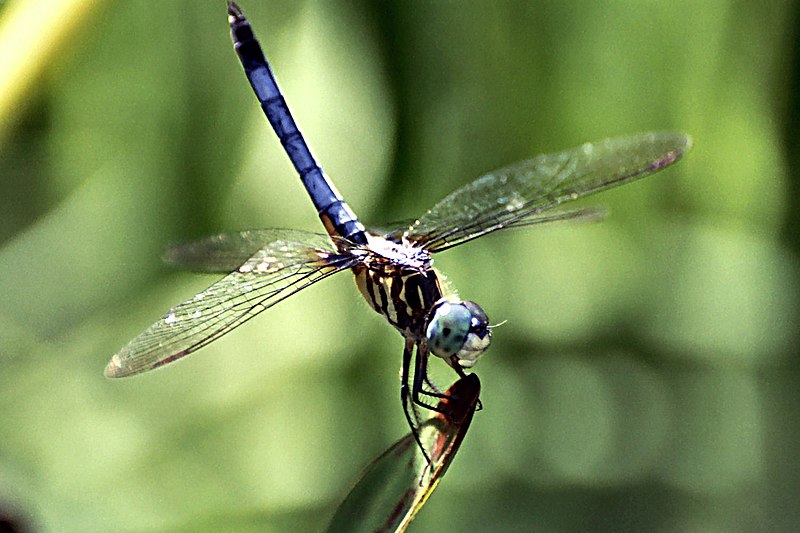
Image showing a dragon fly behavior and adaptation (Source: Lea Maimone)
Ecological importance
Dragonflies acts in ecosystems as both predators and prey.
- They consume mosquitoes and flies. This helps to control insect populations and reduce the spread of disease.
- As nymphs, they help regulate aquatic invertebrate communities.
- They are also food for birds, frogs, and fish. This makes them part of the food chain.
All known species or breeds
There are over 5,000 recognized dragonfly species. They are commonly grouped into families:
1. Aeshnidae (hawkers or darners): large dragonflies, common in North America and Europe. Example: Anax junius (common green darner).
Image showing a Aeshnidae (Source: Dragon flies online)
2. Libellulidae (skimmers): the largest family, known for diverse colors and wing patterns. Example: Libellula depressa (broad-bodied chaser).
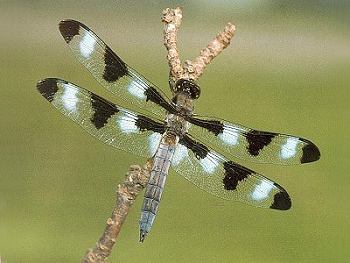
Image showing Libellulidae (Source: NC State Agriculture and Life Science)
3. Gomphidae (clubtails): dragonflies with clubbed tails, found in Europe, Asia, and the Americas. Example: Gomphus vulgatissimus.
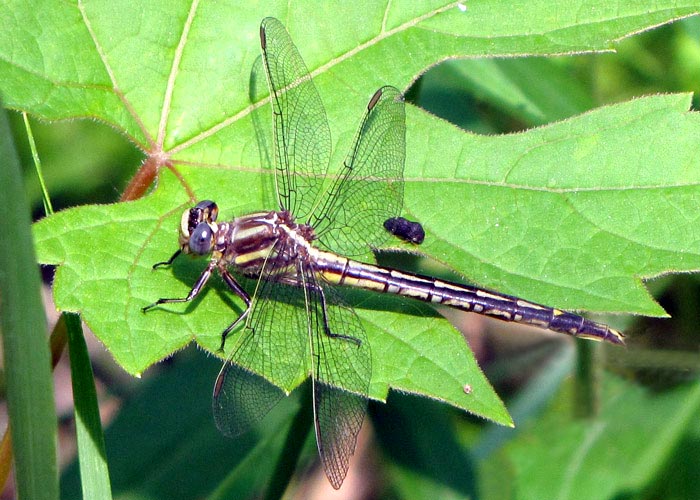
Image showing Club tail dragon fly – Gomphidae (Source: UW-Milwaukee)
4. Corduliidae (emeralds): metallic green dragonflies, common in wetlands. Example: Somatochlora metallica.
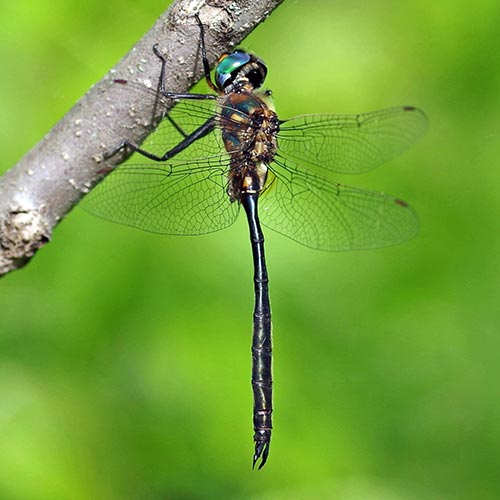
Image showing Emeralds Dragonfly – Corduliidae (Source: UW-Milwaukee)
Threats and conservation status
Dragonflies face threats from habitat destruction, water pollution, pesticides, and climate change. Because they depend on clean freshwater, they are sensitive to environmental changes. While many species remain common, others are declining.
Interaction with humans
Dragonflies are harmless to humans.
- They do not bite or sting.
- They are considered beneficial because they reduce mosquito populations.
- In some cultures, dragonflies are symbols of strength, change, and courage.
- In Japan, they are admired as symbols of summer and victory.
Fun facts
- A dragonfly can fly up to 56 kilometers per hour, making it one of the fastest flying insects.
- Their eyes contain up to 30,000 lenses, giving them nearly complete panoramic vision.
- Fossil dragonflies from 300 million years ago had wingspans of up to 70 centimeters.
You can share this post if you feel educated. You can also reach out to us at Doctor Hulk Veterinary Hospital through 08143397614 to learn more or for your animal care and concerns.
Reviews
There are no reviews yet.