
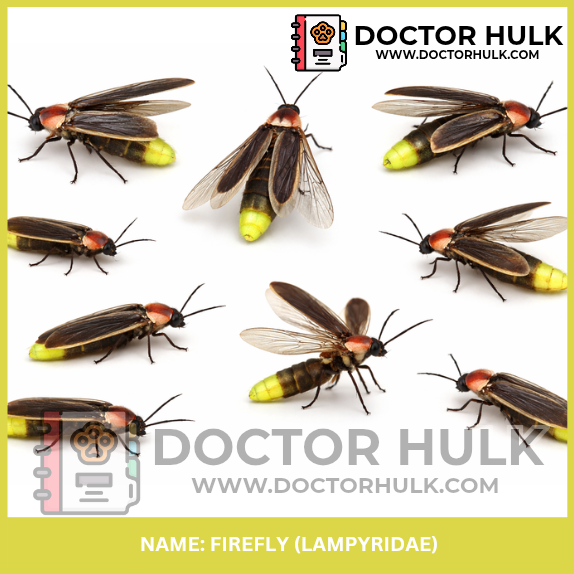

Fireflies are small beetles best known for their glowing abdomens. On warm evenings, their lights flicker across fields, forests, and gardens, turning the night into a moving constellation. The glow is a natural chemical reaction inside their bodies, used to signal mates or warn predators. People often call them lightning bugs, though they are neither true bugs nor flies.
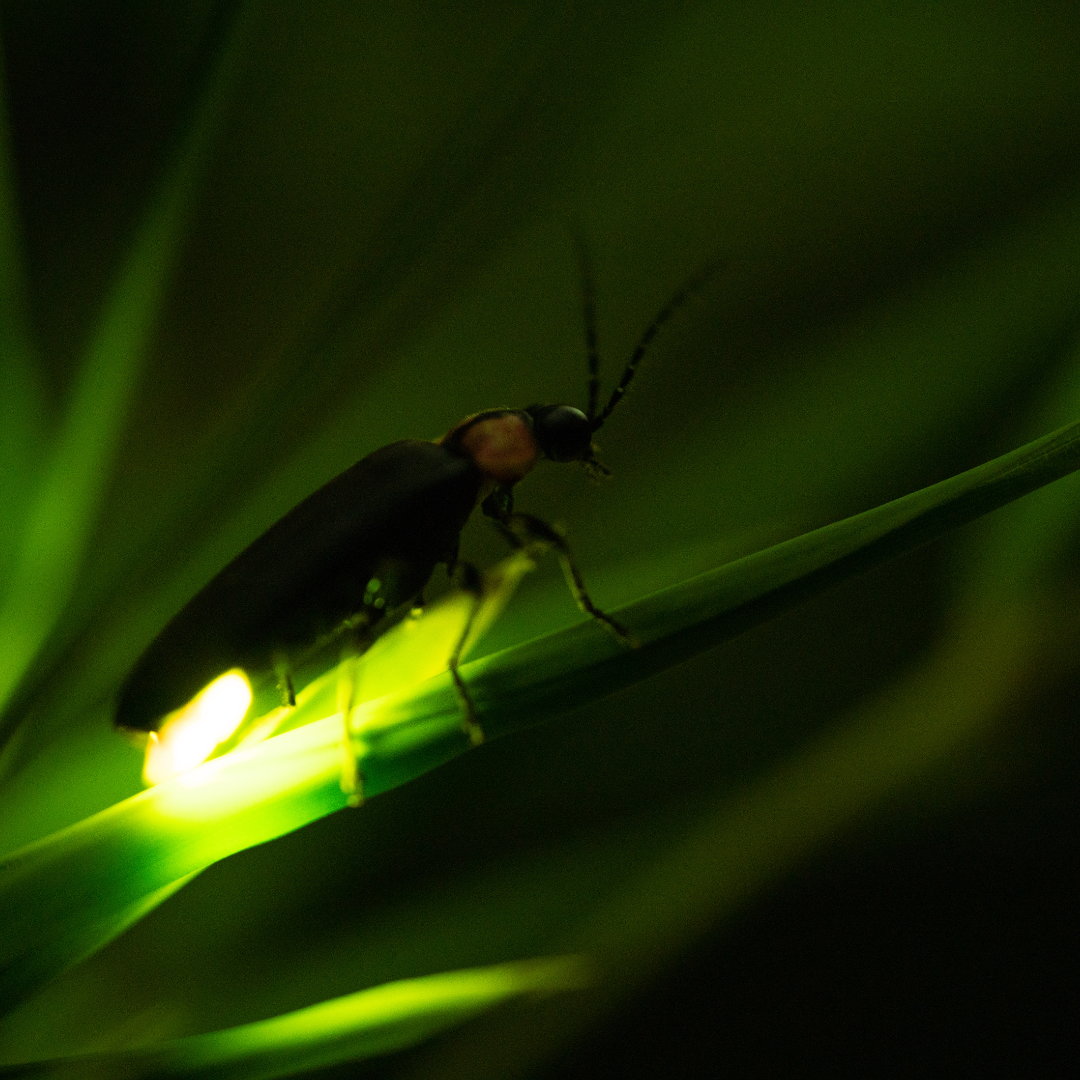
Image showing a firefly (Source: Peace Valley Nature Center)
Scientific classification
- kingdom: Animalia
- phylum: Arthropoda
- class: Insecta
- order: Coleoptera
- family: Lampyridae
- genus: Many genera including Photinus, Photuris, and Lampyris
- species: About 2,000 species worldwide
Physical characteristics
Fireflies are soft-bodied beetles:
- They usually have black or brown bodies with orange or yellow markings.
- Adults range from a few millimeters to about 2.5 centimeters long.
- Their most striking feature is the light-producing organ on the underside of the abdomen.
- The light comes from a reaction involving luciferin, oxygen, and enzymes, producing a cold, greenish-yellow glow. Unlike many insects, the light does not generate heat.
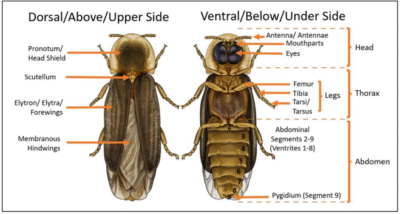
Image showing Firefly Morphology (firefly atlas). Base illustration by Audrey E. Bell (aebellillustration).
Habitat and distribution
Fireflies are found on every continent except Antarctica:
- Their greatest diversity is in tropical and temperate regions.
- They thrive in moist environments such as wetlands, forests, meadows, and gardens.
- Some species live close to water, while others prefer tall grasslands or open woodlands.
Image showing firefly habitat (Source: The Independent)
Diet and feeding habits
- Firefly larvae live in soil, leaf litter, or under bark.
- They are predatory and feed on snails, worms, and other small invertebrates by injecting digestive fluids into their prey.
- Adults of some species eat nectar or pollen, while others do not feed at all during their short lifespan.
- Female fireflies of the genus Photuris are known for mimicking the flash signals of other species to lure and eat males, a behavior nicknamed the “femme fatale firefly.”

Image showing a firefly eating a bug (Source: Bug guide)
Life cycle and reproduction
The firefly life cycle includes egg, larva, pupa, and adult stages:
- Females lay eggs in damp soil, and larvae emerge in a few weeks.
- The larval stage can last one to 160 days, during which they hunt at night and even glow faintly.
- Pupation occurs in the soil, followed by the adult emerging.
- Adults usually live only a few weeks, focusing on reproduction. The flashing signals are species-specific, with each species having its own rhythm and pattern.

Image showing life cycle and reproduction of firefly (Source: Jaikla et al., 2020).
Behavior and adaptations
Fireflies communicate through bioluminescent flashes:
- Males typically fly and flash while females respond from perches in the vegetation.
- Timing is everything, some flashes last just fractions of a second.
- The glow also deters predators, since many animals find the chemicals inside fireflies bitter or toxic.
Ecological importance
- Fireflies are part of many food chains, serving as prey for birds, frogs, spiders, and other insects.
- Their larvae help control snail and slug populations in ecosystems and gardens.
- They also serve as indicators of healthy environments, since many species decline when wetlands are drained or pesticide use is heavy.
All known species
Some well-known firefly groups include:
1. Photinus: Common in North America, known for their rhythmic flash patterns.

Image showing a Photinus (Source: Art farmer-wikipedia)
2. Photuris: Famous for their predatory “femme fatale” females. image

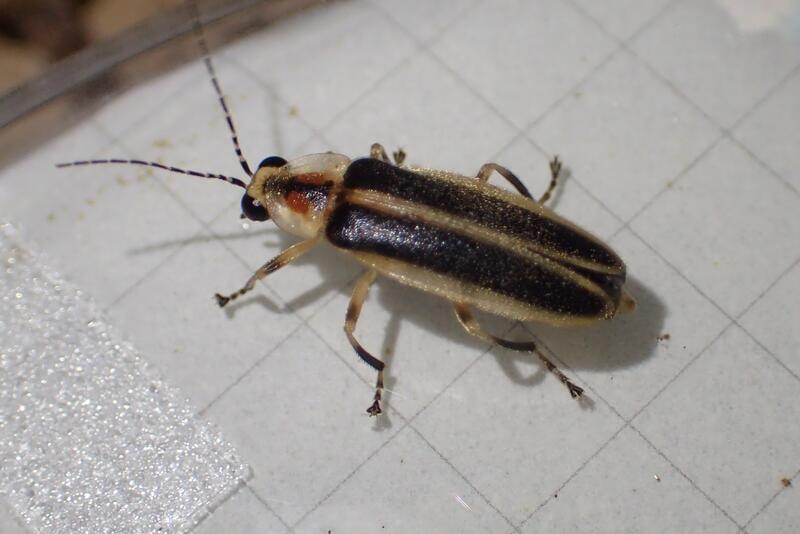
Image showing Photuris forresti (Source: Georgia biodiversity).
3. Lampyris: Includes the European glow-worm, where females produce a steady glow instead of flashes.

Image showing Lampyris (Source: Observation org)
Threats and conservation status
Populations of fireflies are shrinking in many regions:
- This is due to habitat loss, light pollution, pesticide use, and climate change.
- Artificial lights at night interfere with their flash signals, making it harder for males and females to find each other.
Interaction with humans
- Fireflies inspire fascination and folklore worldwide.
- In many cultures, they symbolize hope, love, or the fleeting nature of life.
- Children often chase them on summer nights, and some festivals, especially in Asia, celebrate their glowing displays.
- Their bioluminescence has also been studied in medical research, where luciferase enzymes are used in diagnostics and imaging.
Fun facts
- The glow of fireflies is one of the most efficient natural lights, wasting almost no energy as heat.
- Some firefly larvae are aquatic and live in streams or ponds.
- Different firefly species flash in rhythms, like each one having its own Morse code.
You can reach out to us at Doctor Hulk Veterinary Hospital through 08143397614 to learn more about animals or for your animal health care and concerns.
Reviews
There are no reviews yet.