
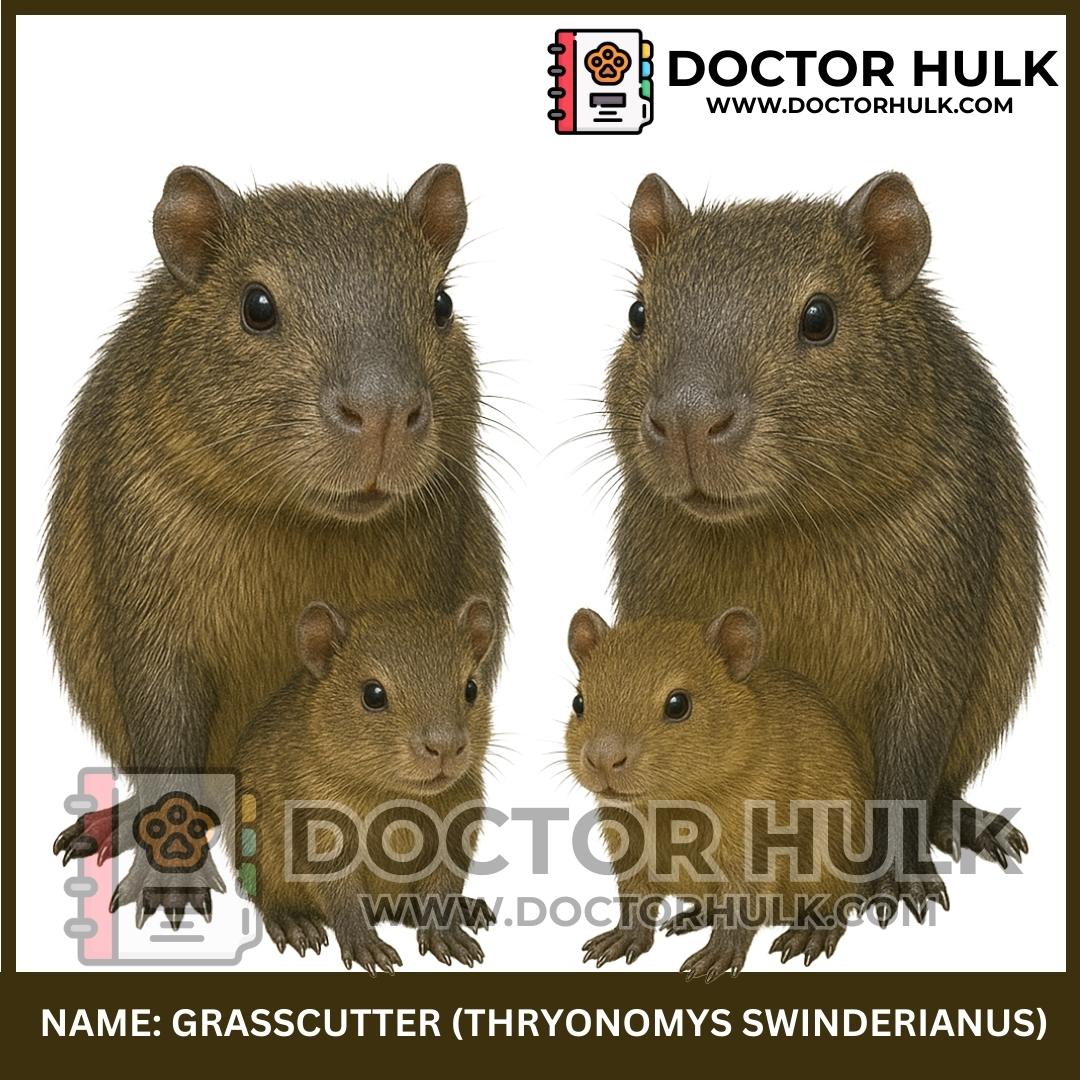

Grasscutters, also called cane rats, are large rodents native to Africa. They are very popular for their meat, which is highly valued in many parts of West and Central Africa. Despite looking like big rats, grasscutters are calm, clean, and easy to rear with proper care.
Scientific Classification
-
Kingdom: Animalia
-
Phylum: Chordata
-
Class: Mammalia
-
Order: Rodentia
-
Family: Thryonomyidae
-
Genus: Thryonomys
-
Species: Thryonomys swinderianus (Greater Cane Rat)
Common Names
-
Grasscutter
-
Cane Rat
-
Bush Meat (informal, in food markets)
-
Agouti (in some local languages)
In Nigeria and Ghana, grasscutters are a common delicacy and part of local bushmeat culture.
Geographic Distribution
Grasscutters are found in many parts of Sub-Saharan Africa, especially in:
-
Nigeria
-
Ghana
-
Cameroon
-
Côte d’Ivoire
-
Benin
-
Togo
They prefer grassy fields, farmlands, and forest edges, often near sugarcane or maize.
 Image showing an adult grasscutter feeding on sugarcane (Source: You Tube)
Physical Characteristics
-
Length: 40–60 cm (excluding tail)
-
Weight: 3–6 kg (sometimes up to 8 kg)
-
Fur: Coarse, brownish-grey or mixed colors
-
Head: Broad with strong jaw
-
Body: Stocky, with short legs and sharp claws
-
Teeth: Orange or yellow front teeth (like other rodents)
Their strong teeth help them chew hard grass and tough plant stalks.
Species of Grasscutter
There are two known species, but only one is commonly farmed:
1. Greater Cane Rat (Thryonomys swinderianus)

Image showing greater cane grasscutter (Source: Reddit)
Key Facts:
-
Most commonly farmed grasscutter
-
Grows bigger and faster
-
Calm temperament
-
Good for commercial breeding
What do grasscutters eat?
Grasscutters are strict herbivores. Their diet includes:
-
Fresh and dry grass
-
Sugarcane
-
Maize husks
-
Elephant grass
-
Palm kernel cake (PKC)
-
Peels of sweet potato, cassava, or plantain (with caution)
They need a clean and balanced diet to grow well and avoid bloating or illness.
Fun facts
-
Grasscutter meat is very high in protein and low in fat.
-
Their meat sells higher than chicken or goat in many markets.
-
They don’t bark or squeak , they make soft grunting sounds.
-
A mature female can give birth to 4–7 young (called pups) at once.
-
They are non-aggressive and easy to handle when trained.
Importance to Humans
Positive Roles:
-
Popular source of meat in West Africa
-
Farming grasscutters creates jobs and income
-
Meat used in restaurants and cultural events
-
Easy to raise in small spaces (even backyard farming)
-
Can reduce overhunting of wild animals
Challenges:
-
Can damage farms if they escape
-
Need proper hygiene to avoid disease outbreaks
-
Poor breeding can lead to aggression or stress
Health & common issues
Grasscutters are hardy animals but need good hygiene and handling.
Common health issues:
-
Bloating from poor diet
-
Pneumonia from cold or damp pens
-
External parasites (mites or ticks)
-
Stress from overcrowding
-
Stillbirths in poor breeding setups
Veterinary needs:
-
Clean, dry cages or pens
-
Constant supply of clean water
-
Balanced diet and mineral blocks
-
Regular deworming and health checks
Conservation Status
The grasscutter is not endangered, but wild populations face pressure from overhunting in some areas.
By promoting grasscutter farming, people can protect wild species while still enjoying the meat.
Grasscutter vs Rat
| Feature | Grasscutter | Regular Rat |
|---|---|---|
| Size | Much larger | Smaller |
| Use | Farmed for meat | Seen as pest |
| Behavior | Calm and easy to handle | Fast and skittish |
| Diet | Purely plant-based | Eats anything (omnivorous) |
Image showing a calm grasscutter feeding in iron cage with its weaners (Source: Entrepreneurs.ng)
Are you interested in starting your own grasscutter farm? Visit Doctor Hulk Veterinary Hospital for training, health support, and animal care solutions, or call 08143397614.


Reviews
There are no reviews yet.