


Monkeys are curious, smart, and social animals. They live in trees, forests, and even near humans. Some are small enough to fit in your hand, while others are big and powerful. Monkeys are known for jumping, swinging, and making fun sounds.
Scientific Classification
-
Kingdom: Animalia
-
Phylum: Chordata
-
Class: Mammalia
-
Order: Primates
-
Suborder: Haplorhini
-
Infraorder: Simiiformes (True Monkeys)
Common Names
-
Monkey
-
Baboon
-
Colobus
-
Capuchin
-
Vervet Monkey
-
Howler Monkey
-
Spider Monkey
-
Mandrill
Geographic Distribution
Monkeys live in many parts of the world. You’ll find them in:
-
Africa (e.g., baboons, colobus monkeys)
-
Asia (e.g., macaques, langurs)
-
South & Central America (e.g., capuchins, howler monkeys)
 Image showing a vervet monkey climbing a tree: (Source: Pexels)
Physical Characteristics
-
Body: Covered in fur, arms and legs for climbing
-
Face: Some have flat faces, others have long snouts
-
Tail: Most have tails; some use them for balance or grasping
-
Size: From 15 cm (pygmy marmoset) to over 1 meter (mandrill)
-
Color: Brown, black, grey, golden, or colorful (like mandrill’s blue nose)
Major species of Monkeys
1. Old world monkeys (Africa, Asia)
Examples: Baboon, Colobus, Mandrill, Macaque Image showing a baboon sitting on a rock (Source: Dreamstime)
-
Larger, usually live on ground or trees
-
Nostrils are close together
-
No prehensile (gripping) tail
Key Traits:
-
Smart and social
-
Often seen in groups
-
Strong limbs and sharp teeth (baboons)
2. New World monkeys (South & Central America)
Examples: Capuchin, Howler, Tamarin, Spider Monkey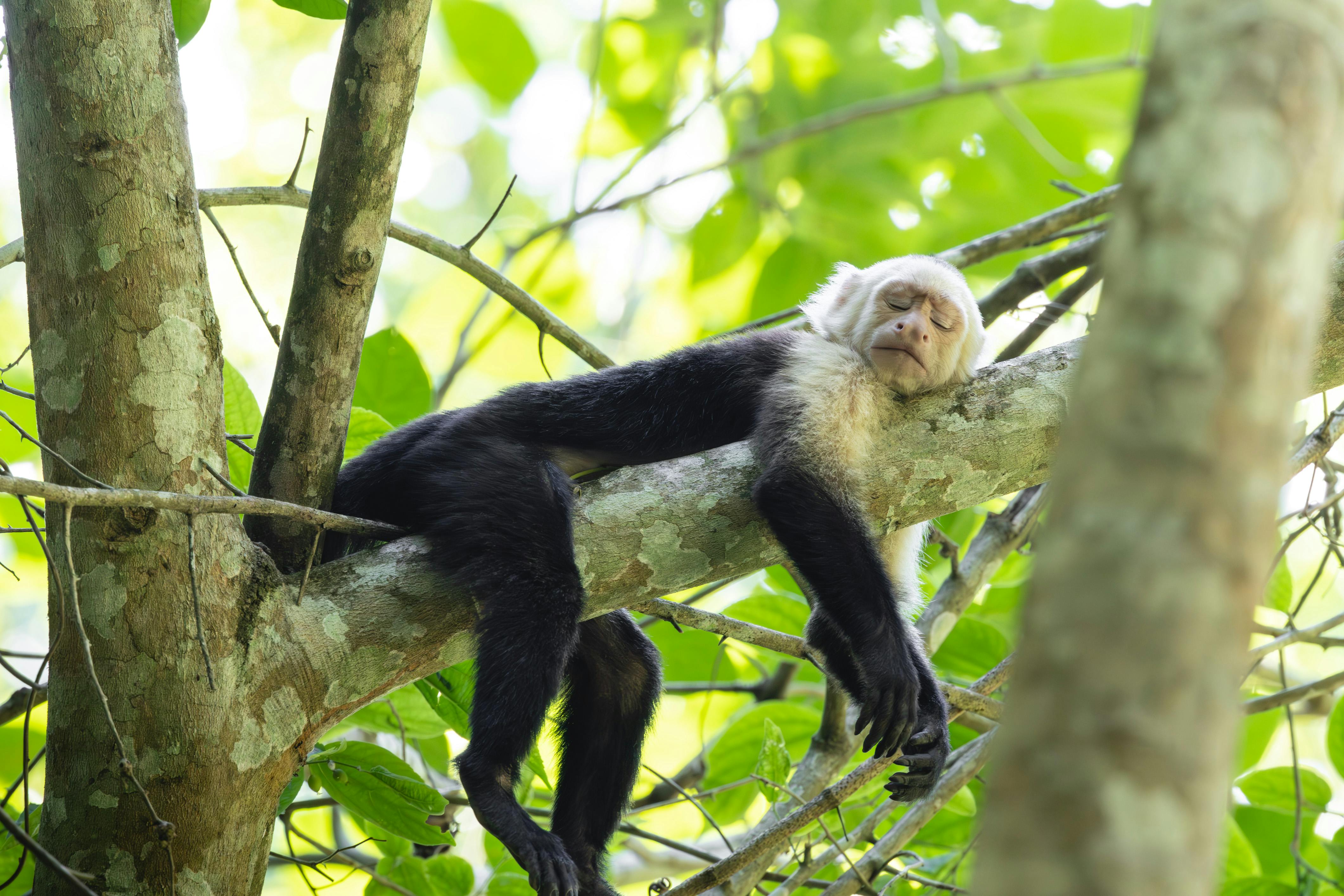 Image showing a capuchin monkey lying down and sleeping on a tree branch (Source: Pexels)
-
Live mostly in trees
-
Wide-set, flat noses
-
Many have prehensile tails for grabbing
Key Traits:
-
Great climbers
-
Make loud calls (howler monkeys)
-
Small to medium size
What do monkeys eat?
Monkeys are omnivores, meaning they eat both plants and small animals.
Their diet includes:
-
Fruits and seeds
-
Leaves and flowers
-
Insects and spiders
-
Small birds or eggs (sometimes)
Fun facts about monkeys
-
Capuchin monkeys can use tools like sticks or stones.
-
Howler monkeys have a voice that carries 3 km through forests.
-
Some monkeys like the macaque can swim and dive in water.
-
Vervet monkeys have different alarm calls for different predators.
-
Monkeys groom each other to build friendships.
Importance to Humans
Positive Impact:
-
Help in forest regeneration by spreading seeds
-
Used in scientific and medical research (ethically debated)
-
Seen in tourism and documentaries
-
Part of many cultural beliefs and stories
Challenges:
-
Some monkeys can steal food from farms or homes
-
Keeping them as pets is often harmful and illegal
-
Human conflict and hunting hurt monkey populations
Health & common issues
Monkeys in the wild face threats like habitat loss, while captive monkeys need good care.
Common health concerns:
-
Injuries from fighting or falls
-
Malnutrition from poor diet
-
Stress and boredom in captivity
-
Diseases like herpes B (in macaques), respiratory infections
Vet Tips:
-
Wild monkeys should never be kept as pets
-
Sanctuaries and zoos should give them space, social time, and enrichment
-
Regular health checks are vital for captive monkeys
Conservation status
Many monkey species are endangered due to:
-
Deforestation and logging
-
Illegal wildlife trade
-
Climate change
-
Hunting for bushmeat
Groups around the world are protecting forests and creating monkey sanctuaries.
Monkey vs Ape: What’s the difference?
People often confuse monkeys with apes (like gorillas and chimpanzees).
| Feature | Monkeys | Apes |
|---|---|---|
| Tail | Usually have tails | No tails |
| Size | Smaller | Larger and stronger |
| Intelligence | Smart | Smarter (tool use, memory) |
| Examples | Baboon, Capuchin | Gorilla, Chimpanzee |
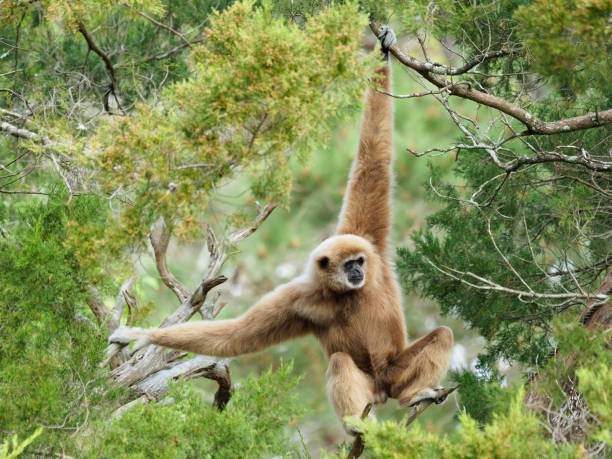
Image showing a Monkey swinging between tree branches in the wild (Source: IStock)
If you have a monkey-related question or wildlife concern, reach out to us at Doctor Hulk Veterinary Hospital, or call 08143397614.

Reviews
There are no reviews yet.