
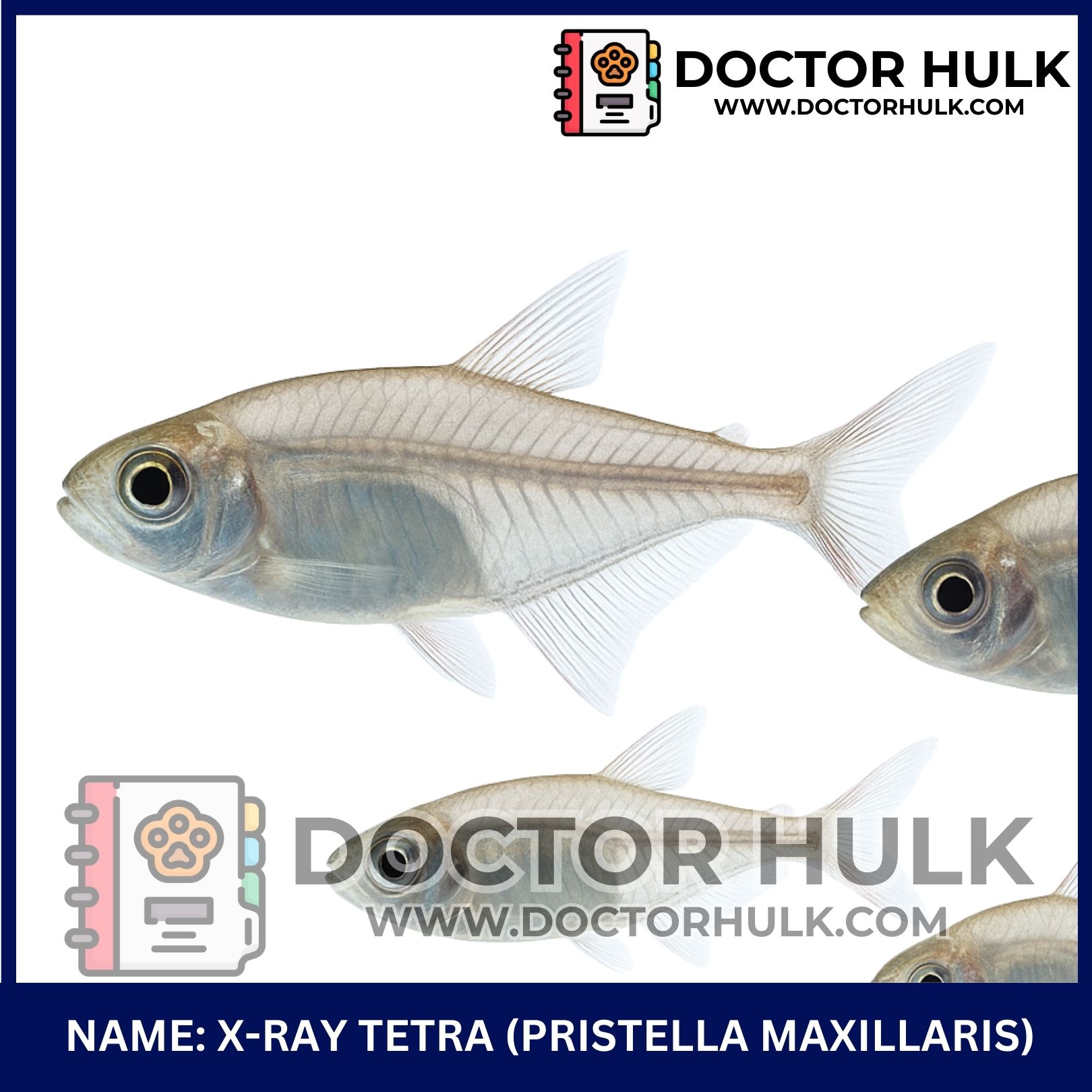


This is a small, shiny, fish with a see-through body. This fish gets its name from its semi-transparent body that shows off its internal bones like an X-ray. It lives in rivers of South America, swims in groups, and is calm and friendly enough that many beginner fishkeepers love it.
Scientific Classification
-
Common Name: X-ray Tetra
-
Scientific Name: Pristella maxillaris
-
Kingdom: Animalia
-
Phylum: Chordata
-
Class: Actinopterygii (ray-finned fishes)
-
Order: Characiformes
-
Family: Characidae
Physical characteristics
- X-ray tetras reach about 4–5 cm in length.
- Their bodies are silvery and partly transparent.
- The dorsal and anal fins have stripes of yellow, white, and black.
- Their tails are reddish or pink.
- Males are usually slimmer; females are a bit rounder and may show eggs when ready to spawn.
 Image showing close-up of a single X-ray tetra showing its transparent body and colorful tail fin (Source: Aquadiction)
Habitat and distribution
- They grow up in slow-moving rivers and streams in places like Brazil, Venezuela, Suriname, and parts of the Amazon basin.
- They tolerate slightly different water types, some are soft and acidic, some a little harder.
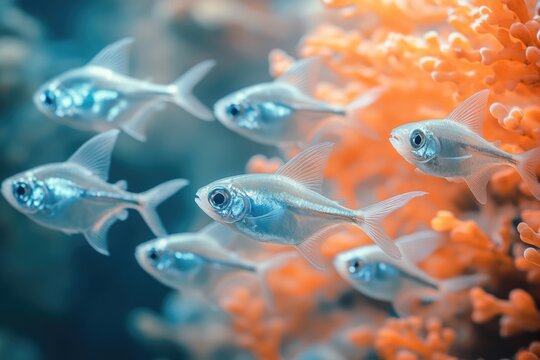 Image showing a school of X-ray tetras swimming through clear water (Source: AdobeStock)
Diet and feeding habits
- In nature, they eat small insects, larvae, and tiny organisms floating in the water.
- In aquariums, they accept good flake food or pellets plus frozen or live treats like brine shrimp or insect larvae.
Life cycle and reproduction
- They lay eggs, and scatter them over plants or decorations.
- Eggs hatch in about 24 to 36 hours under good conditions.
- The fry swim freely a few days later.
- In aquariums, they will breed if water is clean, warm enough, and plants or fine cover are available.
- Lifespan is about 4-5 years if well kept.
Behavior and adaptations
- X-ray tetras swim in schools; being in groups reduces stress and helps them feel safe.
- Their semi-transparent body helps camouflage them against predators.
- Their coloration on fins can warn or distract predators.
- They prefer planted tanks or places to hide.
 Image showing a pair of X-ray tetras (Source: Dreamstime)
All known species or varieties
This species has a few variants people keep:
1. Regular (Pristella maxillaris): has typical transparent body, red tail, yellow/black/white fin stripes.
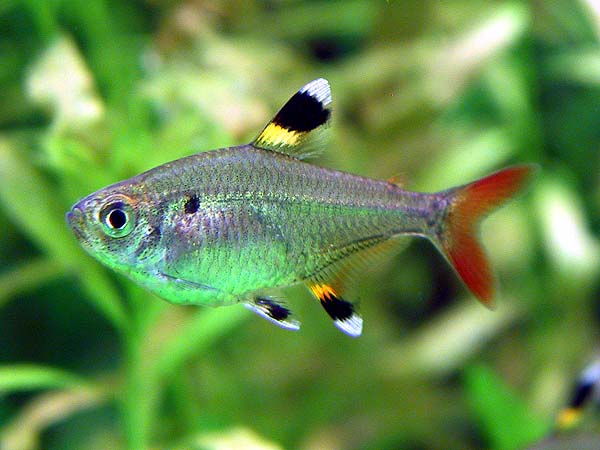
Image showing Regular x ray tetra fish (Pristella maxillaris)(Source:
2. Albino variant (Red Belly X-ray): has paler body, pinkish tones, similar fin patterns.

Image showing Albino variant (Red Belly X-ray) (Source: Dcfreshwaterfish)
Threats and conservation status
- They are listed as Least Concern by IUCN. That means they are not declining sharply.
- Water pollution and habitat changes could affect local populations though, especially where their river systems are degraded.
Interaction with humans
- These fish are common in home aquariums because they are peaceful and pretty.
- They don’t bother people.
- Tank mates are gentle fish.
- Because they like clean water, caring for them helps new aquarists learn good aquarium practices.
Fun facts
- You can see through their body to some organs, and that’s how they got “x-ray” in the name.
- They can survive mild brackish water (a mix of fresh and salt) better than many other tetras.
- Their fin colours, yellow, black, white, look like a signal flag and help them stand out during courtship or among their own kind.
You can reach out to us at Doctor Hulk Veterinary Hospital through 08143397614 if you want to learn more about keeping this species or caring for other animals
Reviews
There are no reviews yet.