


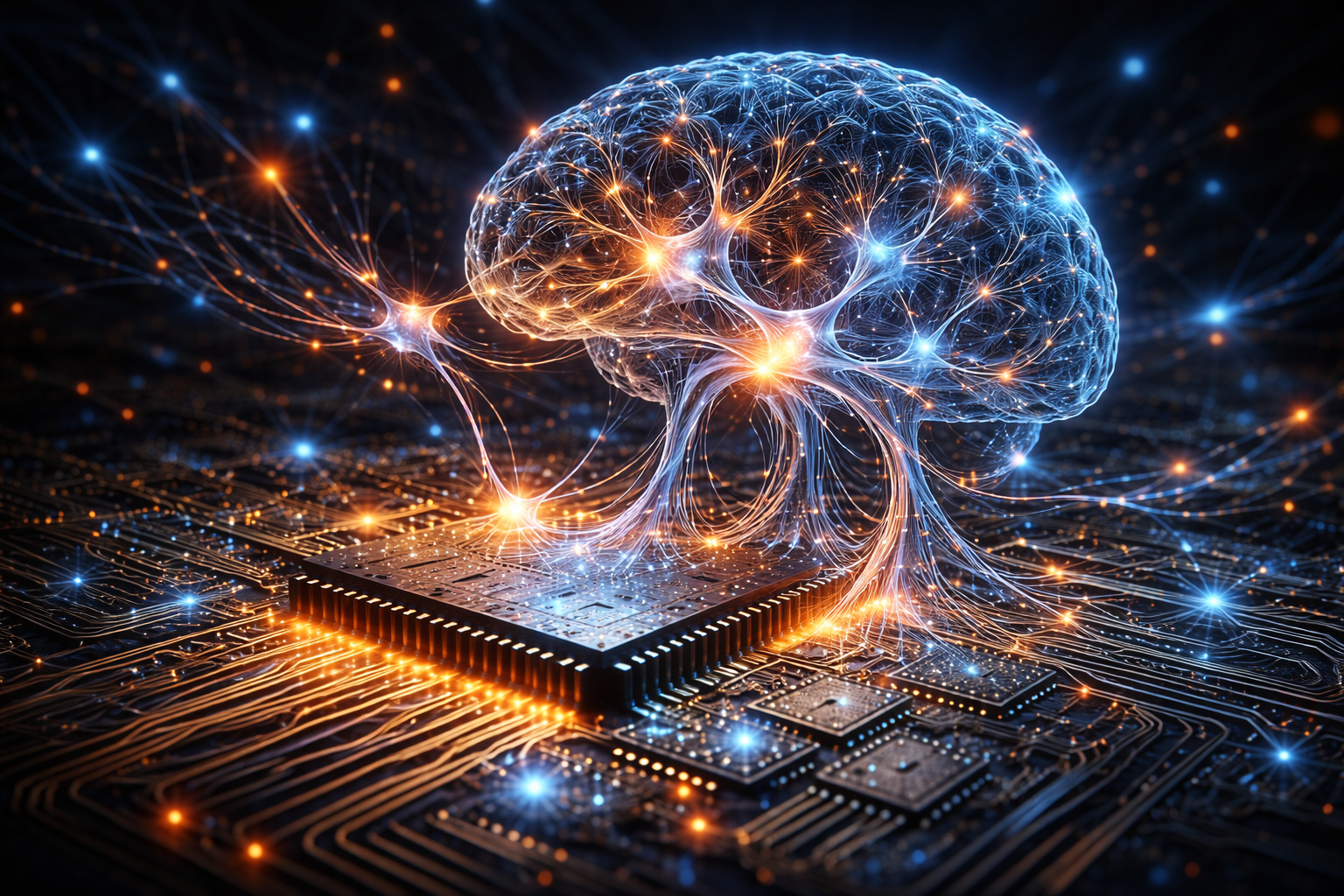
1. A New Kind of Artificial Intelligence
Artificial intelligence today usually runs on silicon chips inside computers. These chips process information using electrical circuits and mathematical algorithms. But scientists are now exploring a radically different idea:
building artificial intelligence using living brain cells. This emerging field is sometimes called BIO-AI or biological intelligence systems.
Instead of programming silicon circuits, researchers grow living neurons in laboratories and allow them to form networks that can process information.
In other words, living brain cells themselves become the computers
2. Where Do These Brain Cells Come From?
Surprisingly, these neurons do not need to come from the brain. Scientists can take ordinary skin cells from a person and reprogram them into neurons.This process is called cellular reprogramming.
Skin cells are first converted into induced pluripotent stem cells (iPSCs). These cells behave like embryonic stem cells and can transform into almost any type of cell in the body. From there, scientists guide them to become neurons.
So a small skin sample can eventually produce millions of brain cells in the lab.
3. Reprogramming Resets Cellular Aging
One fascinating aspect of this process is that reprogramming resets many biological aging markers.
Normal cells age over time due to factors such as:
- Telomere shortening
- DNA damage
- accumulated cellular stress
But when cells are reprogrammed into induced pluripotent stem cells, many of these aging signals are partially reset. Telomeres can become longer again, and the cells behave more like young cells.
This means the neurons created in the lab may avoid some of the limitations that ordinary aging cells have.
4. Growing Living Neural Networks
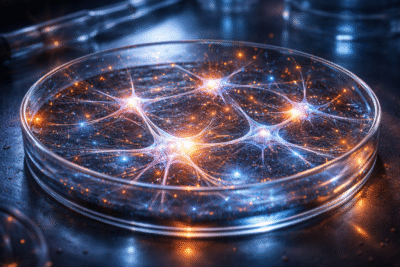
Once neurons are created, scientists grow them in laboratory dishes. The neurons naturally connect with each other through synapses, forming networks similar to those found in the brain. These networks can:
- Send electrical signals
- Learn patterns
- Adapt over time
Researchers place these neurons on microelectrode arrays, which allow computers to communicate with them.
The electrodes can:
- stimulate the neurons
- record their electrical activity
This creates a two-way interface between living cells and machines.
5. When Neurons Learn Like a Brain
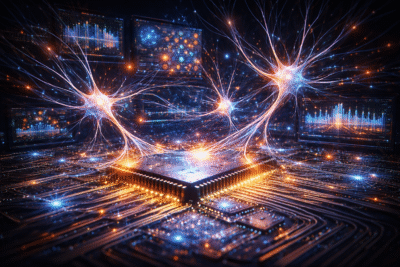
Scientists have already demonstrated that these living neural networks can learn simple tasks.
In some experiments, neurons grown in a dish have learned to:
- respond to electrical signals
- recognize patterns
- even control simple games
For example, in one experiment, neurons were connected to a computer simulation of a game similar to Pong. The neurons gradually learned how to adjust their signals to improve performance.
This suggests that living neural networks can adapt and learn in ways similar to biological brains.
6. Why Biological Intelligence Could Be Powerful
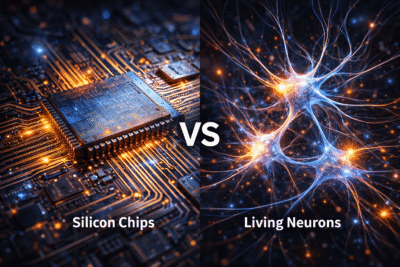
Biological neurons have several advantages over traditional computer chips.
They are:
- Extremely energy efficient : The human brain uses about 20 watts of power, far less than modern supercomputers.
- Highly adaptable : Neurons constantly reorganize their connections, allowing them to learn naturally.
- Massively parallel : Billions of neurons can process information simultaneously.
These properties could allow BIO-AI systems to perform certain tasks more efficiently than traditional computers.
7. Potential Applications of BIO-AI 
Although still experimental, BIO-AI could eventually have many uses. Possible applications include:
- Drug testing : Scientists could test new medicines on living neural networks derived from human cells.
- Neurological disease research : Researchers can study diseases like Alzheimer’s or Parkinson’s using neurons grown from patient cells.
- Energy-efficient computing : Biological computers may perform complex tasks while using far less electricity.
- Brain-machine interfaces : Future systems might allow more advanced connections between biological brains and computers.
8. Ethical Questions and Challenges
This technology also raises serious ethical questions.
For example:
- Could large neural networks develop forms of awareness?
- How should living biological systems used for computing be treated?
- Who owns biological data derived from human cells?
Scientists and ethicists are actively discussing these issues to ensure the technology develops responsibly.
9. The Future of BIO-AI
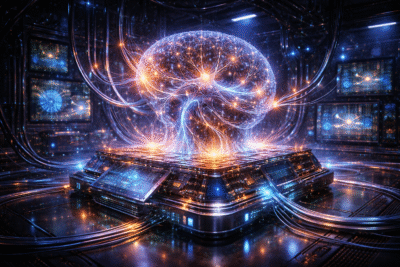
BIO-AI is still in its early stages, but it represents a fascinating direction for science. In the future we may see hybrid systems where:
- silicon computers handle traditional calculations
- biological neural networks handle adaptive learning tasks
Such systems could combine the speed of computers with the flexibility of living brains.
If this vision becomes reality, BIO-AI could transform computing, medicine, and neuroscience.
Final Thoughts
BIO-AI represents a new frontier where living cells and artificial intelligence merge.
By turning ordinary skin cells into neurons and allowing them to form living neural networks, scientists are exploring a future where computers may partially be alive.
It is a powerful reminder that the most sophisticated information processor known today is still the biological brain. And now, for the first time, humanity is beginning to build technology inspired directly from it.